|
1) Green Diamonds Explained: Formation, Rarity, And ValueGo To Table Of Contents |
Green diamonds are among the rarest and most fascinating fancy-colored diamonds in the world. Understanding how they form, why they are rare, and what influences their value can help you appreciate their uniqueness.

|
1.a) What Are Green Diamonds?Back To Table Of Contents |
Green diamonds are natural fancy-colored diamonds that display a green body color due to exposure to natural radiation over millions of years. They are among the rarest diamonds in the world and are highly prized by collectors, investors, and jewelry enthusiasts.
These gems do occur naturally though most people are not aware of their existence. However, simultaneous existence of all the environmental conditions necessary for formation of green diamonds is virtually impossible. As such, green diamonds are extremely rare and extraordinarily valuable.
On the scale of rarity of natural color diamonds, green diamonds are second only to red (or pink) diamonds and probably share this second place with blue diamonds.
|
|
1.b) How Do Green Diamonds Form?Back To Table Of Contents |
Diamonds form deep inside the Earth, at depths of about 140 to 190 kilometers, when extremely high temperatures and intense pressures act on carbon present at such great depths. This continues over millions to billions of years and ultimately crystallizes the carbon into a diamond.
When perfectly colorless natural diamonds get exposed to a source of radioactivity during their formative years over a prolonged period, some diamonds acquire a green color. The green coloration is caused by a specific defect in the diamond lattice known as the GR1 center, created when radiation displaces carbon atoms. Green diamonds of this type are truly unique.
The radiation exposure that produces green coloration usually occurs after the diamond has formed, near uranium- or thorium-rich rocks. Depending on the type of radiation (alpha, beta, or gamma), the green color may remain on the surface or penetrate deeper into the crystal.
|
|
1.c) Why Are Green Diamonds So Rare?Back To Table Of Contents |
Green diamonds are rare because the conditions required to create them are unusually specific. A diamond must first form deep inside the earth. Then it must encounter natural radiation for a long enough time to alter its structure and create a visible green color.
Because radiation exposure is highly localized and inconsistent, most diamonds never encounter the right conditions. Even when they do, the green color often remains superficial and can be lost during cutting. As such, fewer than 0.1% of all fancy color diamonds are green, making them one of the rarest varieties.
In rarer cases, radiation penetrates more deeply and gives the stone a stronger green body color. This unusual formation process explains why natural green diamonds are so scarce and why collectors value them highly. Natural green diamonds can command prices ranging from hundreds of thousands to millions of dollars per carat, depending on purity and saturation.
|
|
2) Understanding Green Diamond ColorsBack To Table Of Contents |
Green diamonds display a remarkable range of colors and shades that result from complex natural processes. Understanding radiation, secondary color modifiers, and color intensity will help you appreciate why some green diamonds are rarer and more valuable than others.
|
|
2.a) Natural Radiation And Atomic VacanciesBack To Table Of Contents |
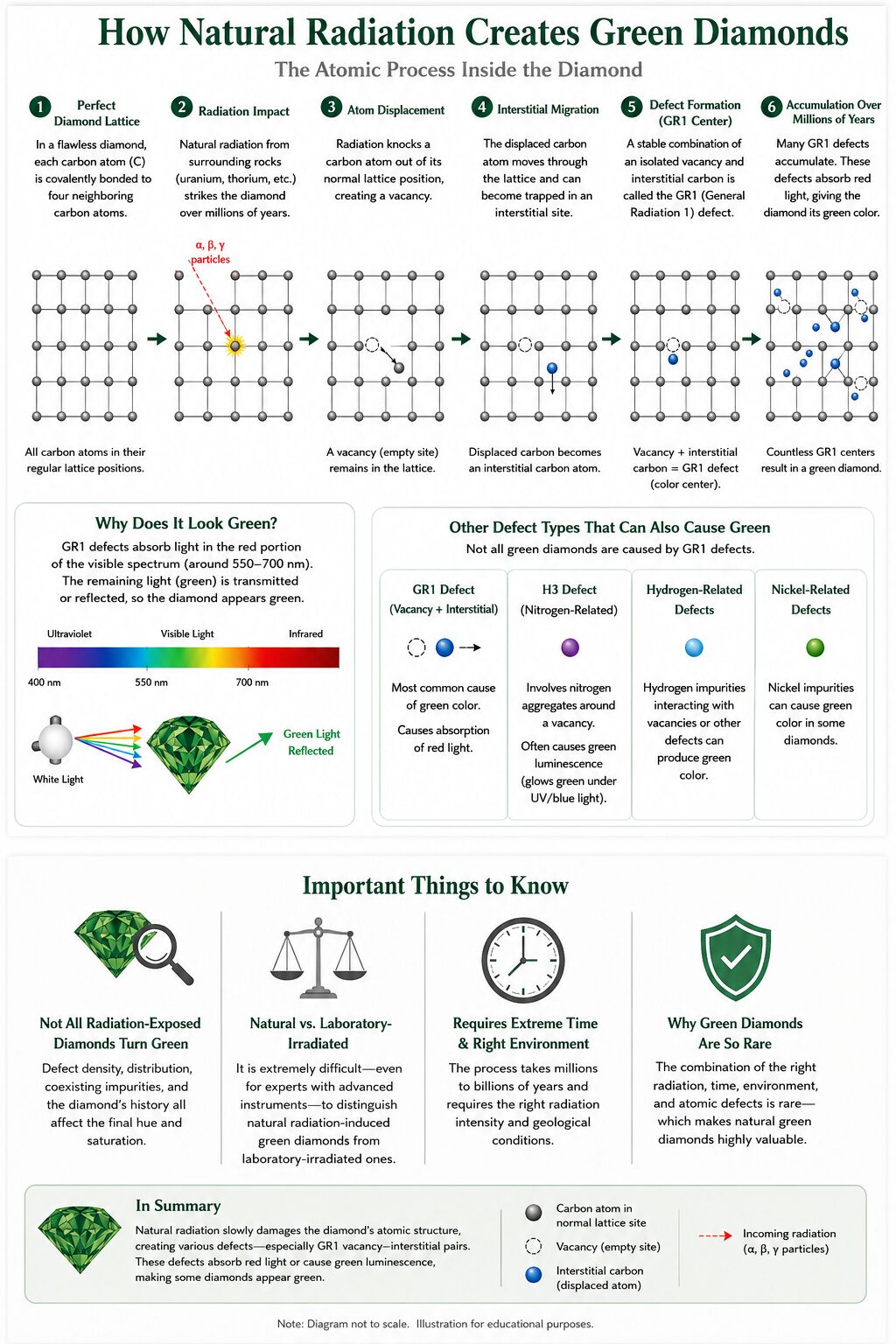
Most green diamonds acquire their color from exposure to naturally radioactive environments within the Earth’s crust. Over millions of years, radiation produced by the decay of isotopes of elements such as uranium and thorium changes the diamond’s structure by displacing carbon atoms and creating vacant atomic positions.
Role of GR1 Defect Center
The green coloration is primarily linked to the GR1 defect center, a vacancy created when radiation displaces carbon atoms in the diamond lattice. The vacancy causes the diamond to absorb the red portion of the spectrum of light. Nitrogen-related defects may also be found in natural diamonds. These defects absorb the blue part of light. The combination of these factors allows the green portion of the spectrum to be visible. This is how we get natural green diamonds.
Source of Radiation
Mostly, such radiation comes in the form of alpha and beta particles emitted by underground uranium compounds or by seeping groundwater. The penetration of green color imparted by this radiation is not very deep and is often lost during fashioning of the stone. Expert cutters leave a skin or staining of surface radiation on the stone, giving the stone a greener appearance.
Since GIA grades color on face-up appearance, and since the skin occurs naturally, there is little clue as to how the stone appears green.
Less often, gamma rays from radioactive sources shower the diamond and impart the green color deeper into the diamond. In the rarest cases, the entire gemstone is turned green.
The size of the gemstone, the strength of radioactivity, the length of time of exposure to radioactivity along with the type of radiation (as brought out above) are the factors governing the intensity and depth of the green color acquired by a natural green diamond.
Although natural green diamonds acquire their color through radiation, they are completely safe to wear and are not radioactive.
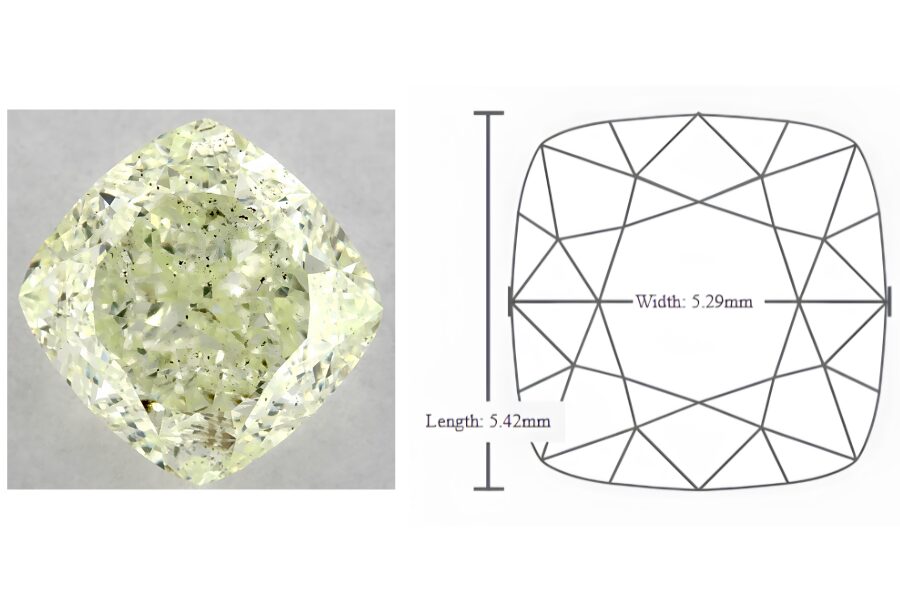
GIA 1.01 Carat Cushion Modified Green Diamond |
|
|
Tap The Image And Discover The Beauty Of This GIA 1.01 Carat Cushion Modified Green Diamond! |
|
|
2.b) Secondary Colors Found In Green DiamondsBack To Table Of Contents |
Like all natural colored diamonds, natural green diamonds too exhibit more than one spectral hue. The predominant green color is accompanied by modifiers which are one or more additional colors that contribute to its overall impression. There are many combinations of modifying colors contributing to a green diamond’s final appearance & they factor in determining its final per-carat price.
Modifier colors of green diamonds include brown, yellow, gray, and blue. As a result, yellowish-green, yellow-green, bluish-green, blue-green, grayish-green, gray-green, and even gray-yellowish-green diamonds also occur in nature. The Gemological Institute of America (GIA) uses precise terminology for modifiers, such as ‘yellow-green’ or ‘blue-green,’ which directly influence grading and pricing.
Brown and gray modifiers greatly reduce the value of a stone. Yellow as a modifier can also reduce value, though in some cases it can create vibrant colors.
Blue as a modifier is the most valuable. Bluish-green, blue-green, green-blue, and greenish-blue diamonds are even rarer and may be more highly valued than pure green diamonds. Blue modifiers are rare because they require both radiation and boron-related defects, making bluish-green diamonds exceptionally valuable.
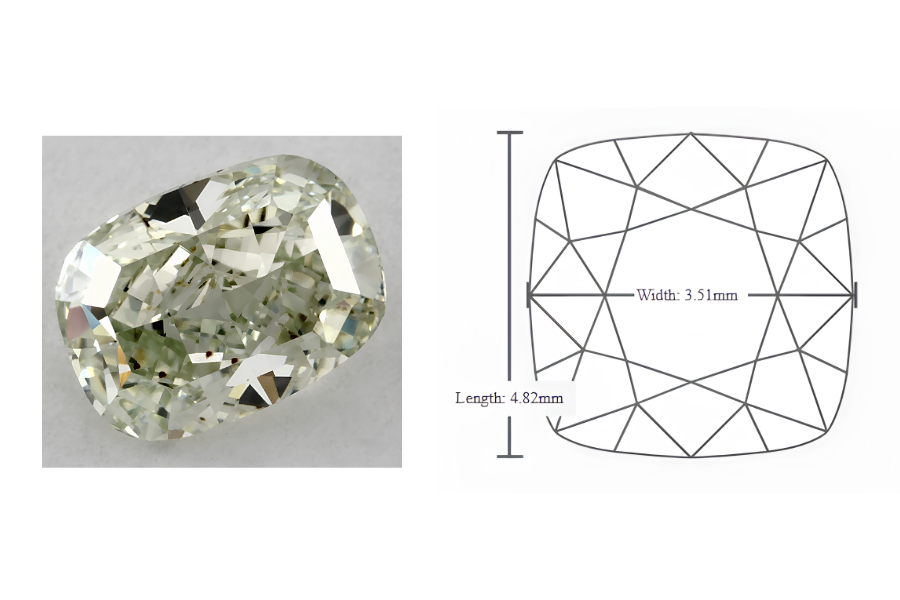
GIA 0.35 Carat Cushion Green Diamond |
|
|
Click The Image To See Why This GIA 0.35 Carat Cushion Green Diamond Stands Out! |
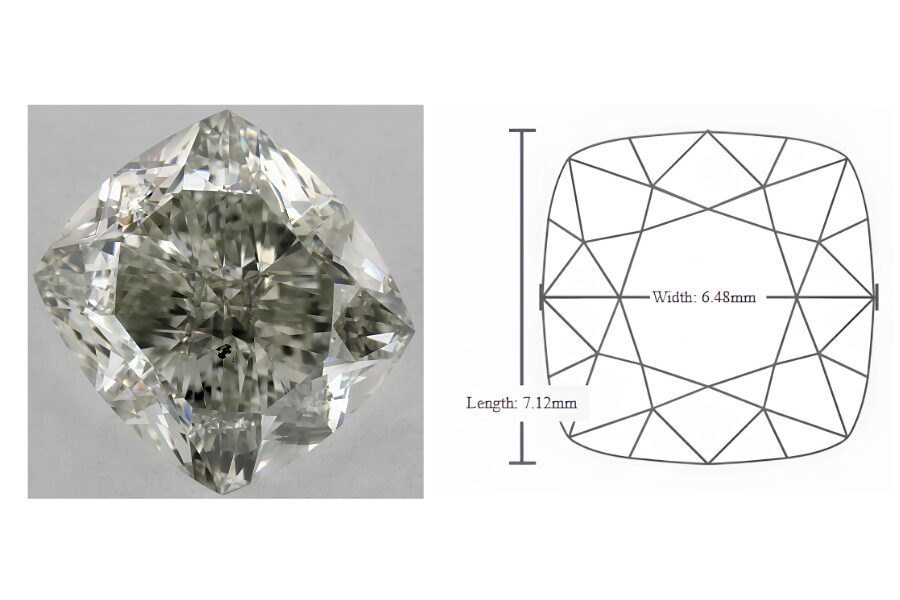
GIA 1.81 Carat Cushion Modified Green Diamond |
|
|
Ready To Elevate Your Look? Tap The Image To See More About This GIA 1.81 Carat Cushion Modified Green Diamond Now! |
|
|
2.c) Factors Affecting Green Color IntensityBack To Table Of Contents |
Several factors determine the intensity and depth of a green diamond’s color. These include the size of the gemstone, the strength of radioactivity, the duration of exposure, and the type of radiation involved.
Longer exposure to natural radiation generally produces a stronger green coloration. However, in many cases the green color remains concentrated near the surface rather than spreading uniformly throughout the stone.
Pure green diamonds without any trace of secondary color modifiers are highly valued and greatly admired in the diamond and jewelry industry. Uniformly saturated pure green diamonds are the rarest; most stones show uneven distribution of color.
Auction records show that pure vivid green diamonds can command prices exceeding $1–3 million per carat, depending on clarity and size. Advanced spectroscopy (like photoluminescence analysis) is often required to confirm whether the green is natural or artificially induced.
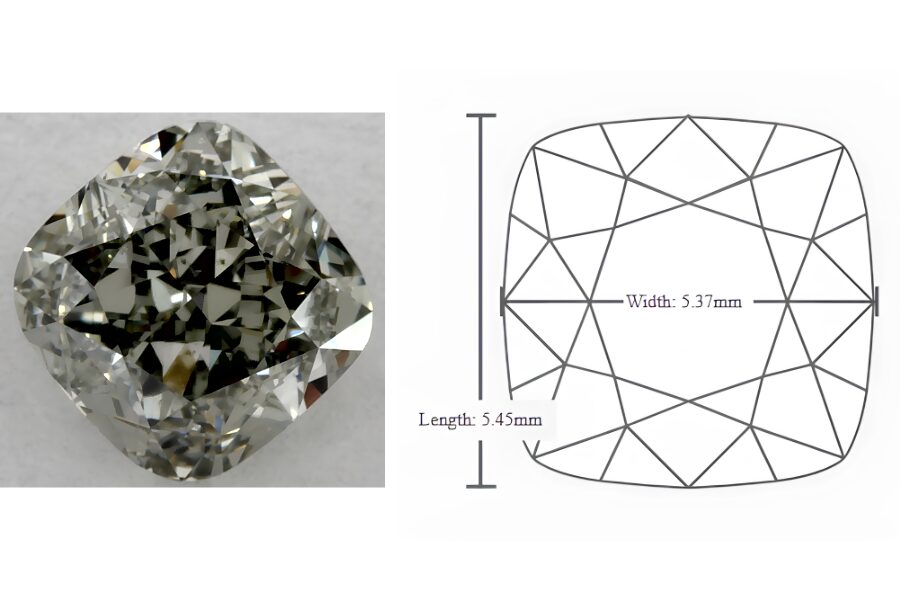
GIA 1.01 Carat Cushion Modified Green Diamond |
|
|
Fall In Love With The Sparkle. Click On The Image To View This GIA 1.01 Carat Cushion Modified Green Diamond! |
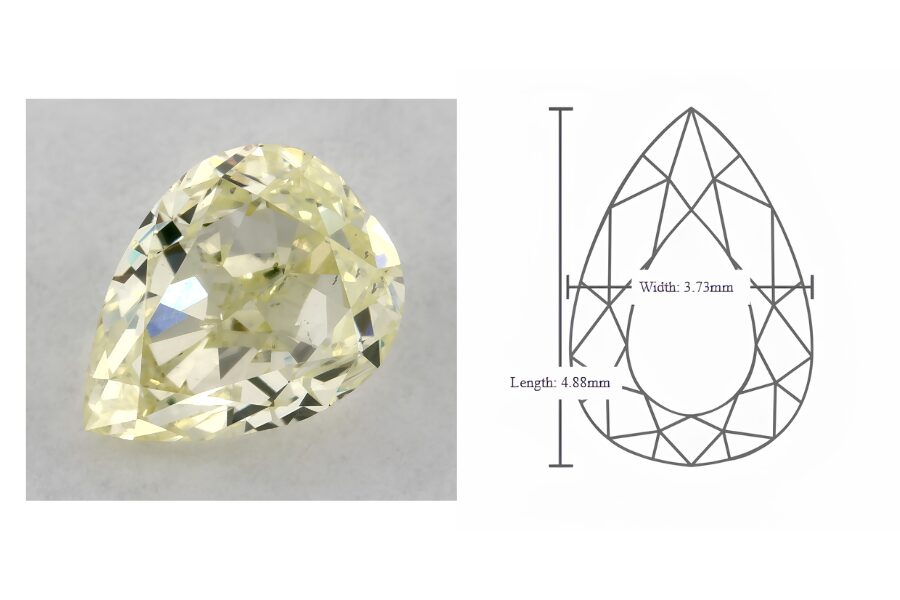
GIA 0.32 Carat Pear Green Diamond |
|
|
Tap The Image To Find Out What Makes This GIA 0.32 Carat Pear Green Diamond A Must-Have Piece! |
|
|
3) Famous Green Diamonds In HistoryBack To Table Of Contents |
A handful of green diamonds have achieved legendary status because of their rarity and historical significance. Among them, the Dresden Green Diamond remains the most famous and well-documented natural green diamond ever discovered. Other notable green diamonds also exist, each contributing to the mystique of this rare color.
|
|
3.a) The Dresden Green DiamondBack To Table Of Contents |
The Dresden Green Diamond, more famously known as ‘Dresden Green’, is the most famous green diamond on earth. It is a 41 carats (8.2 g) natural green diamond. The diamond probably weighed over 100 carats (old carat) in its rough form and came from the Kollur mine in the state of Andhra Pradesh in India.
The diamond has been named after Dresden, capital of Saxony, Germany where it has been on display for the last two hundred years. It is mounted in an elaborate 18th‑century hat ornament surrounded by 411 diamonds, a setting it still retains today.
Earliest record pertaining to The Dresden Green can be seen in issue dated October 25th – 27th, 1722 of ‘The Post Boy’, a London new-sheet of the 1700’s which reads as follows:
“On Tuesday last, in the afternoon, one Mr. Marcus Moses, lately arrived from India, had the honor to wait on his Majesty [King George I (ruled 1714-27)] with his large diamond, which is of a fine emerald green colour, and was with his Majesty near an hour. His Majesty was very much pleased with the sight thereof. It is said there never was seen the like in Europe before, being free from any defect in the world; and he has shown his Majesty several other fine large diamonds, the like of which ’tis said were never brought from India before. He was also, the 25th, to wait on their Royal Highnesses with his large diamond; and they were surprised to see one of such largeness, and of such a fine emerald color without the help of a foil under it. We hear the gentlemen values it at £10,000.”
The Dresden Green is unique as the largest known natural green diamond with a pure, evenly distributed color. It has survived wars and theft attempts, including the 2019 Dresden Green Vault burglary, because it was on loan to the Metropolitan Museum of Art in New York at the time.
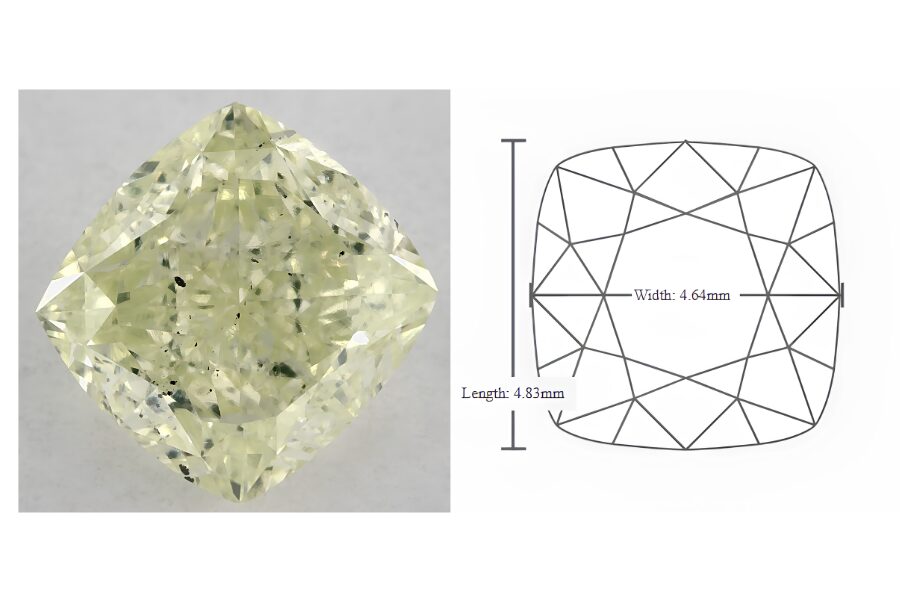
GIA 0.71 Carat Cushion Modified Green Diamond |
|
|
Tap The Image To Take A Closer Look At This GIA 0.71 Carat Cushion Modified Green Diamond. You’ll Be Amazed! |
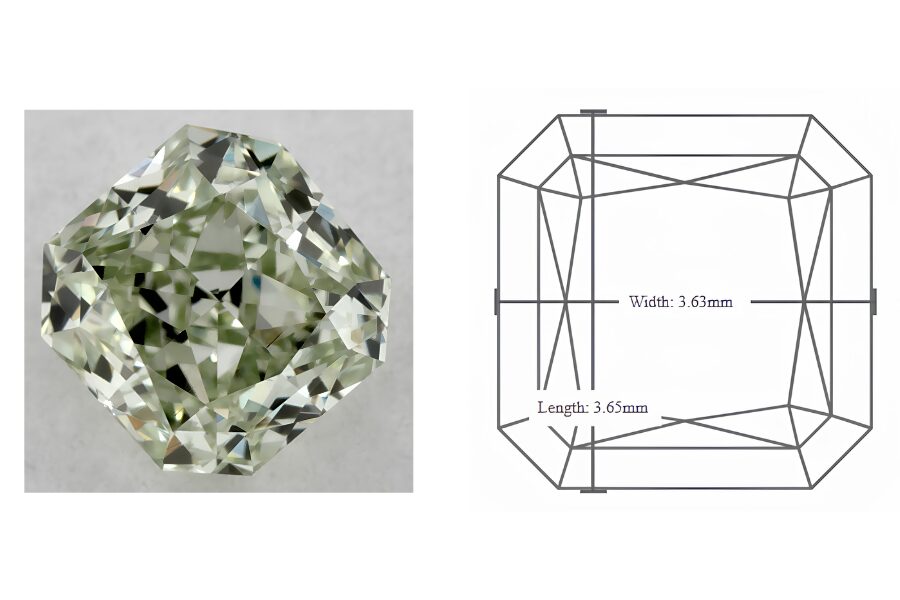
GIA 0.26 Carat Square Green Radiant Diamond |
|
|
Don’t Miss Out! Tap The Image And Explore This GIA 0.26 Carat Square Green Radiant Diamond In Full Detail Now! |
|
|
3.b) GIA Facts About The Dresden Green DiamondBack To Table Of Contents |
The Gemological Institute of America (GIA) examined the stone in 1988.
- The Dresden Green Diamond found to be of extraordinary quality, and a rare type IIa diamond.
- The clarity grade established by GIA was VS1 and the gem has the potential of being internally flawless.
- The gem measures 29.75 x 19.88 x 10.29mm. The GIA graded the symmetry good and the polish very good. This is astonishing for a diamond cut prior to 1741.
- The Dresden Green Diamond is displayed at the Albertinium Museum in Dresden.
- The GIA confirmed that its spectral characteristics serve as a benchmark to distinguish natural green diamonds from laboratory‑irradiated stones, making it a reference point in gemological studies.
|
|
3.c) Other Famous Green DiamondsBack To Table Of Contents |
While the Dresden Green is the most celebrated, other green diamonds have also achieved fame:
- The Orloff Diamond: A 189.62‑carat slightly bluish‑green diamond of Indian origin, housed in the Diamond Treasury of Russia.
- Chameleon Diamonds: Rare stones that shift color between green and yellow‑green under heat or darkness, prized for their unusual optical behavior.
- Jennifer Lopez’s Green Diamond Ring (2022): A modern celebrity example that brought renewed global attention to natural green diamonds and their desirability in contemporary jewelry.
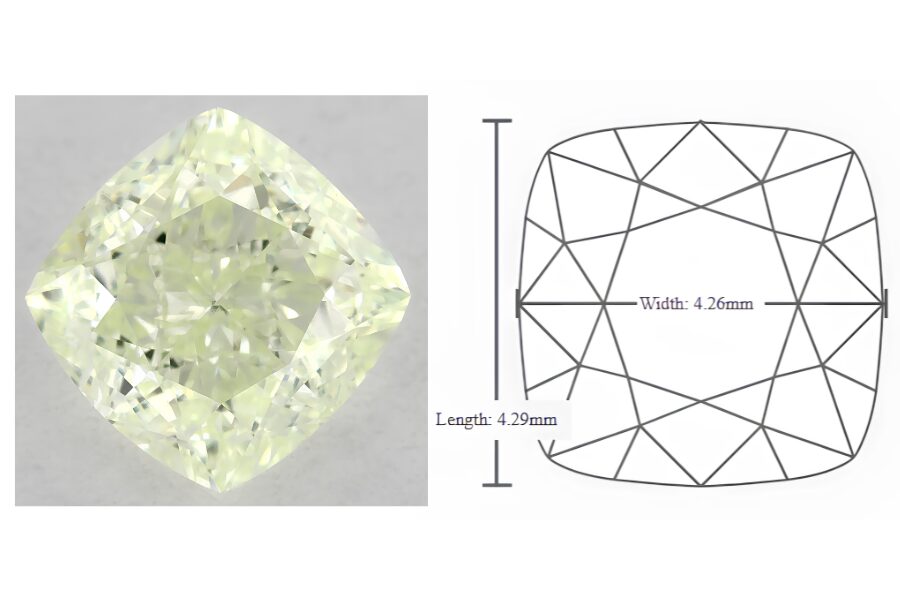
GIA 0.51 Carat Cushion Modified Green Diamond |
|
|
Tap The Image To Reveal Full Details Of This Elegant GIA 0.51 Carat Cushion Modified Green Diamond! |
|
|
4) Buying Green Diamonds: What To Know Before You BuyBack To Table Of Contents |
Green diamonds require careful evaluation because natural color, treatment status, and surface coloration can greatly affect value. A trusted gemological report is essential before buying or collecting any green diamond.
|
|
4.a) Natural vs Irradiated Green DiamondsBack To Table Of Contents |
Natural green diamonds get their color from radiation exposure inside the earth over millions of years. This natural radiation may affect only the surface of the diamond or, in rarer cases, penetrate deeper into the stone.
Irradiated green diamonds, on the other hand, receive their color through artificial treatment after mining. These treated stones can look attractive, but they are not as rare or valuable as natural green diamonds.
Buyers should always ask for a trusted gemological report before purchasing a green diamond. The report should clearly state whether the color is natural, treated, or enhanced.
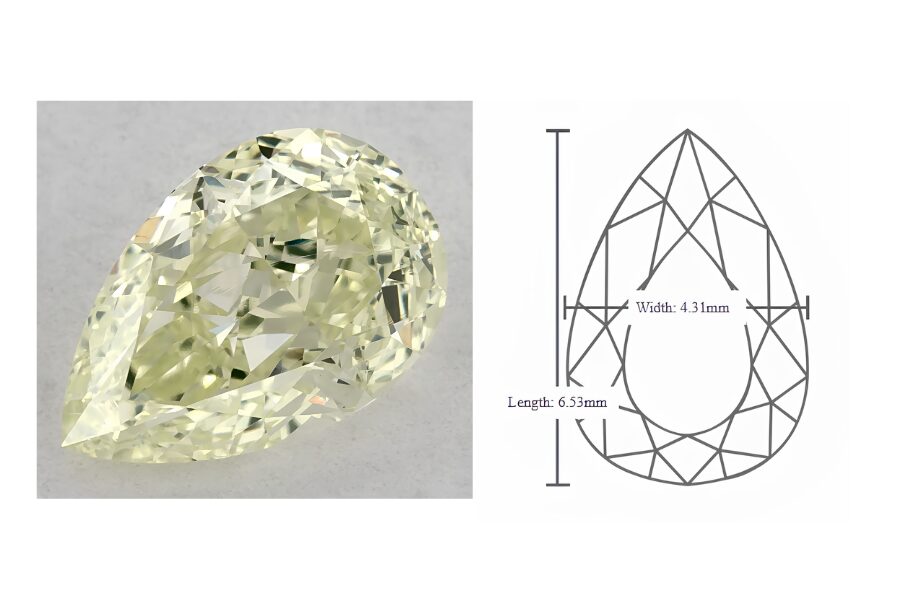
GIA 0.56 Carat Pear Green Diamond |
|
|
Want Something Special? Tap The Image And Dive Into The Charm Of This GIA 0.56 Carat Pear Green Diamond! |
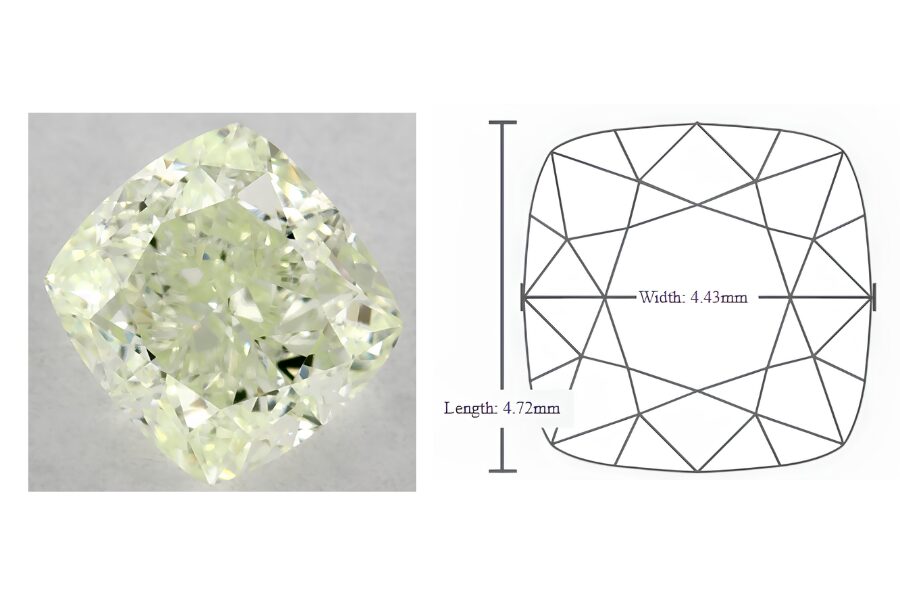
GIA 0.63 Carat Cushion Modified Green Diamond |
|
|
Treat Yourself To This Stunning GIA 0.63 Carat Cushion Modified Green Diamond. Click On The Image And View It Now! |
|
|
4.b) Tips for Buyers and CollectorsBack To Table Of Contents |
You should view the diamond loose and check how much of the stone remains in rough form. Generally, the less rough material that is visible, the better.
Green diamonds with the same GIA grades can vary greatly in value because of the natural green “skin” present on the surface. This should not discourage a collector from purchasing a skin stone, since a natural green diamond is exceptionally rare in any form.
Always look for a trusted gemological report and verify whether the diamond’s color is natural, treated, or enhanced before making a purchase.
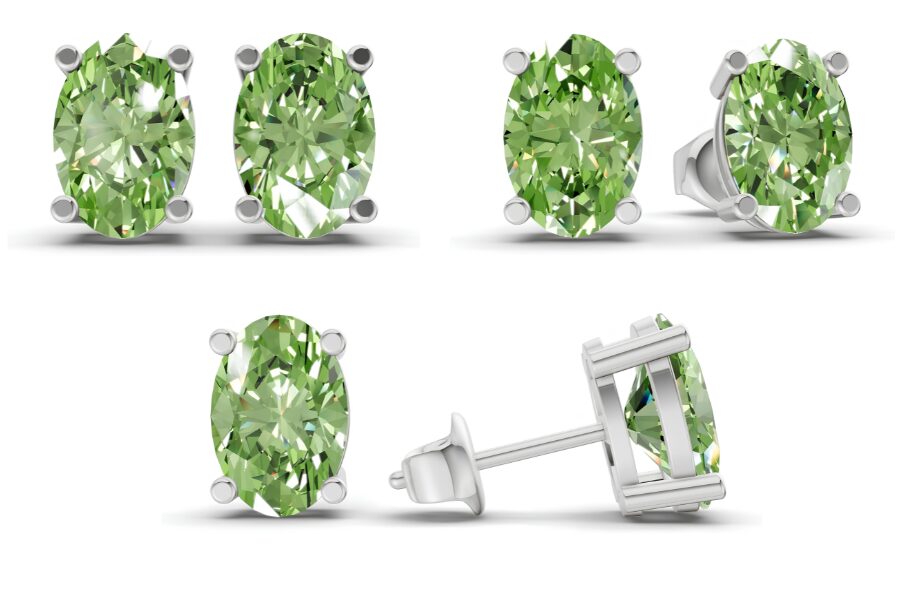
White Gold Lab Grown Ocean Green Diamond Stud Earrings |
|
|
Curious About These White Gold Lab Grown Ocean Green Diamond Stud Earrings? Tap The Image And Learn More Instantly! |
|
|
4.c) How Much Do Green Diamonds Cost?Back To Table Of Contents |
Natural green diamonds are among the world’s most expensive fancy-colored diamonds. Price depends primarily on color intensity, color purity, size, and rarity. A 1-carat Fancy Green diamond may sell for $50,000 to $100,000, while Fancy Intense and Fancy Vivid Green diamonds can reach several hundred thousand dollars per carat. Exceptionally rare collector stones may sell for millions of dollars at auction.
|
|
5) Green Diamonds FAQBack To Table Of Contents |
These quick answers address the most common questions people ask about green diamonds, including rarity, price, safety, and authenticity.
|
|
5.a) Are Green Diamonds Real?Back To Table Of Contents |
Yes, green diamonds are real natural diamonds. Their green color usually forms when natural radiation alters the diamond’s crystal structure over millions of years.
|
|
5.b) Are Green Diamonds Radioactive?Back To Table Of Contents |
No, green diamonds are not radioactive. Although natural radiation helps create their color, finished green diamonds are completely safe to wear in jewelry.
|
|
5.c) Why Are Green Diamonds So Expensive?Back To Table Of Contents |
Green diamonds are expensive because they are extremely rare. Their value depends on color intensity, purity of green color, carat weight, clarity, certification, and whether the color is natural or treated.
|
|
5.d) How Much Is 1 Carat Of Green Diamond?Back To Table Of Contents |
A 1-carat natural green diamond can cost tens of thousands to several hundred thousand dollars depending on color grade, saturation, clarity, and origin of color. Fancy Intense and Fancy Vivid Green diamonds command the highest prices.
|
|
5.e) How Can You Tell If A Green Diamond Is Natural?Back To Table Of Contents |
The safest method is to request a trusted gemological report, preferably from GIA. The report should clearly state whether the green color is natural, treated, enhanced, or laboratory created.
Or Learn About More Colored Diamonds As Follows:

See Also:
 Fascinating Facts About Diamonds Straight From Tiffany & Co’s Chief Gemologist