A white gold Byzantine chain combines the intricate craftsmanship of the classic Byzantine weave with the bright, contemporary appearance of white gold. Whether you are considering a necklace or bracelet, this guide explains how white gold is made, compares different karats, explores styling options, discusses durability and care, and provides practical buying advice to help you choose the right piece with confidence.
Table Of Contents

|
1) Why Choose a White Gold Byzantine Chain?Go To Table Of Contents |
A white gold Byzantine chain combines one of the most intricate chain designs ever created with the bright, contemporary appearance of white gold. The result is jewelry that showcases exceptional craftsmanship while offering a refined alternative to traditional yellow gold chains.
Many buyers are drawn to white gold because of its cool metallic color, versatility and ability to complement both casual and formal attire. Before choosing one, however, it is worth understanding what distinguishes a white gold Byzantine chain from other precious metal versions and whether it matches your personal style, lifestyle and maintenance expectations.
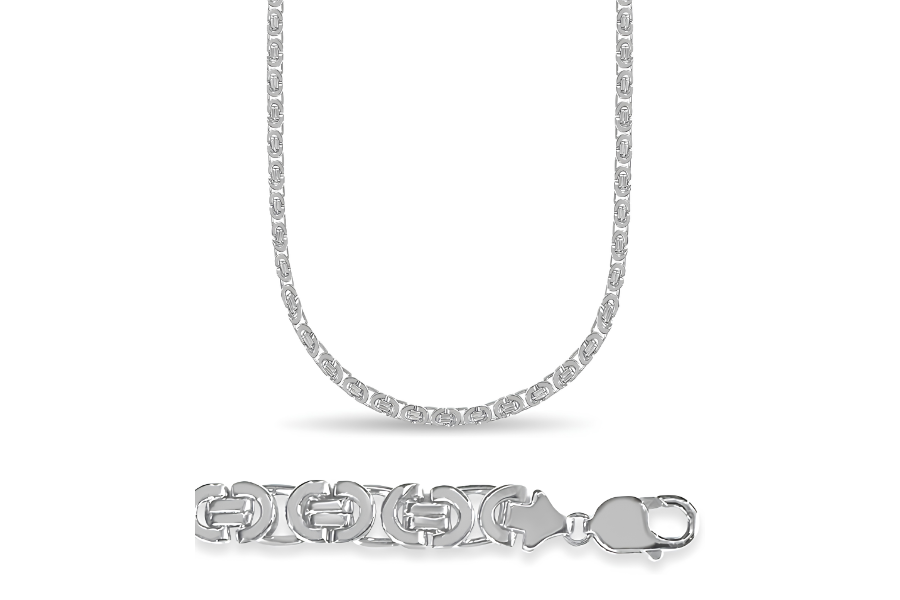
10K White Gold 11mm Flat Byzantine Necklace |
|
|
Click On The Image To Reveal The Full Specifications, Craftsmanship And Current Price Of This 10K White Gold 11mm Flat Byzantine Necklace. |

|
1.a) What Makes a White Gold Byzantine Chain Different?Back To Table Of Contents |
A white gold Byzantine chain differs from other Byzantine chains primarily because of the precious metal from which it is made. The Byzantine weave remains the same intricate arrangement of interlocking links, but white gold gives the chain a brighter, cooler appearance than yellow gold while offering a more luxurious finish than sterling silver.
Unlike sterling silver, white gold is an alloy containing pure gold combined with white metals such as palladium or nickel. Most white gold jewelry is also coated with rhodium, giving it a brilliant white surface that enhances the visual depth of the Byzantine weave. The result is a chain that combines timeless craftsmanship with a modern aesthetic.
|
|
1.b) Who Should Choose a White Gold Byzantine Chain?Back To Table Of Contents |
A white gold Byzantine chain is an excellent choice for anyone who appreciates detailed craftsmanship but prefers the sleek appearance of white metals. Its neutral colour pairs effortlessly with white gold rings, platinum jewelry, stainless steel watches and diamond pendants, making it easy to incorporate into an existing jewelry collection.
It is also well suited to those seeking a premium chain for regular wear without the warm yellow hue of traditional gold. Buyers should, however, be prepared for occasional rhodium replating to maintain the chain’s bright finish. Those who prefer a naturally warm appearance or lower maintenance may find that a yellow gold or sterling silver Byzantine chain better matches their preferences.
|
|
2) Understanding White Gold in Byzantine ChainsGo To Table Of Contents |
The appearance, durability and long-term performance of a white gold Byzantine chain depend largely on the composition of the metal itself. While every Byzantine chain features the same intricate woven link pattern, the choice of white gold alloy and karat significantly influences its colour, strength, maintenance requirements and price.
Understanding how white gold is made and how different gold purities compare will help you choose a chain that suits your budget, lifestyle and wearing habits.
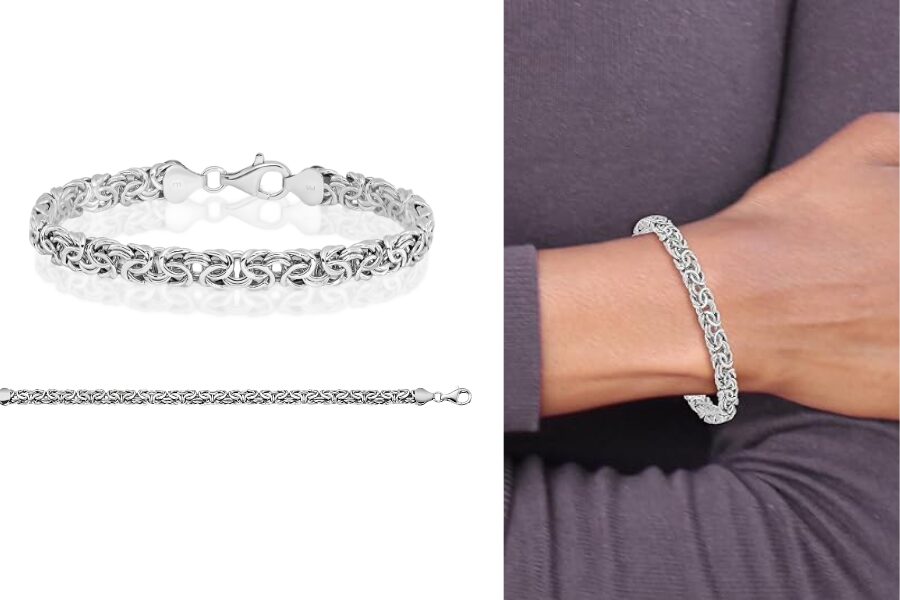
14K White Gold 6mm
|
|
|
Click On The Image To Reveal The Full Specifications, Craftsmanship And Current Price Of This 14K White Gold 6mm Byzantine Chain Bracelet. |
|
|
2.a) How White Gold Is MadeBack To Table Of Contents |
Pure gold has a rich yellow color and is too soft for most chain jewelry, especially for complex designs such as the Byzantine weave. To improve its strength and durability, jewelers combine pure gold with naturally white metals to produce white gold.
Depending on the manufacturer, these alloying metals may include palladium, silver, nickel or zinc. Most white gold Byzantine chains are then finished with a thin layer of rhodium. This bright, highly reflective precious metal enhances the chain’s whiteness, improves scratch resistance and gives the intricate links a crisp, polished appearance.
|
|
2.b) White Gold Alloys Used in Byzantine ChainsBack To Table Of Contents |
The exact alloy used in a white gold Byzantine chain varies between jewelry manufacturers. Palladium-based white gold is valued for its naturally bright color and hypoallergenic properties, while nickel-based alloys are generally harder and more resistant to wear. Silver and zinc are also commonly added in carefully balanced proportions to improve workability and achieve the desired shade of white.
Because Byzantine chains contain many closely interwoven links, manufacturers typically favour alloys that provide a good balance between strength, flexibility and resistance to deformation. This helps the chain retain its intricate structure during everyday wear without compromising comfort.
|
|
2.c) Choosing Between 10K, 14K and 18K White Gold Byzantine ChainsBack To Table Of Contents |
The choice between 10K, 14K and 18K white gold depends on what you value most in a Byzantine chain. A 10K chain contains the highest proportion of alloying metals, making it the most durable and generally the most affordable option for everyday wear.
A 14K white gold Byzantine chain offers an excellent balance between durability, color and gold content, making it the most popular choice for many buyers. An 18K chain contains a higher percentage of pure gold, giving it greater intrinsic value and a richer feel, although it is slightly softer and usually commands a higher price. For most people seeking a combination of beauty, strength and long-term value, 14K white gold represents the sweet spot.
|
|
3) Appearance and StyleGo To Table Of Contents |
The distinctive beauty of a Byzantine chain comes from its intricate pattern of interlocking links, but the choice of metal plays an equally important role in its overall appearance. White gold gives the weave a bright, contemporary character, emphasising the chain’s texture while maintaining the luxurious appeal associated with precious metals.
Whether worn as a standalone statement piece or paired with a pendant, a white gold Byzantine chain complements a wide range of personal styles. Factors such as width, length and finish also influence how bold or understated the chain appears.
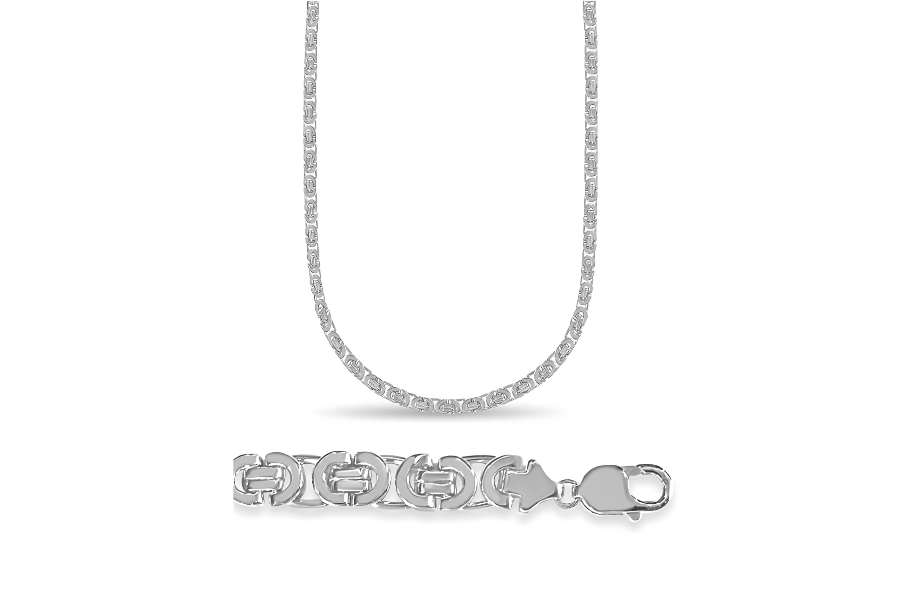
10K White Gold 11mm
|
|
|
Click On The Image To Reveal The Full Specifications, Craftsmanship And Current Price Of This 10K White Gold 11mm Flat Byzantine Necklace 20 Inches. |
|
|
3.a) How White Gold Influences the Appearance of a Byzantine ChainBack To Table Of Contents |
White gold enhances the intricate geometry of the Byzantine weave by reflecting light from multiple angles. The rhodium-plated surface produces a bright, mirror-like finish that highlights each individual link, making the chain appear crisp and highly detailed.
Its neutral colour also makes white gold remarkably versatile. Unlike yellow gold, which creates a warm, traditional look, white gold offers a sleek, contemporary aesthetic that pairs effortlessly with diamonds, platinum jewellery, stainless steel watches and other white metals. This versatility allows the chain to transition easily from everyday wear to formal occasions.
|
|
3.b) White Gold Byzantine Chains for MenBack To Table Of Contents |
Men often favour white gold Byzantine chains for their substantial appearance and sophisticated finish. Medium to heavier widths create a bold statement without appearing overly flashy, making them suitable for business attire, smart casual outfits and formal occasions alike.
Many men wear a Byzantine chain on its own to showcase the intricate craftsmanship, while others pair it with a simple cross, dog tag or other meaningful pendant. The chain’s distinctive weave provides visual interest without relying on oversized links or elaborate ornamentation.
|
|
3.c) White Gold Byzantine Chains for WomenBack To Table Of Contents |
White gold Byzantine chains are equally popular among women who appreciate detailed craftsmanship combined with a refined, contemporary appearance. Slimmer chain widths create an elegant, understated look, while slightly heavier designs make a distinctive fashion statement without sacrificing sophistication.
Many women wear these chains alone to showcase the intricate weave, while others pair them with diamond, gemstone or symbolic pendants. The bright white finish complements a wide variety of jewelry styles, making a white gold Byzantine chain a versatile addition to both everyday and special-occasion wardrobes.
|
|
4) Durability and Everyday WearGo To Table Of Contents |
A white gold Byzantine chain is designed to withstand regular wear while retaining its elegant appearance for many years. Its durability depends on two factors: the strength of the intricate Byzantine weave and the properties of the white gold alloy used to create it.
Although white gold is durable enough for everyday use, proper care helps preserve its appearance. Understanding how rhodium plating works and how white gold naturally ages allows you to make informed decisions about maintenance and long-term ownership.
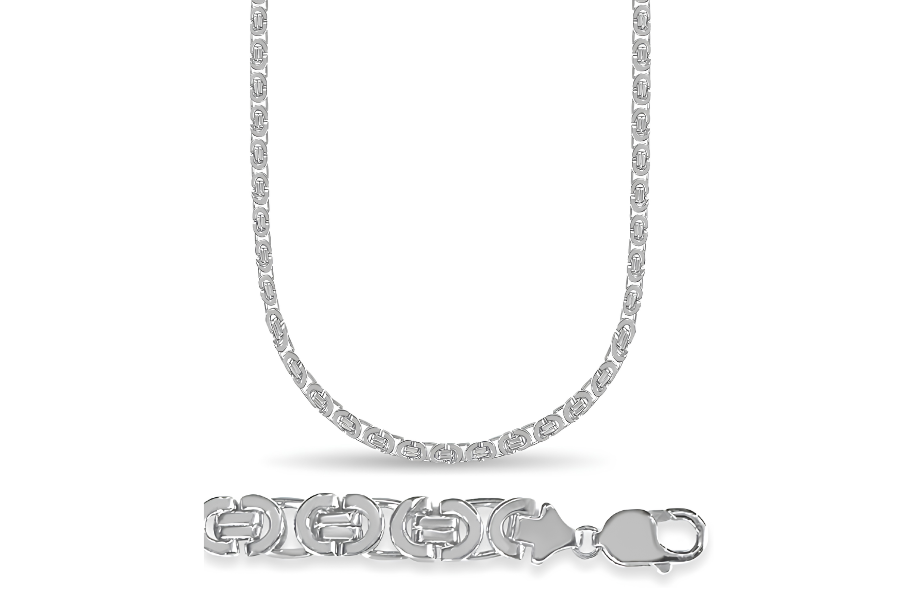
10K White Gold 11mm
|
|
|
Click On The Image To Reveal The Full Specifications, Craftsmanship And Current Price Of This 10K White Gold 11mm Flat Byzantine Necklace 22 Inches. |
|
|
4.a) Is a White Gold Byzantine Chain Durable?Back To Table Of Contents |
Yes, a white gold Byzantine chain is generally durable enough for everyday wear when it is well made. The Byzantine weave consists of numerous interlocking links that distribute stress throughout the chain rather than concentrating it at a few points. This intricate construction provides excellent flexibility while maintaining structural integrity.
The durability also depends on the karat of the white gold. A 10K or 14K white gold Byzantine chain typically offers greater resistance to scratches and everyday wear than an 18K version because it contains a higher proportion of strengthening alloy metals. Regardless of karat, avoiding excessive pulling, twisting or snagging will help preserve the chain’s intricate weave.
|
|
4.b) How Rhodium Plating Affects a White Gold Byzantine ChainBack To Table Of Contents |
Most white gold Byzantine chains are coated with rhodium, a rare precious metal belonging to the platinum group. This plating gives the chain its brilliant white finish while adding a layer of protection against minor scratches and surface wear.
Rhodium plating is not permanent. With regular wear, particularly around high-friction areas such as the clasp and frequently handled links, the coating gradually wears away. Fortunately, professional replating restores the chain’s original brightness without affecting the underlying gold, allowing it to maintain its elegant appearance for many years.
|
|
4.c) Does White Gold Change Color Over Time?Back To Table Of Contents |
White gold itself does not tarnish like sterling silver, but its appearance can change gradually as the rhodium plating wears away. Over time, the bright white finish may soften, allowing the natural slightly warm tone of the underlying white gold alloy to become more noticeable. This is a normal characteristic of rhodium-plated white gold rather than a defect.
The rate at which this occurs depends on factors such as how often the chain is worn, skin chemistry and exposure to cosmetics, chlorine or household chemicals. Periodic professional cleaning and rhodium replating will restore the chain’s original brilliance and keep the intricate Byzantine weave looking its best.
|
|
5) Choosing the Right White Gold Byzantine ChainGo To Table Of Contents |
Choosing the right white gold Byzantine chain involves more than selecting an attractive design. The chain’s width, length, construction and intended use all influence its appearance, comfort and durability. By considering these factors before making a purchase, you can select a chain that complements both your personal style and your everyday lifestyle.
Solid 14K White Gold
|
|
|
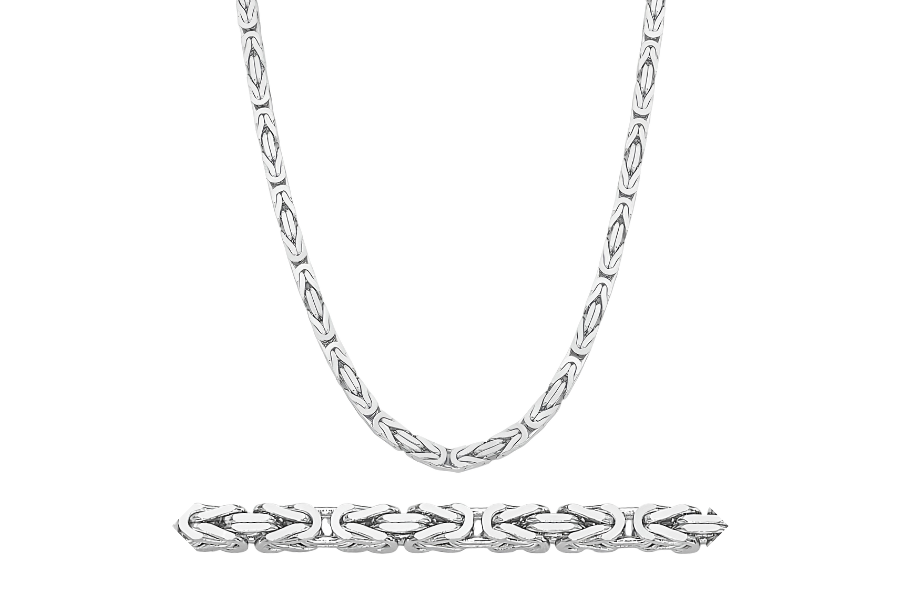
Click On The Image To Reveal The Full Specifications, Craftsmanship And Current Price Of This Solid 14K White Gold Byzantine Chain Necklace 24 Inches. |
|
|
5.a) Choosing the Right WidthBack To Table Of Contents |
The width of a white gold Byzantine chain has a significant impact on its overall appearance. Slim chains create a refined, understated look that is ideal for everyday wear or for pairing with smaller pendants. Medium-width chains strike a balance between elegance and visual presence, making them suitable for most occasions.
Wider Byzantine chains showcase the intricate weave more prominently and create a bold statement. They are often worn as standalone pieces because the elaborate pattern itself becomes the focal point. When choosing a width, consider your body proportions, personal style and whether the chain will be worn alone or with a pendant.
|
|
5.b) Choosing the Right LengthBack To Table Of Contents |
The right chain length depends on how you intend to wear your white gold Byzantine chain. Shorter lengths sit closer to the neckline and create a clean, contemporary appearance, while medium lengths are versatile enough for both casual and formal settings.
Longer chains provide a more relaxed look and work particularly well when worn over clothing or paired with larger pendants. Before making a purchase, consider your neck size, body proportions and preferred neckline so the chain sits comfortably and achieves the desired visual effect.
|
|
5.c) Solid vs Hollow White Gold Byzantine ChainsBack To Table Of Contents |
Solid white gold Byzantine chains contain precious metal throughout each link, giving them greater strength, a reassuring weight and superior long-term durability. Although they cost more, they are generally the preferred choice for buyers seeking a premium chain that can withstand regular wear.
Hollow white gold Byzantine chains use less gold, making them lighter and more affordable. However, the thinner walls of the links are more susceptible to dents and damage if subjected to heavy impact. If you plan to wear your Byzantine chain frequently, a solid construction is usually the better long-term investment.
|
|
5.d) Wearing a Pendant on a White Gold Byzantine ChainBack To Table Of Contents |
A white gold Byzantine chain can be worn with a pendant, provided the chain and pendant are proportionate in size and weight. Smaller and medium-sized pendants usually pair well with finer Byzantine chains, while heavier pendants require a wider, sturdier chain capable of supporting the additional weight.
Many jewelry enthusiasts, however, prefer to wear a Byzantine chain without a pendant. The intricate weave is one of the chain’s defining features and leaving it unobstructed allows its craftsmanship to remain the center of attention. If you do choose a pendant, ensure that the bail is large enough to move freely over the chain without causing excessive wear.
|
|
6) Choosing Between White Gold and Other Byzantine ChainsGo To Table Of Contents |
Although the intricate Byzantine weave remains the same regardless of the metal, the choice of precious metal significantly influences a chain’s appearance, maintenance, durability and cost. Comparing white gold with other popular metals helps you identify the option that best complements your style preferences, everyday lifestyle and budget.
14K White Gold 2mm
|
|
|
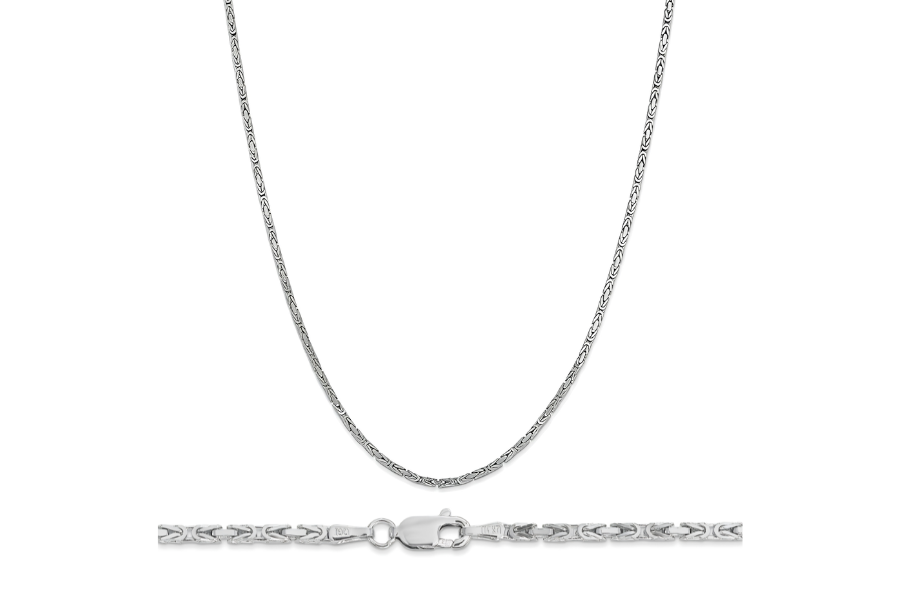
Click On The Image To Reveal The Full Specifications, Craftsmanship And Current Price Of This 14K White Gold 2mm Polished Byzantine Chain. |
|
|
6.a) White Gold vs Yellow Gold Byzantine ChainsBack To Table Of Contents |
White gold and yellow gold Byzantine chains contain the same amount of pure gold when they share the same karat, but they create distinctly different visual impressions. White gold offers a bright, contemporary appearance that pairs effortlessly with diamonds and other white metals, whereas yellow gold delivers the classic warm tone traditionally associated with fine jewelry.
From a maintenance perspective, yellow gold does not require rhodium replating, while white gold typically benefits from periodic replating to maintain its brilliant white finish. If you prefer a modern, understated aesthetic, white gold is an excellent choice. If you appreciate timeless warmth and lower maintenance, yellow gold may be the better option.
|
|
6.b) White Gold vs Sterling Silver Byzantine ChainsBack To Table Of Contents |
At first glance, white gold and sterling silver Byzantine chains may appear similar because both have a bright white color. However, they differ significantly in composition, value and long-term performance. White gold is a precious gold alloy with greater intrinsic value, while sterling silver consists primarily of silver alloyed with copper.
Sterling silver is generally more affordable but requires regular cleaning because it can tarnish when exposed to air and moisture. White gold does not tarnish in the same way, although its rhodium finish gradually wears with use. Buyers seeking a luxury heirloom piece often favour white gold, while sterling silver remains an attractive choice for those with a more modest budget.
|
|
6.c) White Gold vs Platinum Byzantine ChainsBack To Table Of Contents |
White gold and platinum are both premium white metals, but they offer different ownership experiences. Platinum is naturally white and does not require rhodium plating. It is also denser than white gold, giving a platinum Byzantine chain a noticeably heavier feel. Over time, platinum develops a soft patina that many jewellery enthusiasts appreciate.
White gold provides a similar sophisticated appearance at a lower price point and is considerably lighter to wear. Although it requires occasional rhodium replating, many buyers consider this a worthwhile trade-off for the reduced cost and brilliant mirror-like finish. The choice ultimately depends on whether you prioritize platinum’s rarity and natural color or white gold’s excellent balance of beauty, value and practicality.
| Feature | White Gold | Yellow Gold | Sterling Silver | Platinum |
|---|---|---|---|---|
| Appearance | Bright white, modern | Warm golden tone | Bright white with slight grey tone | Naturally white with soft lustre |
| Durability | Excellent | Excellent | Good | Excellent |
| Maintenance | Occasional rhodium replating | Minimal | Regular polishing to remove tarnish | Occasional polishing if desired |
| Tarnish Resistance | Excellent | Excellent | Can tarnish | Excellent |
| Weight | Medium | Medium | Light | Heavy |
| Typical Price | $$$$ | $$$$ | $ | $$$$$ |
| Best For | Modern luxury and versatility | Classic traditional style | Budget-conscious buyers | Premium heirloom jewellery |
|
|
7) Buying a White Gold Byzantine ChainGo To Table Of Contents |
Buying a white gold Byzantine chain involves more than choosing an attractive design. The quality of the craftsmanship, the purity of the gold, the chain’s construction and its authenticity all influence long-term satisfaction. Knowing what to look for before making a purchase helps ensure you invest in a chain that offers lasting beauty, durability and value.
|
|
7.a) How to Identify a High-Quality White Gold Byzantine ChainBack To Table Of Contents |
A high-quality white gold Byzantine chain should have uniform, precisely formed links that move smoothly without gaps, rough edges or visible distortions. The weave should appear symmetrical throughout the entire length of the chain, reflecting careful craftsmanship and attention to detail.
Pay close attention to the clasp as well. A sturdy lobster clasp or box clasp with a secure locking mechanism is generally more reliable for everyday wear than lightweight alternatives. The chain should also feel substantial for its size without appearing bulky or poorly finished.
|
|
7.b) Understanding White Gold HallmarksBack To Table Of Contents |
Most genuine white gold Byzantine chains carry a hallmark indicating their gold purity. Common examples include 10K, 14K and 18K, while some manufacturers stamp numerical fineness marks such as 417, 585 or 750, representing the percentage of pure gold in the alloy.
In addition to the purity mark, many chains also display a manufacturer’s trademark or assay mark. These markings help verify authenticity and provide confidence that the chain meets recognised quality standards.
|
|
7.c) White Gold Byzantine Chain Price FactorsBack To Table Of Contents |
Several factors determine the price of a white gold Byzantine chain. The most significant are the gold purity, total gold weight, chain width, length and whether the construction is solid or hollow. Because the Byzantine weave is labour-intensive, craftsmanship also contributes substantially to the final price.
Other considerations include the quality of the clasp, the reputation of the manufacturer and fluctuations in global gold prices. Chains featuring hand-finished details or premium craftsmanship generally command higher prices than mass-produced alternatives.
|
|
7.d) Common Mistakes to Avoid When Buying a White Gold Byzantine ChainBack To Table Of Contents |
Many buyers focus primarily on appearance while overlooking factors that affect long-term ownership. Choosing a hollow chain when a solid one would better suit your lifestyle, selecting the wrong width or length, or ignoring the quality of the clasp can all lead to disappointment after purchase.
It is equally important to verify the chain’s hallmarks, purchase from a reputable jeweler and understand that most white gold jewelry requires occasional rhodium replating. Taking these considerations into account helps ensure that your white gold Byzantine chain remains a beautiful and durable investment for years to come.
|
|
8) Care and MaintenanceGo To Table Of Contents |
A well-crafted white gold Byzantine chain can retain its beauty for decades with proper care. Although white gold is durable, regular cleaning, careful storage and periodic maintenance help preserve its brilliant finish and protect the intricate woven links from unnecessary wear.
|
|
8.a) CleaningBack To Table Of Contents |
Clean your white gold Byzantine chain periodically using warm water, a few drops of mild dish soap and a soft-bristled brush. Gently brush between the interlocking links to remove accumulated dirt, skin oils and cosmetic residue before rinsing thoroughly with clean water.
After cleaning, pat the chain dry with a soft, lint-free cloth. Avoid abrasive cleaners, toothpaste, ultrasonic cleaners unless recommended by the manufacturer, and harsh chemicals such as bleach or chlorine, as these may damage the rhodium finish or certain gemstone pendants attached to the chain.
|
|
8.b) StorageBack To Table Of Contents |
Store your white gold Byzantine chain separately from other jewelry to minimize scratches and prevent the woven links from becoming tangled with neighboring chains. A soft-lined jewelry box, individual pouch or fabric-lined compartment provides ideal protection.
Before storing the chain, fasten the clasp to help maintain its shape and reduce the likelihood of knots forming. Keeping the chain away from excessive humidity and direct sunlight will also help preserve its appearance over time.
|
|
8.c) When Should Rhodium Plating Be Renewed?Back To Table Of Contents |
There is no fixed schedule for renewing the rhodium plating on a white gold Byzantine chain. The need for replating depends on how frequently the chain is worn, your skin chemistry and the amount of friction it experiences during daily use. Many owners choose to have their chains professionally replated every few years, while others may go considerably longer before noticing any change in appearance.
If the chain begins to lose its bright white finish and a slightly warmer tone becomes visible, it is usually a sign that the rhodium coating has worn thin. Professional replating restores the chain’s original brilliance without affecting the underlying gold, helping the intricate Byzantine weave continue to look its best.
|
|
9) Final Thoughts on White Gold Byzantine ChainsGo To Table Of Contents |
A white gold Byzantine chain combines exceptional craftsmanship with the timeless value of gold and the clean, contemporary appearance of white precious metals. Its intricate woven design offers far more visual interest than many traditional chain styles while remaining versatile enough for both everyday wear and special occasions.
Selecting the right chain involves balancing factors such as karat, width, length, construction and budget. A well-made solid white gold Byzantine chain from a reputable jeweler can provide decades of enjoyment with only routine cleaning and occasional rhodium replating.
|
|
10) White Gold Byzantine Chain FAQsGo To Table Of Contents |
These frequently asked questions provide quick answers to the most common questions about white gold Byzantine chains, helping you make a more informed buying decision.
|
|
10.a) Is a White Gold Byzantine Chain Suitable for Everyday Wear?Back To Table Of Contents |
Yes. A well-made white gold Byzantine chain, particularly one made from 10K or 14K gold, is generally durable enough for everyday wear. The interlocking Byzantine weave distributes stress across numerous links, but the chain should still be protected from strong pulling, impacts, snagging and harsh chemicals.
|
|
10.b) Which Is Better for a Byzantine Chain: 10K, 14K or 18K White Gold?Back To Table Of Contents |
The best karat depends on your priorities. A 10K white gold chain offers greater hardness and affordability, while 18K contains more pure gold and has greater intrinsic value. For most buyers, 14K white gold provides the strongest overall balance of durability, gold content, appearance and price.
|
|
10.c) Do White Gold Byzantine Chains Require Rhodium Plating?Back To Table Of Contents |
Most white gold Byzantine chains are rhodium plated to create a brighter, whiter and more reflective surface. The coating also provides limited protection against minor surface wear. Rhodium plating gradually wears away, but a jeweller can renew it whenever the chain begins to lose its brilliant white finish.
|
|
10.d) Can I Wear a Pendant on a White Gold Byzantine Chain?Back To Table Of Contents |
Yes, provided the pendant is proportionate to the chain’s width, weight and strength. A heavier pendant requires a wider and more substantial chain, while its bail must be large enough to move freely across the woven links. Many people nevertheless wear Byzantine chains alone because the intricate weave already provides considerable visual interest.
|
|
10.e) Does a White Gold Byzantine Chain Tarnish?Back To Table Of Contents |
White gold does not normally tarnish in the same way as sterling silver. However, its rhodium coating can gradually wear away, revealing the slightly warmer colour of the underlying white gold alloy. Professional cleaning and rhodium replating can restore the chain’s original bright white appearance.
|
|
10.f) Is a Solid White Gold Byzantine Chain Better Than a Hollow One?Back To Table Of Contents |
A solid white gold Byzantine chain is generally stronger, heavier and better suited to frequent wear. A hollow chain costs less and feels lighter, but its thinner link walls are more vulnerable to dents and deformation. Buyers seeking durability and long-term use will usually find solid construction to be the better investment.
|
|
10.g) How Do I Know If a White Gold Byzantine Chain Is Genuine?Back To Table Of Contents |
Look for a recognized purity hallmark such as 10K, 14K, 18K, 417, 585 or 750. The chain may also carry a manufacturer’s trademark or assay mark. Because markings can be imitated, buying from a reputable jeweler and requesting professional testing when authenticity is uncertain provide stronger protection.
|
|
10.h) How Often Should I Clean a White Gold Byzantine Chain?Back To Table Of Contents |
Clean the chain whenever oils, dirt or cosmetic residue begin to dull its surface. A frequently worn chain may benefit from gentle cleaning every few weeks, while an occasionally worn piece will require less attention. Use mild soap, warm water and a soft brush rather than abrasive cleaners.
|
|
10.i) Is a White Gold Byzantine Chain Worth More Than a Sterling Silver Chain?Back To Table Of Contents |
Yes. White gold has substantially greater intrinsic value than sterling silver because it contains pure gold. It also offers strong tarnish resistance and is often chosen for luxury or heirloom jewellery. Sterling silver remains an attractive and affordable alternative, although it requires more regular polishing.
|
|
10.j) What Is the Best Length for a White Gold Byzantine Chain?Back To Table Of Contents |
The ideal length depends on your neck size, body proportions, clothing and whether you plan to add a pendant. Shorter chains sit closer to the neckline, medium lengths offer the greatest styling versatility, and longer chains create a more relaxed or prominent appearance. Measuring where you want the chain to rest is more reliable than choosing by length alone.
See More Byzantine Chains:
| Byzantine Chain | Yellow Gold Byzantine Chains |
| Sterling Silver Byzantine Chains | Yellow Gold Byzantine Earrings |
| Byzantine Jewelry Necklace | Byzantine Chain Stainless Steel |