A curb chain is a jewelry chain made of interlocking oval links that are twisted and flattened so the chain lies flat against the skin. It is known for its smooth drape, durability, and classic look, making it one of the most popular chain styles for necklaces and bracelets.

|
1) What Is a Curb Chain?Go To Table Of Contents |
Curb chains combine a flat, orderly link pattern with a smooth drape and dependable strength. Their versatile construction supports everything from fine necklaces to bold bracelets, while their name reflects an older connection to equestrian equipment. The following sections explain the curb chain’s definition, appearance, uses, origin, and distinction from a horse curb chain.
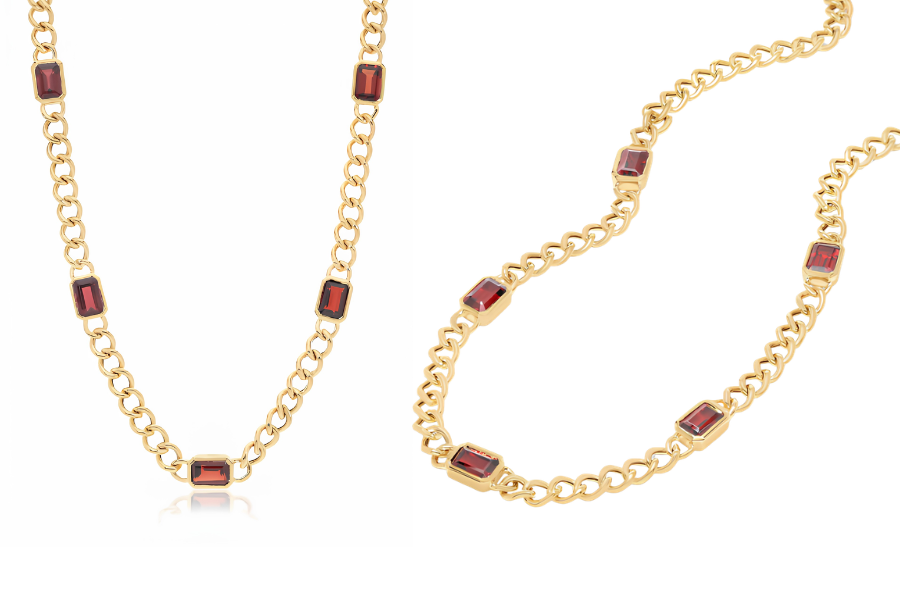
14K Yellow Gold Emerald Cut Garnet Curb Chain Necklace |
|
|
Tap The Image And Discover The Beauty Of 14K Yellow Gold Emerald Cut Garnet Curb Chain Necklace Today! |

|
1.a) Curb Chain Definition and MeaningBack To Table Of Contents |
A curb chain consists of uniform round or oval links joined in a repeating sequence. Jewelers twist and flatten each link. This process aligns the links in one plane and helps the chain lie smoothly against the skin.
In jewelry, the word “curb” names the link pattern. It does not refer to a particular metal, width, or weight. A curb chain may be fine or substantial, solid or hollow. Jewelers make these chains from gold, silver, platinum, stainless steel, and other suitable metals.
The curb pattern belongs to the broader cable-link family. However, its flattened alignment creates a wider and smoother profile than a basic cable chain. Fine curb chains may have elongated links and closely resemble cable chains. Heavier curb designs look denser and more prominent. The Cuban link uses closely packed, rounded links and represents a distinctive variation of the curb pattern.
|
|
1.b) What Does a Curb Chain Look Like?Back To Table Of Contents |
A curb chain looks like a smooth row of identical round or oval links. Each link is twisted and flattened, so its broad face aligns with the links beside it. As a result, the chain forms a low, flexible profile instead of standing upright.
From the front, you can see a regular pattern of angled openings between the links. The individual links remain visible, even though the chain flows like a continuous band. Polished surfaces reflect light in clean flashes, while matte or oxidized finishes create a softer, darker look.
Fine curb chains often appear open and delicate because more space separates the links. By contrast, thick and closely packed curb chains look compact, substantial and bold. Whatever the size, the key visual features remain the repeating links, flattened alignment and smooth drape.
|
|
1.c) What Are Curb Chains Used For?Back To Table Of Contents |
Curb chains are widely used for necklaces and bracelets because their flattened links rest comfortably against the skin. Slim styles can support pendants when the chain, clasp and pendant bail are suitably matched. Wider curb chains, however, often work best as standalone jewelry.
Because the link pattern is flexible and dependable, jewelers also use curb chains in ID bracelets, charm bracelets, anklets and watch chains. Their individual links provide convenient attachment points for identification plates, charms and small tags.
Beyond conventional jewelry, similar curb-style chains appear on keyrings, eyeglass holders, wallet chains and ID-tag holders. These practical uses take advantage of the chain’s recognizable pattern, smooth movement and strength.
|
|
1.d) What Is the Origin of the Curb Chain?Back To Table Of Contents |
The curb chain has no firmly documented inventor or precise date of creation. Interlocking metal chains have existed since ancient times, and craftspeople gradually adapted their construction for decorative and practical uses. The familiar curb pattern emerged by twisting linked rings and flattening them into one smooth plane.
The jewelry name is generally understood to come from equestrian equipment. A horse curb chain is a flat-linked chain fitted beneath the lower jaw as part of a curb bit. Because its twisted links lie flat, it has a clear visual resemblance to the jewelry pattern.
Over time, jewelers refined this flat-lying construction in gold, silver and other metals. They also varied the link size, spacing, profile and finish to create different necklaces and bracelets. However, reliable evidence does not support popular claims that one person invented curb-link jewelry in a particular century.
|
|
1.e) Jewelry Curb Chain vs Horse Curb ChainBack To Table Of Contents |
A jewelry curb chain is designed for necklaces, bracelets and other personal accessories. Jewelers shape and finish its links to create a smooth drape, attractive shine and comfortable fit. Depending on the design, the chain may be delicate and understated or wide and substantial.
A horse curb chain, by contrast, is a functional part of a curb bit. It attaches to the bit and rests in the chin groove beneath the horse’s lower jaw. When the curb rein engages the bit, the chain helps regulate its leverage action. Proper fitting and adjustment are therefore important for the horse’s comfort and safety.
Both chains share a flat-linked appearance, which explains their related names. However, they differ in scale, hardware, finish and purpose. A horse curb chain is not jewelry, and a jewelry curb chain is not suitable for equestrian use.
|
|
2) Curb Chain vs Cuban Chain: What Is the Difference?Go To Table Of Contents |
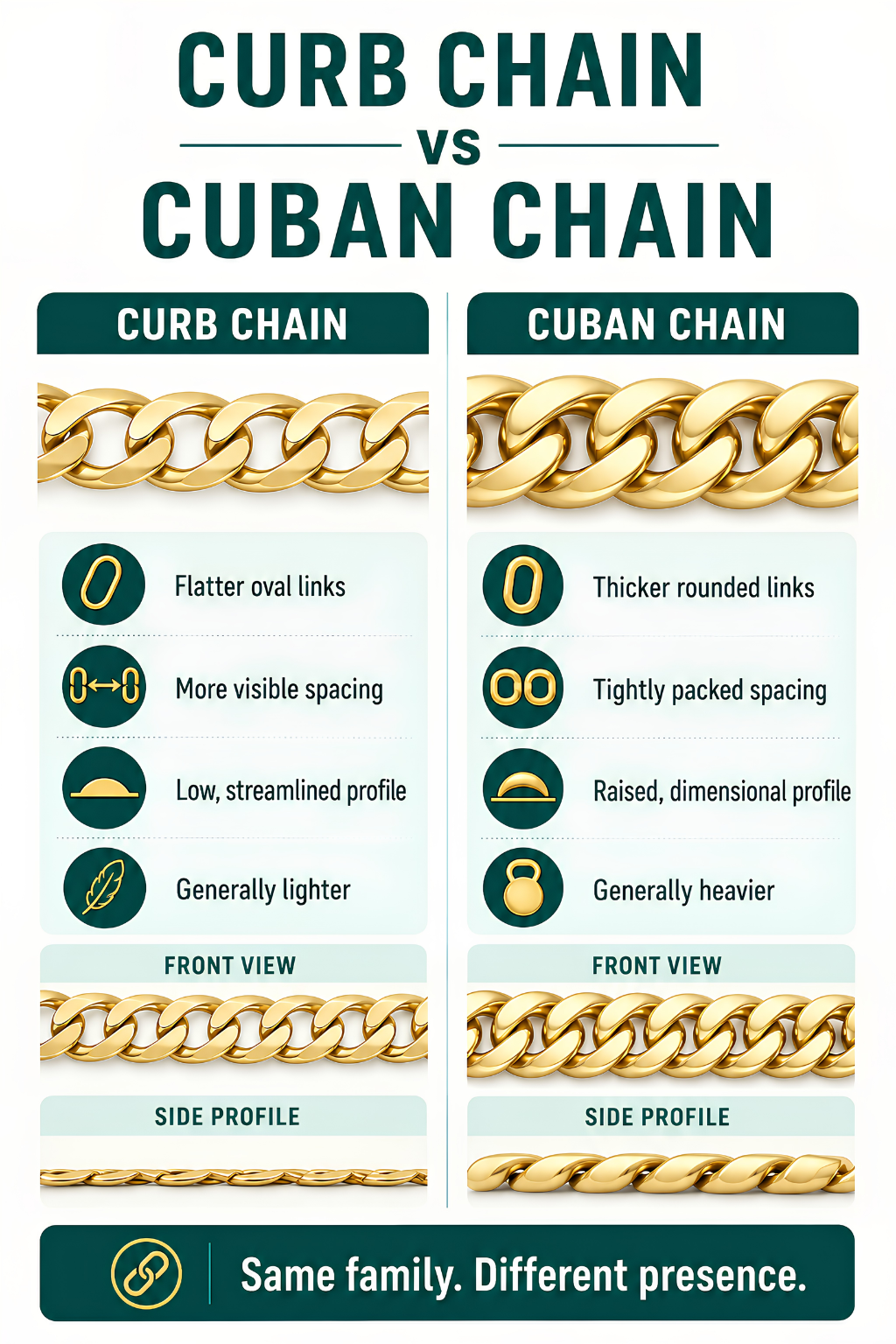
The main difference between a curb chain and a Cuban chain is that a curb chain lies flat and feels lighter on the skin, while a Cuban chain is thicker, heavier, and designed for a more bold, raised appearance.
| Feature | Curb Chain | Cuban Chain |
|---|---|---|
| Link Profile | Flatter, often thinner oval links with a low-profile surface | Thicker, more rounded oval links with a raised, dimensional profile |
| Link Spacing | Often shows more visible spacing between individual links | Links are packed closely together with minimal visible spacing |
| Look When Worn | Smooth, streamlined and relatively understated | Bold, substantial and more three-dimensional |
| Weight & Feel | Generally lighter when width, length, metal and construction are comparable | Generally heavier because its closely packed links often use more metal |
| Flexibility & Comfort | Usually supple and low-profile against the skin | Flexible, but generally feels more substantial because of its thickness and weight |
| Best Use | Everyday wear, layering, compatible pendants and understated standalone styling. | Bold standalone styling and substantial pendants with a compatible bail and adequate chain strength. |
| Cost Tendency | Often lower when metal, purity, length, width and construction are comparable | Often higher because the dense link pattern usually requires more metal and labor |
|
|
2.a) Is a Cuban Chain the Same as a Curb Chain?Back To Table Of Contents |
A Cuban chain is related to a curb chain, but the two names do not usually describe the same finished style. Both designs use interlocking links that are twisted to create a flat-lying chain. However, a Cuban chain develops that basic construction into a thicker and more tightly packed pattern.
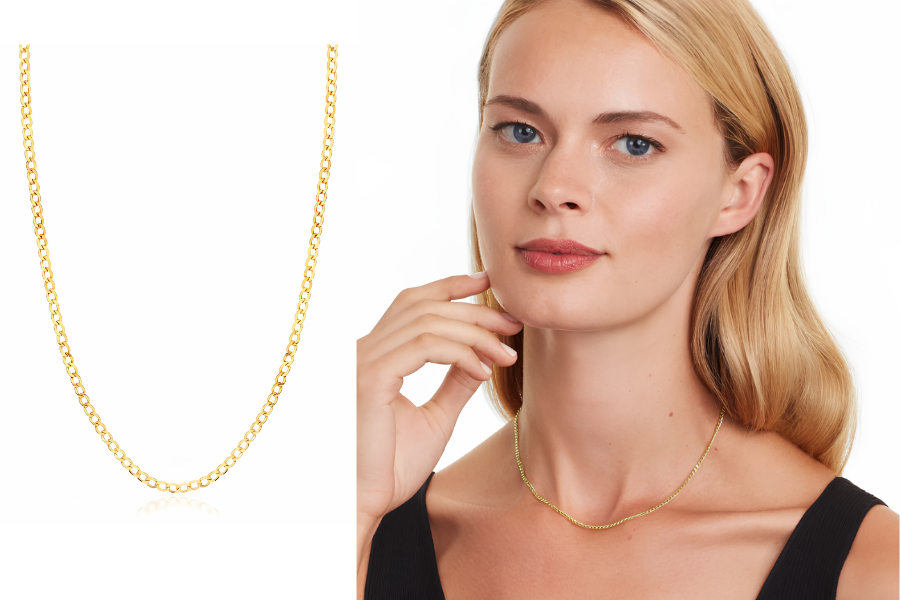
14K Yellow Gold 2.7mm Curb Chain Choker Necklace |
|
|
Click The Image To See Why This 14K Yellow Gold 2.7mm Curb Chain Choker Necklace Stands Out! |
Cuban links generally have rounded surfaces, dense spacing and a raised three-dimensional profile. Standard curb links usually look flatter, lighter and more widely spaced. Therefore, a Cuban chain can be considered a specialized member of the broader curb-link family, but not every curb chain is a Cuban chain.
Some retailers use terms such as “Cuban curb chain” or “Cuban link curb chain,” which can blur the distinction. When comparing products, examine the actual link shape, spacing, width and weight instead of relying on the product name alone.
|
|
2.b) Link Shape, Spacing, and Overall AppearanceBack To Table Of Contents |
A standard curb chain usually has flattened oval links with visible spaces between them. The links form a neat repeating pattern, so you can follow each one around the chain. From the side, the chain appears relatively low and rests close to the skin.
Cuban chains typically use thicker links with rounder edges and much tighter spacing. Each link fits closely against the next, which reduces the visible gaps. As a result, the chain looks dense, continuous and more three-dimensional.
These structural differences create distinct visual effects. A curb chain has a cleaner and more understated appearance, even at a noticeable width. By contrast, a Cuban chain creates a bolder silhouette and often becomes the main feature of an outfit. Polishing, diamond cutting and gemstone settings can change the surface effect, but the underlying link profile remains the clearest distinction.
|
|
2.c) Weight, Comfort, and FlexibilityBack To Table Of Contents |
At the same width and length, a standard curb chain usually feels lighter than a Cuban chain. Its flatter links contain less metal and sit lower against the skin. However, the actual weight also depends on the metal, link thickness and whether the chain is solid or hollow.
A curb chain bends easily through its individual links and follows the shape of the neck or wrist. This flexibility makes slimmer versions comfortable for daily wear and layering. Cuban chains also move through their links, although their dense construction often gives them a firmer and more substantial feel.
Comfort ultimately depends on more than the link style. A well-finished Cuban chain can feel smooth despite its weight, while a poorly finished curb chain may catch hair or irritate the skin. Therefore, check the link edges, clasp balance, chain length and overall weight before choosing either design.
|
|
2.d) Strength and DurabilityBack To Table Of Contents |
Both curb and Cuban chains can be strong enough for regular wear. However, link thickness, metal, soldering and overall workmanship matter more than the style name alone. Solid construction also tends to withstand dents and deformation better than hollow construction.
A Cuban chain often feels stronger because its links are thick and closely packed. That substantial build can handle everyday movement well, but the added weight places more stress on the clasp and end connections. These components must match the size and weight of the chain.
A standard curb chain can also be highly durable, especially when it has solid links of a practical thickness. Nevertheless, very thin links may wear at their contact points, while extremely flat links can bend if pulled or crushed. Regular inspection helps identify thinning links, weak solder joints and loose clasps before they cause a break.
|
|
2.e) Price, Style, and Which Chain to ChooseBack To Table Of Contents |
When metal, length and width are comparable, a Cuban chain usually costs more than a standard curb chain. Its thicker links require more metal and may involve additional shaping and finishing. However, a hollow or plated Cuban chain can cost less than a solid curb chain made from precious metal.
Choose a curb chain if you prefer a flatter, lighter and more versatile design. Slim versions work well with pendants or layered necklaces, while wider styles can make a confident statement on their own. Their balanced appearance also moves easily between casual and formal settings.
Choose a Cuban chain if you want a heavier profile with a bold and luxurious presence. Its dense links often look best as the main piece, particularly at wider sizes. Before deciding, compare the metal, solid or hollow construction, clasp quality, weight and price rather than judging by width alone.
Ultimately, the better chain is the one that suits your comfort, budget and personal style. A well-made curb chain offers everyday versatility, whereas a Cuban chain delivers greater visual impact.
|
|
3) How Is a Curb Chain Made?Go To Table Of Contents |
Making a curb chain begins with round or oval metal links that are formed and joined in a repeating sequence. Jewelers then twist and align the links so the chain lies flat. Depending on the design, they may also solder, shape, cut, polish or texture the links before attaching the clasp.
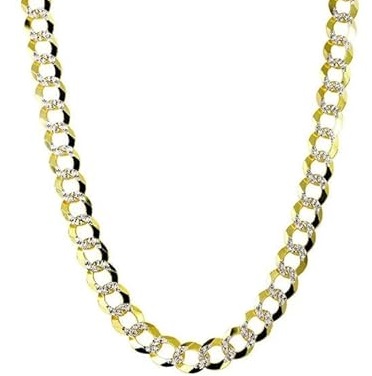
| 14K Solid Yellow Gold Diamond Cut Cuban Link Chain |
|---|
|
| Click on the Image |
|
|
3.a) How Are Curb Chain Links Constructed?Back To Table Of Contents |
A jeweler begins with metal wire or tubing of the required thickness. The material is formed into round or oval loops, which are then cut and passed through one another. Depending on the manufacturing method, the open ends may be soldered before the chain receives its final shape.
At this stage, the linked loops resemble a basic cable chain because they sit in alternating planes. The chain is then twisted until the links settle into the same flat alignment. Rollers, dies or hand tools may also shape and flatten the link surfaces.
Finally, the maker files rough areas, checks the joints and polishes or textures the chain. Some curb chains receive decorative facets through diamond cutting, but this step is optional. After the links move smoothly and lie correctly, the jeweler adds suitable end fittings and a clasp.
|
|
3.b) Single Curb Chain vs Double Curb ChainBack To Table Of Contents |
A single curb chain follows the standard link sequence. Each link connects to the link before it and the link after it, except at the two ends. This simple arrangement creates a clean, flexible chain with a clearly visible repeating pattern.
A double curb chain uses paired or doubled links within its pattern. In some designs, two links sit together before connecting to the next pair. Other versions place additional links within the same space, producing a denser and more layered appearance.
Because it contains more links, a double curb chain usually feels heavier and looks more substantial than a comparable single curb chain. However, the term “double curb” is not applied consistently by every retailer. Therefore, examine the photographs and link arrangement instead of relying on the product name alone. Link thickness, metal and workmanship still determine the chain’s actual strength.
|
|
3.c) Solid Curb Chain vs Hollow Curb ChainBack To Table Of Contents |
A solid curb chain has links made from metal that remains solid through their cross-section. As a result, the chain feels substantial for its size and usually resists dents and deformation well. Solid links can be fine or thick, depending on the intended design.
A hollow curb chain uses links formed from metal tubing with an empty interior. It can provide the appearance of a wider chain while using less metal. Therefore, hollow construction usually feels lighter and costs less than a comparable solid chain made from the same precious metal.
The tradeoff is reduced resistance to crushing, denting and forceful pulling. Hollow links may also be harder to repair because their thin walls can collapse or react poorly to soldering heat. For frequent wear, a solid curb chain is generally the safer choice. A hollow chain may suit occasional wear when a bold appearance and lower weight matter more.
|
|
3.d) Are Curb Chains Strong and Durable?Back To Table Of Contents |
Curb chains can be strong and durable because their interlocking links move freely and spread everyday strain along the chain. Their flat profile also helps them sit securely without constant twisting. However, no chain is unbreakable.
Actual durability depends on the metal, link thickness, construction and quality of the joints. A solid curb chain with well-finished links usually withstands regular wear better than a thin or hollow version. In addition, the clasp and end fittings must be strong enough for the chain’s weight.
Over time, friction can thin the links where they rub against one another. Pulling, crushing or hanging an overly heavy pendant may also cause damage. Fortunately, an experienced jeweler can often remove a worn link and reconnect a solid curb chain. The repair may be discreet, although its success depends on the chain’s condition, metal and construction.
|
|
4) Types and Styles of Curb ChainsGo To Table Of Contents |
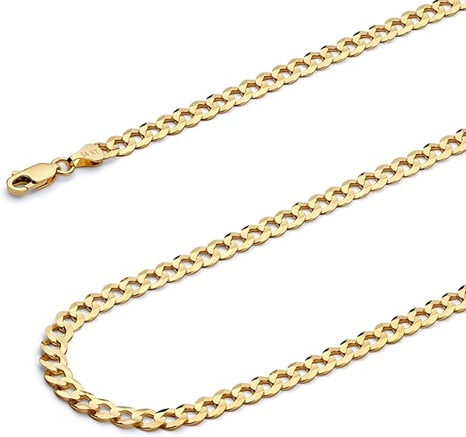
Every curb chain design starts with the same foundation: interlocked, twisted oval links. Jewelers then adjust the link shape, width, profile, construction and finish. These changes create rounded, open, closed, concave, square, flat, diamond-cut and gemstone-set curb chains.
| 14K Hollow Gold Cuban Link Curb Chains |
|---|
|
| Click on the Image |
|
|
4.a) Rounded, Open, and Closed Curb ChainsBack To Table Of Contents |
A rounded curb chain has smooth links with curved surfaces and little or no faceting. Its softened edges create a classic, understated appearance and can feel comfortable against the skin. Rounded links may be solid or hollow, depending on the chain’s construction.
An open curb chain has elongated links with clearly visible spaces between them. This spacing gives the chain a lighter and airier appearance. Open curbs also tend to move freely, making them useful for layering or supporting a suitably matched pendant.
A closed curb chain places its links much closer together. The reduced spacing creates a denser and more continuous line around the neck or wrist. As a result, closed curbs often look heavier and more prominent than open designs of a similar length.
“Rounded” describes the surface profile of the links, while “open” and “closed” describe their spacing. Therefore, these terms can overlap. For example, a curb chain may have rounded links arranged in either an open or closed pattern.
|
|
4.b) Concave, Square, and Flat Curb ChainsBack To Table Of Contents |
A concave curb chain has links with centers that curve inward to form shallow grooves. These recessed areas add depth and create contrasting surfaces for light to strike. Consequently, the chain can look sculpted and reflective without requiring gemstones.
A square curb chain replaces soft curves with straighter edges and more angular faces. Its geometric link profile gives the chain a structured, modern appearance. Depending on the cut, the flat surfaces may also reflect light in sharp flashes.
A flat curb chain has links that are pressed or shaped into a low, broad profile. From above, the chain looks wider than a rounded curb chain containing a similar amount of metal. It also rests close to the skin and usually retains the flexible movement associated with curb links.
Flat construction can create a bold appearance without the weight of a thick, rounded chain. However, very thin flat links may bend or distort under force. Link thickness, metal and workmanship therefore remain important when comparing durability.
|
|
4.c) Diamond-Cut Curb ChainsBack To Table Of Contents |
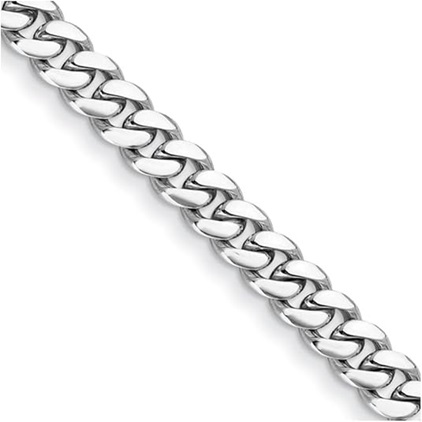
A diamond-cut curb chain does not necessarily contain diamonds. Instead, the name refers to a finishing technique. A jeweler uses a diamond-tipped tool to cut small, precise facets into the metal surface.
| Platinum Polished 10.5 mm Solid Curb Chain Necklace for Women |
|---|
|
| Click on the Image |
These facets catch light from different angles and give the chain a brighter, more animated sparkle. Depending on the design, the cuts may appear along the link edges, across the upper surface or in a repeating pattern. Therefore, two curb chains with similar links can look noticeably different after diamond cutting.
The technique works on gold, silver and other suitable jewelry metals. It can also be applied to solid or hollow links. However, sharply cut surfaces may feel less smooth than fully rounded links, so check the finish carefully if you have sensitive skin or plan to wear the chain every day.
|
|
4.d) Pavé and Gemstone-Set Curb ChainsBack To Table Of Contents |
A pavé curb chain has many small stones set closely across the surfaces of its links. Jewelers cut tiny seats into the metal and secure each stone with small beads or areas of raised metal. The close spacing reduces the amount of visible metal and creates a continuous field of sparkle.
Diamonds are a traditional choice for precious-metal curb chains. However, designs may also feature colored gemstones, lab-created stones or simulants such as cubic zirconia. The stones may cover the upper faces of the links, follow their edges or form a two-tone pattern.
Not every gemstone-set curb chain uses pavé. Some designs rely on prongs, channels or other settings, depending on the stone size and link construction. In addition, the links need enough metal to support the settings securely.
Before choosing one, inspect the stones for even spacing and secure placement. Also check whether the links still move freely without rubbing against nearby settings. Pavé curb chains require gentler cleaning and more frequent inspection because a loose stone can be difficult to notice.
|
|
5) Curb Chain vs Other Chain StylesGo To Table Of Contents |
Curb chains can resemble several other link-chain styles at first glance. However, differences in link shape, spacing and arrangement give each chain a distinct texture and drape. Comparing curb chains with Figaro, rope, cable, Belcher and Rolo chains can help you identify each design and choose the right look.
|
|
5.a) Curb Chain vs Figaro ChainBack To Table Of Contents |
A curb chain uses links of the same general size throughout its length. This uniform sequence creates a smooth and continuous rhythm. By contrast, a Figaro chain interrupts the pattern with one elongated link after a group of shorter links.
The exact Figaro sequence can vary, although three short links followed by one long link is common. Its links are usually twisted and flattened like curb links. Therefore, the Figaro chain is generally regarded as a patterned variation of the broader curb-link design.
Choose a curb chain if you prefer a clean, even appearance that works well alone, layered or with a suitable pendant. Choose a Figaro chain if you want more visual movement without a heavily textured surface. Neither style is automatically stronger, since durability depends on the metal, link thickness, construction and clasp.
|
|
5.b) Curb Chain vs Rope ChainBack To Table Of Contents |
A curb chain has a visible sequence of flattened round or oval links. These links create a relatively smooth surface that rests close to the neck or wrist. By contrast, a rope chain has a rounded and intricately woven profile.
A rope chain is made from many small metal links arranged in a spiral that resembles twisted rope. Its textured surface catches light from several angles, giving the chain a lively shine as it moves. A curb chain reflects light differently, with broader, flatter links that create cleaner flashes and a smoother outline.
Both styles can suit pendants when the chain, clasp and pendant bail are properly matched. A curb chain offers a flatter and more understated look, while a rope chain adds texture and shimmer. Repairing a curb chain is often more straightforward because its individual links are easier to access than a rope chain’s closely woven structure.
|
|
5.c) Curb Chain vs Cable ChainBack To Table Of Contents |
Curb and cable chains both use interlocking round or oval links. However, a traditional cable chain keeps its links rounded and arranged in alternating planes. This construction gives it the familiar appearance of a simple utility chain.
A curb chain begins with a similar link pattern, but its links are twisted and flattened into the same plane. As a result, the chain lies closer to the skin and creates a broader, smoother surface. A fine curb chain with elongated links may still look similar to a cable chain at first glance.
Cable chains offer a simple and open appearance that works well with many pendants. Curb chains provide a flatter profile and can look more substantial at the same general width. Neither design is automatically stronger, since durability depends on the metal, link thickness, joints and overall workmanship.
|
|
5.d) Curb Chain vs Belcher or Rolo ChainBack To Table Of Contents |
Belcher and Rolo chains are closely related designs made from uniform, rounded links. Many jewelers use the two names interchangeably. However, some reserve “Rolo” for fully circular, symmetrical links and “Belcher” for broader or slightly oval links. Since naming conventions vary, the chain’s actual construction matters more than its label.
A curb chain uses oval links that are twisted and flattened into the same plane. Belcher or Rolo links usually retain their rounded form and alternate in direction. As a result, a curb chain creates a flatter, smoother line. A Belcher or Rolo chain has a more open pattern and a distinctly rounded rhythm.
Their open links make Belcher and Rolo chains particularly useful for attaching charms. Finer versions can also carry pendants when the bail, clasp and chain are properly matched. A curb chain, meanwhile, offers a sleeker profile and often creates a broader line against the skin. Therefore, compare the link shape, spacing, gauge and pendant compatibility before choosing between them.
| Other Chain Style | How It Differs from a Curb Chain | Typical Appearance & Use |
|---|---|---|
| Figaro Chain | Uses a repeating sequence of several short links followed by one elongated link. A curb chain normally uses uniformly sized links. | Rhythmic and decorative; commonly worn alone or with a compatible pendant. |
| Rope Chain | Uses many small links arranged in a twisting spiral. A curb chain displays distinct flattened oval links in a smoother sequence. | Rounded, textured and highly reflective; suited to standalone wear, layering or compatible pendants. |
| Cable Chain | Retains rounded oval links in alternating planes. A curb chain twists and flattens its links so they form a lower, flatter profile. | Simple, open and understated; widely used for pendants, charms and everyday wear. |
| Belcher or Rolo Chain | Commonly uses uniform circular or near-circular links with a rounded, open profile. Curb links are usually flatter and more elongated. | Rounded and evenly patterned; suitable for charms, pendants or classic standalone styling. |
|
|
6) Curb Chain Metals and FinishesGo To Table Of Contents |
Curb chains are available in gold, sterling silver, platinum, stainless steel and several other jewelry metals. The chosen metal affects the chain’s color, weight, durability, price and maintenance needs.
Gold offers traditional warmth and lasting value, while sterling silver provides a bright appearance at a more accessible price. Stainless steel suits everyday wear because it is strong and relatively easy to maintain. Platinum, meanwhile, offers a naturally white color, substantial weight and a distinctly premium feel.
The finish can also change a curb chain’s appearance without altering its basic link pattern. A polished finish creates a smooth shine, whereas a brushed or matte surface looks softer and more understated. Diamond cutting adds reflective facets, while plating or coating introduces a different color. However, plated and coated surfaces may gradually wear, so their quality and thickness also matter.
|
|
6.a) Gold Curb ChainsBack To Table Of Contents |
Gold curb chains combine the pattern’s smooth, flat profile with the color and intrinsic value of gold. Their broad link surfaces reflect light clearly, which gives even a simple chain a polished and refined appearance.
These chains come in yellow, white and rose gold. Yellow gold has a traditional warm color, while white gold creates a cooler, more contemporary look. Many white gold chains also receive rhodium plating for added brightness. Rose gold contains copper-rich alloys that give it a pink or reddish tone.
Gold purity is measured in karats. A 10K chain contains 41.7% gold, a 14K chain contains 58.3%, and an 18K chain contains 75%. Lower-karat gold generally costs less and may better withstand everyday wear. In contrast, higher-karat gold offers richer color and greater gold content, although it can be softer. However, the precise hardness also depends on the metals used in the alloy.
Construction matters as well. A solid gold curb chain feels substantial and usually withstands wear better, but it also costs more. A hollow chain creates a larger look with less gold and less weight. However, its links are more vulnerable to denting or crushing. Gold-plated chains are more affordable, although their thin surface layer can gradually wear away.
|
|
6.b) 14K vs 18K Gold Curb ChainsBack To Table Of Contents |
Both 14K and 18K gold work well for curb chains, but they balance purity and practicality differently. A 14K chain contains 58.3% pure gold, while an 18K chain contains 75%. The remaining content consists of alloy metals that influence the chain’s color, hardness and strength.
Because 14K gold contains more alloy metal, it generally withstands scratches and deformation better than 18K gold. It also costs less, making it a practical choice for thicker chains and frequent wear. Nevertheless, link thickness, construction and the particular alloy also affect durability.
An 18K yellow gold curb chain usually has a richer and deeper golden color. Its greater gold content also adds intrinsic value. However, it normally costs more and may require more careful handling. The color difference is less noticeable in rhodium-plated white gold, while rose gold shades vary according to the alloy.
Choose 14K gold if you want a durable curb chain for regular wear at a more moderate price. Alternatively, choose 18K gold if richer color and higher gold content matter more to you. In either case, a well-made solid chain will usually outlast a lightweight or hollow chain of the same karat.
|
|
6.c) Sterling Silver and Oxidized Silver Curb ChainsBack To Table Of Contents |
A sterling silver curb chain offers a bright, cool-toned appearance at a more accessible price than gold or platinum. Sterling silver contains 92.5% pure silver and 7.5% alloy metals, commonly including copper. These added metals strengthen the silver, while the curb links provide broad surfaces that reflect light clearly.
Sterling silver can tarnish as it reacts with substances in the air and its surroundings. However, tarnish does not mean the chain is fake or poorly made. Regular wiping, dry storage and occasional cleaning with a suitable silver product will help preserve its shine.
Oxidized silver undergoes a deliberate treatment that darkens its surface to charcoal grey or black. The darker areas emphasize the spaces between the curb links and give the chain a rugged or vintage character. Meanwhile, raised surfaces may remain brighter, creating contrast across the link pattern. This controlled finish differs from the uneven tarnish that develops naturally.
An oxidized finish can gradually change wherever the chain rubs against the skin, clothing or other jewelry. Therefore, harsh silver dips and abrasive polishing should be avoided because they may remove the intended dark layer. Gentle cleaning with a soft cloth is usually safer. If the finish becomes uneven, a jeweler can restore the oxidation.
|
|
6.d) White Gold and Platinum Curb ChainsBack To Table Of Contents |
White gold and platinum curb chains both offer a cool, silvery-white appearance, but the metals differ considerably. White gold combines pure gold with white-colored alloy metals. In addition, many white gold chains receive rhodium plating to create a brighter and more uniform surface.
Platinum is naturally white and does not require rhodium plating to hide a yellow undertone. Jewelry-grade platinum usually contains 90% or 95% pure platinum. It is also much denser than gold. Therefore, a platinum curb chain generally feels heavier than a white gold chain of similar dimensions.
Depending on its alloy, white gold may provide a harder surface and a lighter feel. It also usually costs less than platinum. However, rhodium plating can gradually wear away from areas exposed to friction. The chain may then need replating to restore its bright white finish.
Platinum can also develop fine scratches, although everyday wear tends to create a soft patina rather than remove its natural color. Some people appreciate this muted finish, while others prefer occasional professional polishing. If metal sensitivity is a concern, check whether a white gold chain contains nickel. Platinum alloys are often well tolerated, but the complete alloy composition should still be confirmed.
Choose white gold for a lighter chain with a bright, polished appearance and a more moderate price. Alternatively, choose platinum when you prefer natural whiteness, substantial weight and high precious-metal content.
|
|
6.e) Stainless Steel Curb Chains and Sensitive SkinBack To Table Of Contents |
Stainless steel curb chains offer a silvery appearance, dependable strength and a relatively affordable price. The metal resists corrosion and tarnishing, so it requires less maintenance than sterling silver. Its durability also makes it practical for thicker curb chains worn regularly.
Many jewelry manufacturers use 316L stainless steel, which has a protective chromium-rich surface layer. This layer helps limit corrosion and reduces the release of metals from the alloy. As a result, many people can wear a well-made 316L stainless steel chain comfortably.
However, stainless steel is not automatically nickel-free or suitable for every sensitive wearer. Many stainless steel alloys contain nickel, and someone with a confirmed nickel allergy may still react. Moreover, the term “stainless steel” covers several grades, so the alloy and manufacturing quality both matter.
If you have sensitive skin, look for a clearly identified grade from a reputable seller. Claims such as “nickel-free” or “hypoallergenic” should have reliable product information behind them. A decorative coating may provide a temporary barrier, but friction can eventually wear it away. If irritation develops, stop wearing the chain and seek advice from a dermatologist.
|
|
7) How to Choose a Curb ChainGo To Table Of Contents |
Choosing the right curb chain begins with deciding how you intend to wear it. A chain worn alone may need enough width to create a clear presence. In contrast, a chain for a pendant should suit the pendant’s size, weight and bail opening.
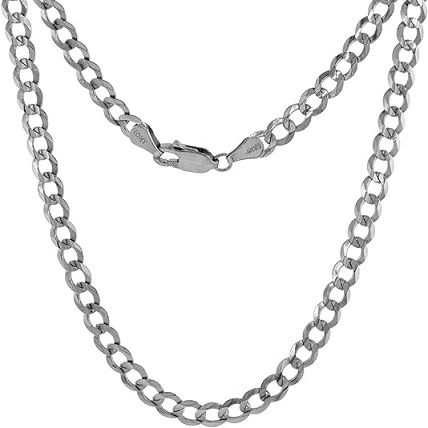
10K White Gold 5mm Curb Chain Necklaces and Bracelets for Men and Women Concaved Beveled Edges
Click On The Image
Length determines where the chain rests, while width controls how bold or subtle it appears. Metal and construction also affect its weight, durability, price and maintenance. For example, a solid chain usually offers greater strength, whereas a hollow chain provides a larger look with less weight.
Comfort matters just as much as appearance. The links should lie smoothly, move freely and avoid rough edges that could catch on clothing. In addition, the clasp should feel secure and remain proportionate to the chain.
Product photographs can make a curb chain appear larger or smaller than it really is. Therefore, check the length, width in millimetres, weight in grams, metal purity and construction before buying. A clear return policy is also valuable, especially when purchasing a chain online.
|
|
7.a) How to Choose the Right Curb Chain WidthBack To Table Of Contents |
A curb chain’s width is measured across the broadest part of its links and stated in millimetres. Even a small increase can noticeably change its appearance. This is because flattened curb links create a wide visible surface.
As a general guide, curb chains between 1 mm and 3 mm create a fine and understated look. Widths from about 3 mm to 5 mm offer a more noticeable yet versatile profile. Chains measuring 5 mm to 8 mm look bolder and often work well on their own. Meanwhile, widths above 8 mm usually create a strong statement.
If you plan to add a pendant, choose a width that supports it without overpowering it. The pendant bail must also fit over both the chain and its clasp. Moreover, a heavier pendant requires a chain with enough strength to carry it safely.
Your build, neckline and other jewelry will influence how the width appears when worn. A wider chain may suit an open neckline, while a slimmer chain layers more easily. However, width alone does not reveal the chain’s weight or strength. A hollow chain can look broad while remaining surprisingly light.
Before buying online, compare the stated width with a ruler or a piece of jewelry you already own. Also check the chain’s weight and whether its links are solid or hollow. These details provide a much clearer impression than photographs alone.
|
|
7.b) How to Choose the Right Curb Chain LengthBack To Table Of Contents |
The right curb chain length determines where the chain rests and how it works with your clothing or pendant. However, the same length can fit two people differently. Neck size, body proportions and chain width all affect its final position.
As a general guide, a 16-inch chain sits close to the neck on many adults. An 18-inch chain usually reaches the collarbone, while a 20-inch or 22-inch chain falls below it. Chains measuring 24 inches or longer extend farther down the chest and create a more relaxed or dramatic look.
Shorter lengths keep the curb pattern close to the neckline and work well for layering. Meanwhile, medium lengths often provide enough space for a pendant or an open shirt collar. Longer chains offer greater movement and make a stronger vertical statement. A thick curb chain also takes up more room around the neck. Therefore, it may sit higher than a finer chain of the same length.
Before buying, use a soft measuring tape or piece of string to test the proposed length. Position it where you want the chain to rest, and remember to include any pendant drop. You can also measure a comfortable necklace from end to end, including its clasp.
For a curb chain bracelet, measure the wrist where the bracelet will sit. Add about half an inch for a close fit or up to one inch for a looser fit. Wider curb links may require slightly more room to move comfortably. Ultimately, the chain should move without pinching or sliding excessively.
|
|
7.c) How to Choose a Curb Chain ClaspBack To Table Of Contents |
A curb chain clasp should feel secure, operate smoothly and suit the weight of the chain. A clasp that is too small may be difficult to handle or inadequate for a heavy chain. However, an oversized clasp can disrupt the appearance of a fine curb necklace.
Lobster clasps are common because their spring-loaded levers provide a secure and practical closure. They suit many light and medium-weight curb chains. Spring-ring clasps create a smaller and more discreet finish, although some people find them harder to operate.
Wide or heavy curb chains often use box clasps, sometimes supported by one or two safety latches. These clasps blend neatly into broad links and provide additional security. Meanwhile, curb bracelets may use box, lobster or fold-over clasps, depending on their width and construction.
Before buying, check that the clasp closes completely and does not open when lightly pulled. Also inspect the end fittings and connecting rings for visible gaps or weak joints. The clasp should sit comfortably without twisting the chain or pressing sharply against the skin.
If you intend to add a pendant, its bail must pass over the widest part of the clasp. Therefore, compare both measurements before purchasing. People with limited hand movement may prefer a larger lobster or fold-over clasp that offers a better grip.
|
|
7.d) Wearing a Curb Chain Alone, with a Pendant, or LayeredBack To Table Of Contents |
A curb chain can create a complete look on its own, carry a pendant or form part of a layered arrangement. The best width and length will depend on which of these roles the chain needs to perform.
When worn alone, a medium or wide curb chain allows the link pattern to become the main feature. A finer chain creates a quieter and more understated effect. Meanwhile, polished or diamond-cut links add extra brightness without requiring a pendant.
For pendant wear, a fine or medium-width curb chain usually provides a balanced foundation. The pendant should not overwhelm the chain or place excessive strain on its links. In addition, its bail must pass over the clasp and move freely along the chain. A jeweler can confirm whether a valuable or heavy pendant has enough support.
When layering, use different lengths so that each chain occupies its own space. A separation of about two inches provides a useful starting point, although individual fit can alter the spacing. Combining a flat curb chain with a rope, box or cable chain also creates visual contrast.
Place larger pendants and heavier chains lower, while keeping finer chains closer to the neck. This arrangement often looks balanced and can reduce tangling. However, chains that rub together may scratch polished surfaces or wear away plating. Therefore, separate delicate or coated pieces when necessary.
|
|
7.e) How to Check Curb Chain QualityBack To Table Of Contents |
Begin by laying the curb chain on a flat surface. Its links should form an even line without persistent twists, kinks or irregular gaps. The links should also appear consistent in shape and thickness. However, slight variations may be normal in a genuinely handmade chain.
Next, run the chain gently between your fingers. The links should move freely without catching, binding or producing sharp edges. Examine the link seams as closely as possible. Closed or soldered seams generally provide better security than visible openings that could widen under strain.
The clasp should open smoothly, close completely and remain shut when gently pulled. Spring-loaded clasps should return firmly to their closed position. In addition, inspect the end fittings and connecting rings because these areas often experience considerable stress.
Check whether the color and finish remain even across the links, clasp and end pieces. Plating should not show peeling, bubbling or exposed base metal on a new chain. The product description should also identify the metal, purity, width, length, weight and solid or hollow construction.
Hallmarks such as 14K, 18K, 925 or Pt950 can support the metal description. However, marking requirements vary, and a stamp alone does not prove quality or authenticity. When buying online, look for detailed photographs, clear specifications and a reasonable return policy. For an expensive chain, an independent jeweler can verify the metal and examine its construction.
|
|
8) Curb Chain Necklaces and BraceletsGo To Table Of Contents |
The curb pattern works well for both necklaces and bracelets because its flattened links create a smooth, flexible line. However, each form places different demands on the chain. Length, width, weight and clasp design must suit where and how the jewelry will be worn.
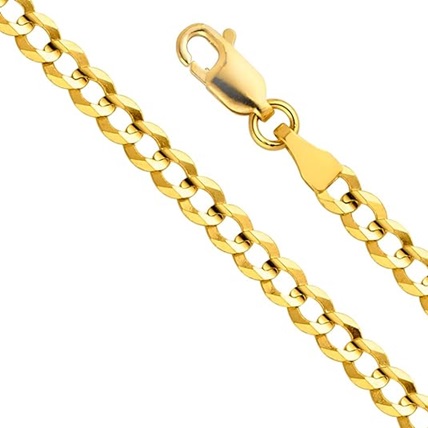
| 14k REAL Yellow Gold Solid Men’s 3.5mm Cuban Curb Chain Necklace with Lobster Claw Clasp |
|---|
|
| Click on the Image |
A curb chain necklace can be worn alone, paired with a pendant or combined with other chains. Fine versions offer a subtle look, while wider links create a stronger presence across the neckline. Pendant compatibility also depends on the chain’s strength and the size of its clasp.
A curb chain bracelet experiences more contact with desks, clothing and other surfaces. Therefore, its links and clasp need to withstand frequent movement and friction. The bracelet should also have enough room to move without sliding excessively or pressing into the wrist.
Both forms are available in precious metals, sterling silver, stainless steel and plated finishes. Ultimately, the best choice balances appearance with comfort and practical use. A well-proportioned curb chain should lie smoothly, feel secure and complement the wearer’s preferred style.
|
|
8.a) Curb Chain Necklace StylesBack To Table Of Contents |
Curb chain necklaces range from fine and understated designs to wide statement pieces. Although they share the same flattened link pattern, changes in width, length, metal and finish can produce very different looks.
A fine curb necklace creates a subtle line and works well with small pendants or layered arrangements. Medium-width chains make the curb pattern more visible while remaining suitable for everyday wear. In contrast, a wide curb chain usually works best as a standalone piece because its links already command attention.
The surface finish also shapes the necklace’s character. Polished links produce smooth flashes of light, while diamond-cut links create a brighter and more textured sparkle. Matte or brushed finishes look quieter and more contemporary. Meanwhile, oxidized silver adds dark contrast, and gemstone-set links create a more decorative or luxurious effect.
Length changes the overall styling as well. A shorter curb necklace frames the neckline, whereas a medium length works easily with open collars and pendants. Longer chains create a relaxed vertical line and can add depth to layered combinations.
Ultimately, the most versatile curb necklace is one that suits your wardrobe and feels comfortable at its chosen width. A simple design can move between casual and formal settings, while a heavier or embellished chain creates a more defined statement.
|
|
8.b) Curb Chain Bracelet StylesBack To Table Of Contents |
Curb chain bracelets range from slim, minimalist designs to wide pieces with a bold presence. Their flattened links sit relatively close to the wrist and create a smooth, continuous pattern. As the width increases, the shape and finish of each link become more noticeable.
A plain curb bracelet allows the link pattern to remain the main feature. Fine and medium widths suit everyday wear, while broader links create a stronger standalone look. Polished, brushed, diamond-cut or oxidized finishes can further change the bracelet’s character.
Curb links also appear in ID bracelets, where they connect to a flat central plate. The plate may remain plain or carry an engraving. In addition, curb chains are often used for charm bracelets because their links provide regular attachment points. However, each charm should be fitted securely to avoid weakening or distorting the link.
Gemstone-set and pavé curb bracelets add brightness across the link surfaces or clasp. These styles require more careful handling because repeated contact can loosen stones or wear their settings. Meanwhile, slimmer curb bracelets can be stacked with watches, bangles or other chains for a layered effect.
Fit and clasp design remain especially important because bracelets experience frequent movement and impact. A wide bracelet needs enough room to flex without pressing into the wrist. It also benefits from a substantial clasp, such as a lobster, box or fold-over design. Ultimately, the bracelet should feel secure without restricting movement.
|
|
8.c) Styling Curb Chains for Men and WomenBack To Table Of Contents |
Curb chains are not inherently masculine or feminine. The same flattened link pattern can look understated, classic or bold depending on its proportions. Width, length, metal and styling make a greater difference than the wearer’s gender.
Retailers often present longer, medium-to-wide curb chains as men’s jewelry. Meanwhile, shorter and finer versions are frequently marketed to women. However, these are styling conventions rather than structural differences between the chains.
A medium or wide curb chain worn alone creates a clean and confident look with a T-shirt, open collar or jacket. In contrast, a fine curb chain can hold a pendant or add a subtle line beneath a shirt. Gold creates warmth, while silver-toned metals offer a cooler and more restrained appearance.
Shorter curb chains frame the neckline and combine easily with pendants or other necklaces. Longer lengths create a relaxed vertical line over clothing. Similarly, a slim curb bracelet can accompany a watch, whereas a wider bracelet works well as a standalone piece.
When layering, vary the lengths and link textures so that each chain remains visible. Matching metals creates a coordinated effect, while mixed metals can look intentional when their colors repeat elsewhere. Ultimately, personal taste, comfort and proportion should guide the choice.
|
|
9) How to Care for a Curb ChainGo To Table Of Contents |
Curb chains are generally durable, but dirt and residue can collect between their closely connected links. Regular care helps preserve their movement, shine and strength. However, the safest method depends on the chain’s metal, finish and gemstone settings.
Yellow 14k Gold 9.5mm Curb Link Chain Necklace for Men and Women Concaved Center Beveled Edges
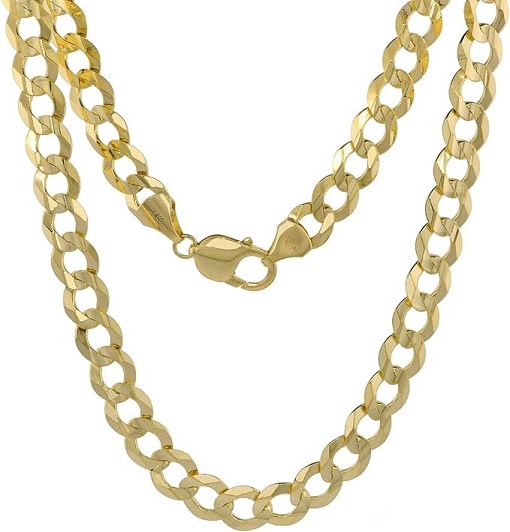
Click On The Image
After wearing the chain, wipe it gently with a clean, soft cloth. This removes skin oils, perspiration and surface residue before they build up. In addition, allow perfume, lotion and other personal-care products to dry before putting on the chain.
Remove the chain before swimming, exercising or using household cleaning products. Chlorine, salt, perspiration and harsh chemicals can affect certain metals, finishes and soldered joints. Plated, oxidized and gemstone-set chains may require particularly careful handling.
Store the curb chain fastened and laid flat or arranged in a loose curve. Keep it separate from harder jewelry that could scratch its broad link surfaces. A dry, lined compartment or individual pouch also helps prevent tangling and tarnishing.
Finally, inspect the clasp, connecting rings and link seams from time to time. Prompt repair can prevent a weakened joint from opening and causing the chain to be lost. A jeweler should handle deep cleaning or repairs when the chain is valuable, delicate or heavily embellished.
|
|
9.a) How to Clean a Curb ChainBack To Table Of Contents |
Before cleaning a curb chain, inspect its links, clasp and gemstone settings. Do not scrub a chain with loose stones, open links or a damaged clasp. Instead, take it to a jeweler before the problem becomes worse.
For a plain, uncoated metal chain, add a few drops of mild dish soap to a bowl of lukewarm water. Let the chain sit briefly so that oils and dirt begin to loosen. Then, use a very soft brush to clean gently between the links. Support the chain while brushing instead of pulling it tight.
Rinse the chain in a separate bowl of clean water rather than directly over an open drain. Afterwards, pat it dry with a soft, lint-free cloth. Lay it flat until the spaces between the links are completely dry.
Sterling silver tarnish may require a polishing cloth or a cleaner made specifically for silver. However, chemical dips can affect gemstones, plating and intentionally oxidized areas. Gold-plated, rhodium-plated and oxidized chains should usually receive gentler cleaning with a soft damp cloth.
Avoid toothpaste, baking soda, bleach, chlorine and rough brushes. These products can scratch metal or remove surface finishes. Likewise, do not use an ultrasonic or steam cleaner unless a jeweler confirms that every metal, stone and treatment can withstand it.
When a chain has heavy buildup, delicate stones or an unknown finish, professional cleaning is the safer choice. A jeweler can also inspect the clasp and link joints while cleaning the piece.
|
|
9.b) How to Prevent Tarnish and Surface DamageBack To Table Of Contents |
Tarnish appears most readily on sterling silver and metals containing copper. Moisture, perspiration, sulfur compounds and cosmetic residue can speed up the process. Gold alloys may also become dull, while plated chains usually show wear through friction rather than ordinary tarnish.
Put on your curb chain after perfume, lotion, sunscreen and hair products have dried. Then, remove it before swimming, bathing, exercising or handling household cleaners. Chlorine and other chemicals can discolor metals, attack soldered areas and shorten the life of surface coatings.
After wearing the chain, wipe it with a clean, soft cloth. Make sure it is completely dry before storage, particularly between the links and around the clasp. For sterling silver, a sealed storage bag with an anti-tarnish strip can help slow discoloration.
Store the chain separately from harder jewelry, gemstones and watch cases. Its broad, polished links can develop scratches when they rub against other pieces. Laying the chain flat or in a loose curve also prevents kinks and unnecessary pressure on the links.
Plated and intentionally oxidized chains require extra care because polishing can remove their surface treatment. Therefore, avoid abrasive cloths, metal polish and aggressive scrubbing unless the manufacturer recommends them. If plating becomes thin or an oxidized finish turns uneven, a jeweler can restore the surface professionally.
|
|
9.c) Storage, Inspection, and Professional RepairBack To Table Of Contents |
Store a curb chain only after it is clean and completely dry. Fasten the clasp, and then place the chain flat or in a loose curve. A soft pouch or fabric-lined compartment will protect its broad link surfaces from scratches.
Keep each chain separate from harder jewelry, gemstones and watches. Fine curb chains can tangle, while heavy pieces may press against softer metals or plated finishes. Sterling silver also benefits from dry, enclosed storage with an anti-tarnish strip.
Inspect the chain periodically under bright light. Look for open seams, thinning links, permanent twists, sharp edges or unusual gaps. In addition, test the clasp several times and check whether its connecting rings remain fully closed.
Gemstone-set chains need further attention. Check for stones that move, rattle or sit at a different angle from the others. Also examine the settings for bent metal or missing prongs. Stop wearing the chain if anything appears loose.
Do not use household glue or ordinary pliers to repair a valuable chain. These methods can stain the metal, damage its finish or make professional repair more difficult. A jeweler can solder or laser-weld links, replace worn clasps and restore plating or oxidation when appropriate.
A valuable chain worn frequently should receive periodic professional inspection. Annual checking provides a reasonable starting point, although heavy use may justify more frequent visits. Furthermore, have the chain examined promptly after a hard pull, snag or impact.
|
|
10) Frequently Asked Questions About Curb ChainsGo To Table Of Contents |
Curb chains come in many widths, metals, finishes and constructions, so several practical questions arise when comparing them. The following answers clarify common points about their appearance, durability, sizing, styling and care. They also help distinguish curb chains from similar jewelry chains and equestrian curb chains.
|
|
10.a) Are Curb Chains Classy?Back To Table Of Contents |
Yes, a curb chain can look classy. Its flattened, evenly arranged links create a clean and orderly line against the skin. Fine and medium-width chains in polished gold, silver or platinum can suit both casual clothing and formal outfits.
A wider, diamond-cut or gemstone-set curb chain creates a bolder impression. However, it can still look refined when its proportions suit the wearer and the rest of the outfit. Good construction, an even finish and a secure fit also improve its appearance.
Ultimately, “classy” depends more on quality and styling than on the curb pattern itself. A well-maintained chain worn with restraint usually looks more polished than one with damaged plating, poor proportions or excessive layering.
|
|
10.b) Can You Wear a Curb Chain Every Day?Back To Table Of Contents |
Yes, a well-made curb chain can be worn every day. Its flattened links lie smoothly against the skin and usually move comfortably with the wearer. However, daily durability depends on the chain’s metal, thickness, construction and clasp.
A solid curb chain generally handles frequent wear better than a lightweight hollow chain. Likewise, an uncoated metal surface usually requires less caution than thin plating or a deliberately oxidized finish. The chain should also fit comfortably without pulling, twisting or catching on clothing.
Everyday wear does not necessarily mean wearing the chain continuously. Remove it before sleeping, swimming, exercising, showering or performing physical work. These activities can expose the chain to snags, impact, perspiration and chemicals.
After wearing it, wipe the chain with a soft cloth and store it properly. In addition, inspect the clasp and link seams regularly. This simple routine can prevent gradual wear from turning into a broken chain or lost piece.
|
|
10.c) Can You Put a Pendant on a Curb Chain?Back To Table Of Contents |
Yes, you can put a pendant on a curb chain. Fine and medium-width curb chains often work particularly well because their flat links create a smooth foundation. However, the pendant and chain must be properly matched.
The pendant’s size and weight should remain proportionate to the chain. A small pendant may look lost on a wide curb chain. Conversely, a heavy pendant can strain a chain that is too fine, hollow or lightly constructed. A heavier pendant generally needs a solid chain with secure link joints and a dependable clasp.
The pendant bail must pass over the widest part of the clasp and end fittings. It should also move freely along the chain without scraping, sticking or forcing the links to twist. Therefore, compare the bail’s internal opening with the clasp measurements before buying.
Very wide curb chains are often designed to be worn alone. Nevertheless, they can carry a suitable pendant when the bail and proportions are large enough. If the match is uncertain, a jeweler can assess the chain’s strength or fit a more appropriate bail.
|
|
10.d) Do Curb Chains Twist or Kink?Back To Table Of Contents |
A well-made curb chain should normally lie flat, although it can occasionally twist or kink. Each link receives a deliberate twist during construction so that the finished chain forms a level surface. This built-in link shape should not be confused with an unwanted twist in the entire chain.
Fine and lightweight curb chains are generally more likely to become tangled or temporarily flipped. Improper storage, layered wear and a poorly fitted pendant can also encourage twisting. In addition, a rotating clasp may gradually turn the chain while it is being worn.
Lay a twisted chain on a flat surface and open its clasp. Then, work through the links gently until they return to their correct position. Do not pull the chain tight or use pliers because either action can deform the links.
A kink that repeatedly returns may indicate a bent link, damaged seam or restricted joint. Stop wearing the chain if a section remains stiff or refuses to lie flat. A jeweler can realign or replace the affected link before it breaks.
|
|
10.e) What Is the Best Curb Chain Width for Everyday Wear?Back To Table Of Contents |
For many adults, a curb chain necklace between 3 mm and 5 mm offers a practical balance for everyday wear. It remains visible without feeling excessively heavy or overpowering most outfits. However, personal proportions and styling preferences can shift the ideal width.
A chain between 2 mm and 3 mm creates a finer look and often works well with a pendant. Meanwhile, widths from about 5 mm to 7 mm provide a bolder standalone appearance. Wider chains can still suit daily wear when their weight and fit remain comfortable.
Curb chain bracelets often look balanced at approximately 4 mm to 8 mm because of their shorter length. Nevertheless, broad links require enough room to move freely around the wrist without pressing into the skin.
Width alone does not determine comfort or durability. Metal, weight, link thickness and solid or hollow construction also matter. Therefore, check the chain’s measurements and gram weight instead of judging its size from photographs alone.
|
|
10.f) What Is Another Name for a Curb Chain?Back To Table Of Contents |
The most direct alternative name for a curb chain is a curb-link chain. Some jewelry catalogs also use the French-derived term “gourmette chain” for the same flattened, twisted-link construction. However, regional and retailer terminology can vary.
Some sellers loosely use “Cuban chain” and “curb chain” interchangeably, particularly for thick gold chains. More precisely, a Cuban link is a denser and usually heavier variation within the broader curb-chain family. Therefore, the two terms do not always describe an identical link profile.
Belcher, Rolo and cable chains are also separate designs rather than alternative names for a curb chain. Their rounded links generally retain a more open profile instead of being twisted and flattened into one plane.
The equestrian curb chain is sometimes called a curb strap when made from leather or another flat material. Despite sharing its name and historical link form with jewelry, it is a piece of horse tack rather than a necklace or bracelet.
See More Chain Styles As Follows
| Anchor Chain Style | Ball Chain Style |
| Box Chain Style | Byzantine Chain Style |
| Herringbone Chain Style | Figaro Chain Style |
| Omega Chain Style | Snake Chain Style |
| Rope Chain Style | Wheat Chain Style |