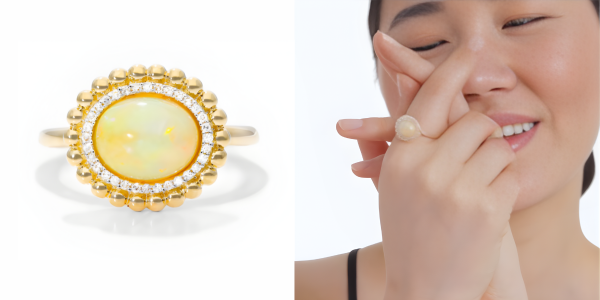
Opal Care And Cleaning Guide: Optimum Care For Opals and How to Store Them.

Opal Care And Cleaning Guide: This guide explains exactly how to handle, clean, and protect your opal jewelry so it stays beautiful and damage-free for years. From daily wear tips to deep cleaning do’s and don’ts, we’ve covered everything you need to care for both natural and lab-created opals the right way.

Opal And Diamond Beaded Double
Halo Ring In 14K Yellow Gold

Opal And Diamond Beaded Double Halo Ring In 14K Yellow Gold
Click On The Image To View Full Details And Grab
This Stunning Opal Ring Before It’S Gone!

Table Of Contents


Tick Mark

1) Understanding Opals and Why They Require Special Care

Back To Top

Opals are unlike most gemstones you’ve seen. Their beauty comes from a unique structure and delicate composition that demands more attention than harder gems like sapphires or diamonds. To keep your opal jewelry safe and shining, you’ll need to understand what makes them so different and why standard care routines won’t work.

Beaded Detail Opal And Halo Diamond
Leverback Earrings In 14K Yellow Gold

Beaded Detail Opal And Halo Diamond Leverback Earrings In 14K Yellow Gold
Click On The Image To Explore Details And
Make These Elegant Opal Earrings Yours Today!

Their fragility isn’t just a cautionary tale—it’s a reality based on their internal structure, water content, and sensitivity to changes in temperature and environment. Let’s explore why this matters and how it affects everyday wear and cleaning.

Downward Right Arrow

1.a) Opal Composition and Physical Characteristics

Back To Top

Every opal holds a secret: it isn’t a crystal like quartz or ruby. It’s a mineraloid, formed from hydrated silica spheres packed into a tight, fragile arrangement. This structure gives opals their famous play-of-color, but it also makes them more vulnerable to scratches, chips, and even cracking.

Their physical makeup affects everything—from how much moisture they hold to how they respond to heat. If you’re wearing or cleaning an opal, you’re interacting with one of nature’s more delicate gems. Understanding its basic structure helps you avoid common mistakes that can lead to dullness, surface cracks, or loss of color.

Water Content and Opal Structure

Opals are made of tiny silica spheres held together by water, typically between 3% and 21%. This internal moisture is essential to their appearance and durability. When the water inside starts to evaporate due to dry conditions or direct sunlight, opals may develop surface cracks—often referred to as crazing.

Their internal layout lacks the hardness and tight crystalline bonds found in other gems. This non-crystalline nature makes opals more porous and reactive to humidity. If they dry out too much, they can lose their fire, their transparency, or worse, break under pressure.

Hardness and Toughness of Opals (Mohs Scale 5–6.5)

With a Mohs hardness ranging between 5 and 6.5, opals sit on the softer side of the gemstone scale. They’re more scratch-prone than you might expect—so daily wear requires some caution. Drop one on a hard floor, and it could chip or fracture.

Cushion Cut Opal with Cadillac Cut
White Sapphire Ring in 18k White Gold

Cushion Cut Opal with Cadillac Cut White Sapphire Ring in 18k White Gold
Click On The Image To View This Luxurious
Sapphire-Accented Opal Ring And Shop It Now!

That softness isn’t the only issue. Opals aren’t especially tough either. They don’t absorb impacts well. Wearing an opal ring while doing chores or exercising may result in unexpected damage if it gets knocked against a surface.

Hydrophane Opals vs Non-Hydrophane Opals (Porosity Differences)

Hydrophane opals, like many Ethiopian opals, are extremely porous. They absorb water easily, which can temporarily change their color or appearance. Soaking them—even by accident—can lead to discoloration or haziness that takes days or weeks to fade.

Non-hydrophane opals, like most Australian varieties, resist water a bit better but still contain internal moisture that must be preserved. Understanding which type of opal you own will guide how you clean, store, and protect it. Hydrophane opals in particular should never be soaked or exposed to rapid changes in moisture.

Downward Right Arrow

1.b) Why Opals Need Special Care

Back To Top

Opals are stunning, no doubt—but they don’t like being rushed, scrubbed, or tossed into jewelry cleaner like a diamond. Their structure makes them vulnerable in ways you might not expect. That’s why they require a slower, more thoughtful care routine.

It isn’t just about cleaning either. Everyday conditions—heat, humidity, or chemicals—can change the way an opal looks and behaves. Treating your opal like a fragile work of art helps it last longer and stay beautiful.

Oval Opal and Swiss Blue Topaz
Halo Ring in 14k Rose Gold

Oval Opal and Swiss Blue Topaz Halo Ring in 14k Rose Gold
Click On The Image To Admire This Stunning Opal
And Topaz Halo Ring And Grab It While It Lasts!

Sensitivity to Heat and Temperature Changes (Risk of Crazing)

Exposing opals to sudden heat or extreme cold can cause stress within the stone. That stress may lead to crazing—fine cracks that appear across the surface. These aren’t just cosmetic flaws. Crazing can lower the value of your gem and make it more likely to break down further over time.

Even leaving your opal in a hot car or near a bathroom heater can push it past its comfort zone. That’s why temperature control—both during wear and storage—is key.

Susceptibility to Scratches and Impacts

Opals scratch easily. A brush against metal, stone, or even hard dust can leave behind fine lines that dull its shine. Rings, in particular, face more risk because they come into contact with surfaces often.

Even a light knock against a countertop can cause a chip. That’s why it’s safer to remove your opal jewelry during any hands-on activity, especially if the setting leaves the edges exposed.

Vulnerability to Chemicals and Harsh Cleaners

Common household products like bleach, detergent, perfume, and even some lotions can damage your opal. These substances can eat into the surface, cloud the finish, or disrupt the water content.

Soaking opals in strong solutions or using abrasive cleaning pads is another fast way to cause permanent damage. It’s always safer to stick to mild, non-chemical cleaning methods. The gentler your approach, the longer your opal will last.

Tick Mark

2) Daily Care and Maintenance Tips for Opal Jewelry

Back To Top

Opals aren’t high-maintenance, but they do need the right kind of attention every day. A few small habits can protect your opal ring, necklace, or earrings from cracks, dryness, and dullness. You’ll prevent damage long before it starts just by being mindful of how you wear, store, and clean them.

Cushion Cut Opal and Diamond
Drop Earrings in 14k Rose Gold

Cushion Cut Opal and Diamond Drop Earrings in 14k Rose Gold
Click on the Image to Explore These Elegant Opal and
Diamond Drops Perfect for Your Next Special Occasion

A consistent opal care routine doesn’t take much effort, but skipping it can shorten the life of your gemstone. Let’s look at simple ways to keep your opal in top shape without overcomplicating things.

Downward Right Arrow

2.a) Safe Handling and Wearing Practices

Back To Top

Everyday wear puts opals at risk. Unlike diamonds or rubies, they can’t handle much pressure, heat, or chemicals. That means your usual routines—cleaning, cooking, or applying perfume—can damage them without you realizing it.

Even subtle friction from a watch strap or shirt cuff can cause tiny scratches over time. If you want your opal to last, you need to be deliberate about how and when you wear it.

Removing Opal Jewelry During Sports or Sleeping

Opals aren’t cut out for rough handling. Activities like jogging, weightlifting, or even tossing in your sleep can cause them to crack or chip. It’s easy to forget, but one unexpected bump against a countertop or wall might leave a permanent mark on your gemstone.

You’ll protect your opal a lot better by taking it off before workouts, sports, or bedtime. That small step can save you from unexpected damage that even insurance won’t make feel better.

Protecting Opals from Heat and Sunlight

Excessive heat can dry out an opal’s internal moisture and trigger crazing. Sunlight might not burn it outright, but over time, direct UV exposure can weaken the surface and drain its vibrancy.

Instead of leaving your opal ring near a window or wearing it in direct sun for hours, store it in a cool place when you’re not using it. The less heat exposure it gets, the longer it retains its fire and color.

Keeping Opals Away from Chemicals and Cosmetics

Lotions, perfumes, hairsprays, and even mild cleaning agents can eat away at an opal’s finish. These products seep into the stone or its setting and gradually dull the sheen.

Apply all your personal care products first, then wear your opal jewelry last. After you’re done for the day, wipe the piece with a soft dry cloth to keep residue from building up.

Downward Right Arrow

2.b) Proper Storage of Opals

Back To Top

Storage may seem like an afterthought, but with opals, it makes a world of difference. They don’t react well to dry air, high humidity, or being crammed into tight jewelry piles.

Opal and Diamond Halo Ring in 18k White Gold

Opal and Diamond Halo Ring in 18k White Gold
Click on the Image to View This Stunning
Opal and Diamond Halo Ring in Full Detail

Opals live longer when stored with care—away from heat, inside a breathable case, and never touching harder gemstones that could scratch them. If you’re keeping yours boxed away, it’s worth doing it right.

Separating Opals from Other Jewelry (Soft Pouches)

Opals can scratch or be scratched by other gemstones—especially diamonds, sapphires, and even harder metals. Tossing them all into one box is a recipe for fine scratches and chipped corners.

Use soft pouches or velvet-lined compartments to keep each piece apart. This cushions the opal and prevents friction during movement or travel.

Maintaining Humidity during Storage (Moist Cloth Wraps)

If stored in a very dry environment, opals may gradually lose their water content. This leads to surface cracks or loss of iridescence, especially in regions with air conditioning or low ambient moisture.

To prevent dehydration, wrap your opal in a soft cloth with a tiny corner slightly damp—not wet. It adds enough humidity to preserve the stone’s moisture without soaking or causing damage.

Avoiding Long-Term Storage in Dry or Airtight Places

Locking your opal in an airtight box for months is the fastest way to kill its shine. Dry, enclosed air will pull moisture from the gemstone and increase the risk of internal cracking.

14K Yellow Ethiopian Opal Row Hoop Earrings

14K Yellow Ethiopian Opal Row Hoop Earrings
Click On The Image To View These
Vibrant Opal Hoops And Shop Instantly

Instead, store it in a breathable space with a moderate, stable temperature. Don’t stash it in sealed containers or forget it in a hot cupboard—give it room to breathe.

Downward Right Arrow

2.c) Routine Inspection and Maintenance

Back To Top

Regular maintenance isn’t about pampering—it’s about catching issues early. Opals don’t always show damage right away, but small changes in color, clarity, or setting tightness can hint at bigger problems ahead.

A few quick checks every month can help you avoid disaster and preserve your opal’s value. Think of it as simple upkeep, not overcare.

Checking Opal Settings and Condition Regularly

Over time, prongs loosen, glue dries, and bezels wear down. If the opal wiggles in its setting or shows new chips or lines, it’s time to act.

Inspect your piece closely every few weeks, especially if it’s a ring or bracelet that takes daily hits. Better to catch a weak setting before your stone vanishes.

When to Consult a Jeweler for Polishing or Repair

If your opal starts looking dull or scratched, don’t reach for polish at home. Professional jewelers can gently repolish the surface without thinning the stone or weakening its integrity.

Visit a trusted jeweler if the opal has lost its color play, feels loose, or shows signs of crazing. Trying to fix it yourself often leads to irreversible damage.

Tick Mark

3) How to Clean an Opal Ring (Step-by-Step Guide)

Back To Top

Cleaning an opal ring isn’t complicated, but it does require a gentle touch and the right method. Unlike harder gems, opals react badly to heat, chemicals, and rough scrubbing. If you follow a safe and simple process, your opal will stay clean without losing its shine or color play.

14K Rose Gold Open Opal and Diamond Ring

14K Rose Gold Open Opal and Diamond Ring
Click On The Image To View This Elegant
Open Opal and Diamond Ring In Detail

This section walks you through exactly what tools to use, what to avoid, and how to care for your opal ring without risking damage. Whether your opal is solid, a doublet, or a triplet, these steps will help you clean it safely.

Downward Right Arrow

3.a) Gather Your Cleaning Tools

Back To Top

The right cleaning tools make all the difference when you’re dealing with a fragile gemstone like opal. You don’t need fancy kits or ultrasonic machines. In fact, less is more.

All you really need is a bowl of lukewarm water, a few drops of mild soap, and a soft, lint-free cloth. These basic tools will help you remove dirt gently without harming your opal or its setting.

Mild Soap, Lukewarm Water, Soft Cloth

Harsh cleaners and hot water are a no-go for opals. Instead, fill a bowl with lukewarm water and add just a drop or two of mild soap—nothing strong or acidic. Dish soap without additives works well.

Dampen a soft cloth with the soapy water and gently wipe the surface of your opal ring. Skip anything abrasive like toothbrushes or textured cloths. These can scratch the stone or dislodge delicate settings. Your goal is to clean, not polish.

Downward Right Arrow

3.b) Clean Your Opal Ring Gently

Back To Top

Once you’ve got the setup ready, go slow. Opals don’t respond well to friction, pressure, or careless scrubbing. Cleaning should feel more like patting than rubbing.

Think of it as refreshing the surface rather than deep cleaning. The idea is to lift surface dirt without disturbing the moisture content or risking cracks.

Dabbing the Surface – Not Scrubbing

Soak your cloth in the soapy solution and squeeze out the extra water. Lightly dab the opal surface. Don’t rub or scrub. You’re lifting grime, not sanding it off.

Opals can craze or cloud if they’re agitated too much. Dab gently and cover all visible areas, especially around the setting where oils and dust collect.

Rinsing and Patting Dry with Care

Once you’re done dabbing, rinse the cloth in plain lukewarm water and use it to wipe off any soapy residue. Avoid rinsing the whole ring under a tap, especially if the opal is a doublet or triplet. Water can seep between the layers and cause fogging.

Pat the ring dry with a clean microfiber cloth. Let it air dry fully before storing. You don’t want any moisture trapped near the stone or in the metal.

Downward Right Arrow

3.c) Avoid Common Opal Cleaning Mistakes

Back To Top

Most opal damage happens not from accidents, but from using the wrong cleaning methods. It’s tempting to treat opals like diamonds or rubies—but they don’t play by the same rules.

If you avoid these common errors, you’ll save yourself a lot of regret and possibly a ruined gemstone.

No Soaking, Steam, or Ultrasonic Cleaning

Soaking might seem harmless, but with opals, it’s risky. Doublets and triplets can absorb water, separating the layers and making the opal look cloudy or distorted.

Steam and ultrasonic cleaners are even worse. They shake and heat the stone, which can cause internal cracking. Always skip anything that vibrates, steams, or gets too hot.

No Abrasives, Bleach, or Jewelry Solutions

Commercial jewelry cleaners often contain chemicals like ammonia or acids. These can eat away at the opal’s surface or dry it out. Abrasive pastes and polishes do more harm than good.

Stick to soap and water. Never try to make your opal “shinier” with household cleaners or polishing agents. What you gain in shine, you lose in integrity.

Downward Right Arrow

3.d) How Often Should You Clean Your Opal Ring?

Back To Top

Opals don’t need daily cleaning. In fact, too much cleaning can do more harm than good. Focus on keeping them free of sweat, lotion, and dirt buildup.

How often you clean depends on how often you wear the ring. But as a rule of thumb, less is more with opals.

Routine Wipe-Downs vs Deep Cleaning Schedule

If you wear your opal ring daily, a soft dry wipe once or twice a week helps remove oils and dust. This keeps buildup from clouding the surface without the need for frequent soap-and-water cleans.

A deeper clean using the gentle method above is fine once every few weeks or once a month. If your ring is rarely worn, a simple check and wipe-down before use is usually enough.

Tick Mark

4) Opal Care And Cleaning Guide – Safe Cleaning Practices

Back To Top

Opals aren’t built to handle aggressive cleaning. Their delicate surface, moisture content, and structure mean that using the wrong method can do permanent harm. To protect your opal jewelry, you need to clean it the right way—and just as important, avoid doing it the wrong way.

Oval Opal Earrings with Blue Topaz and
White Sapphire Halo in 14k Rose Gold

Oval Opal Earrings with Blue Topaz and White Sapphire Halo in 14k Rose Gold
Click On The Image To Discover These
Dreamy Opal And Topaz Halo Earrings Now

This section gives you a full breakdown of safe opal cleaning techniques, with clear do’s and don’ts. Whether you’re handling a solid opal or a composite, you’ll know exactly how to clean it without risking cracks, crazing, or dullness.

Downward Right Arrow

4.a) What Not to Do When Cleaning Opals

Back To Top

Some of the most common cleaning methods will destroy an opal. It’s easy to assume that a standard jewelry cleaner or a soak in hot water will do the job, but these stones require a very different approach.

This is where most people go wrong—so let’s make sure you don’t. You’ll protect your opal better by understanding what not to do than by overcompensating with risky shortcuts.

Avoiding Harsh Chemicals and Household Cleaners

Bleach, ammonia, and strong dish soaps are no friend to opals. These substances can eat away at the surface, leach out moisture, or cause discoloration over time. Even many commercial jewelry cleaners are too strong for this gemstone.

The damage might not be instant, but it builds up fast. A single cleaning with the wrong product could leave your opal dull, cloudy, or permanently damaged. Always reach for mild, unscented soap instead.

Why Ultrasonic and Steam Cleaners are Dangerous

Ultrasonic machines vibrate rapidly to shake dirt off jewelry. Steam cleaners blast high-pressure heat to lift grime. Opals can’t survive either. Both cause shock to the internal structure of the stone and may lead to micro-cracks or sudden crazing.

Even solid opals that look durable on the outside are vulnerable inside. Steam and vibration can split layers in doublets and triplets, or even pop them out of their settings. These machines are designed for diamonds—not opals.

Steering Clear of Abrasive Tools or Rough Cloths

Anything gritty or scratchy—whether it’s a brush, a polishing cloth with metal threads, or a scouring pad—can leave marks on your opal. Even rough fabric can wear down its sheen.

Instead of scrubbing, wipe gently. The smoother the cloth, the safer the stone. Opals are soft, so friction does more damage than dirt ever will.

Downward Right Arrow

4.b) Step-by-Step: How to Clean Opal Jewelry

Back To Top

Once you’ve ruled out the wrong tools, it’s time to gather the right ones. You don’t need anything fancy. In fact, the best cleaning approach for opals is simple, safe, and gentle from start to finish.

Let’s go over the correct method so you can clean your opal ring, pendant, or earrings without the risk of damage.

Gathering Cleaning Materials (Mild Soap, Lukewarm Water, Soft Cloth)

Start with a bowl of lukewarm water—not hot, not cold. Add a drop of mild soap, preferably something free of harsh scents or dyes. Grab a soft, lint-free cloth or a clean microfiber piece.

Skip the brushes, polishing pads, and foaming cleaners. You want the bare minimum to get the job done safely. A simple setup protects both the opal and the setting.

Gentle Washing Technique for Opals

Dip your cloth into the soapy water and gently press it onto the opal. Don’t rub. Just tap or softly glide across the surface. Let the water and soap lift the grime instead of using force.

If you’re cleaning around a bezel or prong setting, be careful not to push too hard. Surface dirt will come off with light contact, and anything deeper should be left to a jeweler.

Rinsing with Water and Patting Dry

Once cleaned, rinse the cloth in plain lukewarm water and gently wipe off any soap. Avoid rinsing the jewelry directly under a faucet, especially if the piece has glue-set stones or layered opals.

Use a dry, soft cloth to pat the jewelry dry. Then, let it sit in open air for a few minutes before putting it back into storage. Moisture trapped behind the stone or in the setting can create problems over time.

Buffing and Polishing Opals to Restore Shine

A freshly cleaned opal often looks slightly matte until it’s dry. After drying, use a dry, clean microfiber cloth to buff the surface gently. This brings out the color play and removes leftover moisture or smudges.

Never use commercial polish or wax. A simple dry buff will bring back the sparkle without risking residue or buildup. Your opal’s beauty should come from its own structure—not a fake gloss.

Downward Right Arrow

4.c) Cleaning Opal Doublets and Triplets

Back To Top

Composite opals, like doublets and triplets, are made of layered materials. They contain a thin opal slice backed or capped with other materials like quartz or resin. These layers are glued, and that glue doesn’t like moisture or stress.

If you own one of these, your cleaning routine needs even more caution. The wrong move can cause permanent separation or clouding.

Why You Should Never Soak Doublets/Triplets

Water can seep between the layers of a doublet or triplet. Once it gets in, it may loosen the adhesive and create foggy patches. Even short soaks can start this process, especially if the glue has aged.

Instead of soaking, always clean the surface only. That way, you protect the delicate bond holding the piece together and preserve its visual clarity.

Wiping the Surface Only with a Damp Cloth

Lightly moisten a soft cloth and gently wipe the top of the opal. Don’t press hard, and never submerge the jewelry. If you’re unsure whether it’s a solid or composite, treat it as a composite just to be safe.

Stick to short sessions—just enough to clean, never enough to soak. Less is always safer with these stones.

Drying and Handling Composite Opals Carefully

After cleaning, dry the surface right away with a soft, clean cloth. Then leave it out for a short while to let any hidden moisture evaporate fully.

Store composite opals somewhere cool and stable. Avoid extreme humidity or long-term exposure to heat, both of which can cause adhesives to fail over time.

Tick Mark

5) Caring for Different Types of Natural Opals

Back To Top

Each variety of opal—black, precious, or solid—needs slightly different care. Their structure, translucency, and color depth all affect how you clean, wear, and store them.

Emerald Cut Birthstone Opal Pendant Necklace in 14K Yellow Gold

Emerald Cut Birthstone Opal Pendant Necklace in 14K Yellow Gold
Click On The Image To Discover This
Stunning Birthstone Opal Pendant Necklace Up Close

By learning the unique quirks of each type, you’ll keep your opals in top shape and protect them from long-term damage or dullness.

Downward Right Arrow

5.a) How to Care for Black Opals

Back To Top

Black opals are among the most valuable opals in the world. They’re prized for their dark body tone, which enhances color play, but they’re still vulnerable to dryness, scratches, and impact.

Taking the right steps while wearing or cleaning a black opal ring or pendant helps you maintain its richness and prevent surface damage.

Why Their Dark Tone Hides Scratches Better

The natural dark body color of black opals helps camouflage tiny scratches. Unlike white or crystal opals, which easily show wear, these darker stones visually absorb light imperfections.

This doesn’t mean they’re harder. Black opals are still soft on the Mohs scale—about 5.5 to 6.5. They can still get scratched, but their play-of-color hides flaws more effectively, which is why they look better for longer with regular wear.

Cleaning and Storage Tips for Black Opals

Use the same gentle cleaning approach you’d apply to all natural opals—lukewarm water, mild soap, and a soft cloth. Because black opals often come in solid form, they can handle occasional polishing with a dry microfiber cloth after cleaning.

Always store them in a separate soft pouch or a fabric-lined box to avoid friction with other stones. Avoid storing them in dry conditions for extended periods. A little ambient humidity keeps them stable.

Downward Right Arrow

5.b) How to Care for Precious Opals

Back To Top

Precious opals include both white and crystal varieties, known for their radiant flashes of color and semi-translucent bodies. They’re stunning, but that delicacy requires extra caution.

Light, humidity, and rough handling can all take a toll. Your main goal is to preserve their color play and structural integrity.

Why Their Translucence Demands Extra Caution

Their semi-transparent structure makes precious opals more prone to showing scratches, moisture loss, and internal crazing. They also react more to temperature shifts, which can create hairline fractures inside the stone.

Because light passes through more easily, surface flaws are amplified. Even a minor scratch or clouding from soap residue can dull the sparkle. This is why gentle handling and low-stress storage are non-negotiable.

Handling and Cleaning Without Dulling the Glow

Always avoid using running water or steam around precious opals. Instead, dampen a soft cloth with soapy water and dab gently. Rinse with a clean, slightly moist cloth and pat dry—no rubbing or pressing.

To avoid dullness, never use polish, wax, or ultrasonic cleaners. Store the opal somewhere cool but not dry, preferably wrapped in cloth or in a lined jewelry box. If the glow starts to fade, a professional jeweler can help rehydrate and re-polish it without damage.

Downward Right Arrow

5.c) How to Care for Solid Opals

Back To Top

Solid opals are single-piece stones, not layered composites like doublets or triplets. They’re often considered more durable, but they’re still porous and soft compared to other gemstones.

Knowing how far you can go with cleaning and storage without crossing the line is key to maintaining their look and stability.

Are Solid Opals Stronger Than Other Types?

Compared to composite opals, yes—solid opals have no glue or lamination, so there’s no risk of delamination. They can usually handle light moisture better and aren’t as prone to fogging or separation.

That said, they’re still fragile by gemstone standards. A solid opal is more stable internally, but it won’t survive harsh chemicals, steam, or direct impact. So treat it as a delicate stone, even if it feels sturdier in your hand.

Best Practices for Cleaning Solid Opals

You can safely use lukewarm soapy water with a soft cloth to wipe down solid opals. If the stone is especially dirty, hold the piece over a bowl and gently clean around the setting—never submerge it directly, especially if it’s in a glued mount.

After cleaning, dry it with a microfiber cloth and let it breathe before storing. Periodic gentle buffing can help restore shine. But avoid anything abrasive—let the stone’s natural shimmer do the talking.

Tick Mark

6) Lab-Created and Synthetic Opal Care And Cleaning Guide

Back To Top

Lab-created opals look remarkably similar to natural ones, but they behave differently under daily wear. Understanding the differences in care, durability, and composition helps protect your synthetic opal jewelry for the long run.

These opals may resist some damage better than natural ones, but they still deserve careful handling and cleaning to keep their color play alive.

Downward Right Arrow

6.a) Natural vs Lab-Created Opals

Back To Top

Synthetic opals are made in labs to mimic natural opals, but they often have less water and more uniform color. While natural opals form over millions of years, lab-grown versions develop in controlled environments.

You’ll find that lab-created opals tend to be more stable under normal conditions, but they don’t have the exact same mineral structure or care needs.

Composition and Water Content Differences

Natural opals usually contain 3% to 21% water, trapped within a delicate structure of silica spheres. This water makes them vulnerable to drying, cracking, and even changes in temperature. Lab-created opals typically have less water—often under 5%—and are made with polymer binders that make them more stable.

The reduced water content in synthetic opals makes them less prone to crazing or clouding from dryness. You still need to avoid heat and harsh storage conditions, but they hold up better over time if treated well.

Durability and Hardness Comparison

Most synthetic opals fall between 5.5 and 6.5 on the Mohs hardness scale—about the same as natural ones. However, their internal structure tends to be more uniform, which helps prevent stress fractures. While both types can scratch or chip if hit hard, lab-created opals may resist minor abrasions slightly better.

Don’t be misled, though—they aren’t diamonds. A knock on a hard surface can still cause real damage, especially at the edges or around prongs. Handle both types of opals with similar care, even if the lab-made one feels tougher.

Stability in Heat and Light (Color Fading vs Crazing)

Synthetic opals are generally more resistant to sudden temperature shifts or UV light. Natural opals can dry out or develop surface cracks, especially if exposed to strong sun or indoor heat for long periods. You may also notice slight yellowing or fading if a natural opal dries out over time.

Lab-grown opals don’t craze easily under light or heat, thanks to the stabilizers used during their creation. That said, you should still avoid extreme temperature swings or storing them in dry, airtight boxes for too long.

Downward Right Arrow

6.b) Caring for Synthetic Opal Jewelry

Back To Top

Even though synthetic opals are more forgiving than natural ones, you shouldn’t skip gentle cleaning and proper storage. Their color play can still fade, and the surface can scratch without protection.

Stick to simple routines and avoid anything that could damage the polish or setting. Good habits make a big difference.

Cleaning Lab-Created Opals Safely

Start with a soft microfiber cloth and lukewarm water mixed with mild dish soap. Dip the cloth, wring it out well, and gently dab the opal’s surface. Never scrub or use bristles—even synthetic stones can lose their polish.

Rinse with a clean damp cloth and dry with a lint-free towel. Skip commercial jewelry cleaners, especially ones containing ammonia or alcohol. They can ruin the smooth finish or cloud the surface over time.

Handling and Storing Synthetic Opals

Store your lab-created opals in soft, padded pouches away from other jewelry. Even a diamond ring kept nearby can leave scratches. If your home has dry air, drop a slightly damp cotton ball in the box to maintain ambient moisture.

Try not to expose synthetic opals to sudden cold or heat—leaving them in a hot car or near a heater can still cause structural stress. While they’re more stable than natural ones, they’re still sensitive to their environment.

Longevity and Maintenance of Man-Made Opals

With regular care, synthetic opals can keep their beauty for decades. They resist some forms of damage better than natural stones, but daily wear will still take a toll on polish and brilliance.

If your opal looks dull, have a jeweler buff and reseal the surface rather than doing it yourself. Avoid ultrasonic machines, polish pastes, or abrasive cloths. A little caution goes a long way in keeping their magic alive.

Tick Mark

7) Opal Care vs. Care for Other Soft Gemstones

Back To Top

Opals share many traits with other soft gemstones like turquoise and moonstone, especially in terms of sensitivity and daily wear needs. While they all require gentle handling, each gemstone responds differently to moisture, cleaning, and heat.

Knowing how to adjust your care routine for each type helps you avoid damage and keep your jewelry looking its best.

Downward Right Arrow

7.a) Opals vs Turquoise

Back To Top

Turquoise and opal both rank low on the Mohs scale, making them vulnerable to scratches and cracks. But turquoise is even more porous, which changes how you should clean and store it compared to opals.

You need different care approaches, especially when dealing with exposure to moisture, chemicals, or daily wear.

Turquoise Characteristics (Softness and Porosity)

Turquoise typically falls around 5 to 6 on the Mohs hardness scale and is well known for being porous. This porosity allows it to absorb oils, perfumes, and even water, which can change its color or leave stains over time. Unlike opals that have a hydrated silica structure, turquoise has a dry, chalky composition that doesn’t tolerate moisture well.

You’ll often find stabilized turquoise in the market, where resin is added to strengthen and seal it. Still, both natural and stabilized varieties need extra caution during wear and cleaning.

Cleaning Turquoise Jewelry vs Cleaning Opals

Cleaning turquoise jewelry calls for extra care due to its absorbent nature. You should never soak turquoise in water or use any detergent-based cleaner. A barely damp, soft cloth is the safest way to clean the surface without letting water seep in.

Opals, while also delicate, handle brief contact with lukewarm soapy water better, provided you’re careful not to soak them for long. If you clean both types side by side, you’ll quickly see how turquoise is less forgiving.

Storage and Wear: Turquoise Compared to Opal

Turquoise and opals both benefit from soft storage conditions, but turquoise can dry out or discolor faster if left in high heat or dry air. Storing it in a pouch with a touch of ambient humidity helps keep it looking fresh.

Opals, by contrast, need moisture to prevent crazing, so wrapping them in a damp cloth occasionally helps maintain balance. In both cases, skip airtight boxes and keep them away from harder jewelry that might leave scratches.

Downward Right Arrow

7.b) Opals vs Moonstone

Back To Top

Moonstone, like opal, is soft and fragile, but its internal cleavage makes it even more prone to splitting under pressure. You’ll find that both gemstones prefer the same gentle cleaning and careful storage routines.

That said, moonstone’s structure reacts differently to knocks, temperature shifts, and rough use.

Moonstone Characteristics (Hardness and Cleavage)

Moonstone usually ranks around 6 to 6.5 on the Mohs scale but has perfect cleavage in two directions. This means a sharp blow or pressure at the wrong angle can cause it to crack more easily than opal. Its visual glow—called adularescence—comes from thin layers inside the stone, which are also quite delicate.

Opal, by comparison, doesn’t have the same cleavage lines but still scratches easily due to its softness. So both stones need a soft hand, but for slightly different reasons.

Cleaning Moonstone Jewelry vs Cleaning Opals

You should clean moonstone using only lukewarm water and a very soft cloth. Anything more—like strong detergents, steam, or ultrasonic cleaners—can weaken the surface and increase the risk of splitting. Avoid brushing or rubbing too hard across its surface.

Opals accept light soapy water and a microfiber cloth but don’t fare well under high heat or soaking. Their structure holds up fine to a gentle hand, but both gems should skip aggressive cleaning methods.

Handling and Storing Moonstone vs Opal

Moonstone scratches easily and can crack under pressure, so store it in a soft-lined box away from other jewelry. Always remove it before sports, cleaning, or hot showers. Humidity doesn’t affect moonstone the way it does opal, so you don’t need to wrap it with a damp cloth.

For opals, moisture matters more. You’ll want to avoid overly dry environments to prevent crazing, especially in solid or natural varieties. In both cases, soft handling and separate storage go a long way.

Tick Mark

8) Conclusion

Back To Top

Caring for opals isn’t hard—it just calls for awareness and a gentle touch. Whether you’re wearing a black opal, solid opal, doublet, or lab-created stone, keeping your cleaning and storage methods gemstone-safe makes all the difference.

By understanding the specific needs of opals and how they compare to other soft gems like turquoise and moonstone, you protect your jewelry’s natural beauty. A little knowledge goes a long way in helping your opals shine brighter, longer.

Tick Mark

9) Frequently Asked Questions (FAQs)

Back To Top

You likely have questions about how to care for your opal jewelry, and we’re here to help. This section answers common FAQs about wearing, cleaning, and protecting opals so you can keep them looking brilliant and beautiful.

Downward Right Arrow

9.a) Can I wear my opal ring every day?

Back To Top

You can wear an opal ring every day, but you need to be mindful of its delicate nature. Opal is softer than many gemstones, so daily wear could lead to scratches or chips if you aren’t careful. With the right precautions and gentle treatment, it’s possible to enjoy your opal ring regularly while minimizing the risk of damage.

Daily Wear And Opal Durability

Treating It Gently

If you plan to wear your opal ring day in and day out, treating it gently is essential. Opal’s hardness is around 5.5–6.5 on the Mohs scale, which is similar to glass. This means it can scratch or crack if it’s hit against something hard.

Protective Settings And Habits

Many people do wear opal rings frequently, but they take extra care. For example, they might choose a setting that protects the stone (like a bezel that surrounds the opal) and remove the ring during strenuous activities or chores.

Handle It Like A Treasure

Think of your opal like a fragile treasure – it can be worn and enjoyed, but you have to avoid knocking it around. By avoiding heavy knocks and rough conditions, you give your opal a better chance to stay intact.

Downward Right Arrow

9.b) Should opals be stored in water?

Back To Top

No, you don’t need to store opals in water. There’s a popular myth that opals will dry out and crack if they aren’t kept in water, but a solid opal won’t gain anything from soaking. It’s better to store opal jewelry dry – just keep it in a cool place out of direct heat, and it will be fine without any special water bath.

Opal Storage And Moisture

Dispelling The Water Myth

For the most part, opals do not need to be stored in water at all. The idea that you must keep an opal in water to stop it from drying out is a misconception. Opals naturally contain a small amount of water within their structure (usually a few percent), but that moisture is locked in during the stone’s formation and won’t evaporate under normal conditions.

Risks With Composite Opals

Placing an opal in water doesn’t replenish its internal water content or prevent cracks – it just makes the stone wet. In fact, immersing opal doublets or triplets (opal slices glued to a backing and possibly covered with a clear cap) can actually harm them. Water can infiltrate the layers and cause cloudiness or separation.

Smart Storage Tips

The best way to store opals is simply to keep them in a moderate environment. Store your opal jewelry in a soft pouch or jewelry box away from direct sunlight and extreme heat or very low humidity. If you live in an extremely dry climate, you can store opals with a bit of humidity. For instance, some people keep a piece of damp cloth or cotton in the storage container. However, in most cases this isn’t necessary.

Downward Right Arrow

9.c) Is it safe to wear opals in the shower?

Back To Top

It’s best to take off opal jewelry before showering or swimming. Solid opals aren’t ruined by plain water, but hot water, soaps, shampoos, and chlorine can dull their shine or possibly damage them. And if your opal is a doublet or triplet, getting it wet for a long time can make it look cloudy by seeping between the layers, so you’ll want to keep those pieces dry.

Keeping Opals Dry During Showers And Swims

Showers Aren’t Ideal

Wearing opals in water frequently is asking for trouble. While a solid opal can handle a bit of water, the conditions in a shower or pool are not ideal for maintaining its beauty. In a hot shower, the rapid temperature change can stress the opal and potentially lead to cracks.

Soaps And Chemicals

Soapy water or shampoos leave a residue that can make an opal’s surface look dull or filmy. In swimming pools and hot tubs, chlorine and other chemicals can be harsh on the metal parts of your jewelry, and they may affect the opal’s luster over time.

Water Damage

In Composite Opals If your opal is a doublet or triplet, prolonged exposure to water is a big no-no. Water can seep into a layered opal and cause the bonding materials to deteriorate. The gem might turn cloudy or gray as the layers separate.

Downward Right Arrow

9.d) Can I use an ultrasonic cleaner?

Back To Top

No – do not use ultrasonic or steam cleaners on your opal jewelry. The intense vibration from an ultrasonic machine or the high heat of steam can crack an opal. To be safe, stick to gentle hand-cleaning methods like mild soapy water and a soft cloth for your opals.

Gentle Cleaning Only: No Machines For Opals

Ultrasonic Cleaners Are Too Harsh

Ultrasonic cleaners work by sending high-frequency vibrations through a liquid to knock dirt off jewelry. Those same vibrations can damage an opal. The stone may develop tiny fractures or even crack from the stress.

Steam Cleaners Aren’t Safe Either

Steam cleaners blast jewelry with very hot steam under pressure. For an opal, this can lead to crazing or breakage. The intense heat and moisture combo isn’t safe.

Stick With Hand Cleaning

Use lukewarm water with a drop of mild dish soap and let the opal piece soak for a few minutes. Then gently wipe with a soft cloth or a soft toothbrush. Rinse and dry thoroughly.

Downward Right Arrow

9.e) How can I tell if it’s a doublet/triplet?

Back To Top

You can usually tell by inspecting the side or back of the gem. A doublet opal has two layers – a slice of opal attached to a dark backing. A triplet has three layers (backing, thin opal, and a clear top). A solid opal is just one continuous piece with no glued layers.

Identifying Doublets, Triplets, And Solid Opals

Start With The Side Profile

Telling the difference between opal types starts with the side profile. Doublets show a sharp seam where two materials meet. Triplets show two junction lines, and a domed, glassy cap.

Examine The Back

The back of a doublet is usually dark and opaque. A solid opal may have a lighter or uneven back, sometimes showing natural matrix rock.

Look For Layer Separation

Triplets often have a very thin opal layer and a domed clear cap. If the stone seems like a sandwich, you likely have a triplet.

Downward Right Arrow

9.f) Are lab-created opals more durable?

Back To Top

Lab-created opals (synthetic opals) are generally a bit more stable than natural opals. They often have lower water content or include polymers, making them less prone to crazing. But they’re just as soft as natural ones, so treat them with care.

Lab-Grown Opals Vs Natural Opals – Durability

Stability In Dry Conditions

Lab opals are made in controlled environments and often have less water content. They are less likely to craze in dry conditions.

Same Hardness As Natural Opals

Even though they’re more stable internally, they’re not harder. Both types rate about 6 on the Mohs scale. Scratches and chips can still happen.

Treat Them With Equal Care

A lab opal needs the same protection from knocks, chemicals, and sudden temperature changes as a natural opal.

Downward Right Arrow

9.g) Why did my opal turn cloudy?

Back To Top

Opals can change appearance due to handling or storage. Cloudiness often comes from water seeping into doublets or triplets. Buildup of grime or scratches also dulls the surface. Heat or chemical exposure can shift color.

Causes Of Opal Cloudiness Or Color Change

Water Damage

In Composite Opals If a doublet or triplet gets soaked, water can get between the layers and cause cloudiness. The glue may weaken, creating a foggy look.

Temporary Absorption

In Hydrophane Opals Ethiopian opals absorb water and can temporarily turn yellowish or dull. They usually recover once dry.

Surface Scratches Or Buildup

Normal wear leads to fine scratches that scatter light. Lotions, perfumes, and household cleaners can also coat the surface.

Heat And Ageing Effects

Extreme heat may dry or stress an opal. Treated or synthetic opals with plastic resins may yellow over time.

Downward Right Arrow

9.h) What if my opal chips or cracks?

Back To Top

If your opal cracks or chips, stop wearing it and save any broken pieces. Bring the jewelry to a professional. They may polish out the damage or re-cut the stone. If it’s badly cracked, you might need to replace it.

Dealing With A Chipped Or Cracked Opal

Stop Wearing It Immediately

Don’t risk further damage. Even a small crack can grow worse with more wear.

Save Any Pieces

If a bit broke off, keep it. A gem cutter may be able to reuse or reshape it.

Seek Expert Help

A jeweler may polish out minor chips or re-cut the stone into a smaller shape. Don’t try to glue it yourself.

Downward Right Arrow

9.i) How often should I clean my opal jewelry?

Back To Top

Give your opal jewelry a gentle cleaning whenever it starts looking dull, or every couple of months if you wear it frequently. A light wipe after each wear and occasional washing in mild soapy water will keep it gleaming.

Cleaning Routine To Maintain Opal Shine

Wipe After Each Use

Wipe your opal with a soft, dry cloth to remove skin oils or dust. It’s a quick daily habit that maintains its luster.

Monthly Gentle Cleaning

Soak it in lukewarm water with mild soap. But you must take precautions depending on the type of opal. Solid opals can be soaked for a short period, while layered opals like doublets and triplets should not be soaked at all.  Use fingers or a soft brush to clean gently. Rinse and dry completely.

Avoid Harsh Scrubbing

Never scrub hard or use abrasive materials. Gentle handling preserves the stone’s natural shine.

Adjust Frequency Based On Use

If you wear it often, clean every 1–2 months. If rarely worn, a few times a year is fine.

Observation Is Key

Watch for signs of dullness. When the gem loses its sparkle, that’s your cue for a cleaning session.

See Also:
About Gemstone Opal

Or Read More About Gemstones As Follows:

Gemstone Settings Geographical Origin of Gemstones
Gemstone Inclusions Opal Care and Cleaning Guide
Gemstone Geology FAQ Factors Influencing Gemstone Brilliance
Mechanical Gemstone Cleaning Perils Trapiche Gemstones
Asterism in Star Gemstones Gemstone Cleaning Guide
Jewelry Nickel Allergy How To Clean Metal Jewelry

Leave a Comment

Verified by MonsterInsights