Round Brilliant Diamond Definition
A round brilliant diamond is a circular-shaped diamond cut with 57 or 58 precisely arranged facets designed to maximize brilliance, fire, and sparkle. It is the most researched and mathematically optimized diamond shape, offering superior light performance compared to all other cuts.
In jewelry, round brilliant diamonds are prized for their unmatched sparkle, symmetry, and versatility. Their balanced proportions make them suitable for nearly all ring settings, from solitaires to halo and pavé designs. Due to high demand and cutting precision, round brilliant diamonds typically command higher prices than other diamond shapes.
In this guide, “round brilliant” refers specifically to the diamond shape used in fine jewelry, not to general cutting styles or brilliance grades.
Round Brilliant Diamond — the cut that sets the gold standard for sparkle, precision, and timeless beauty. This guide breaks down everything you need in simple language, from facet patterns and GIA cut grades to pricing, buying tips, and expert comparison insights. If you’re choosing a diamond for an engagement ring or fine jewelry, you’ll find clear answers and smart advice to help you pick a stone with confident eyes and a happy heart.
A Round Brilliant Diamond
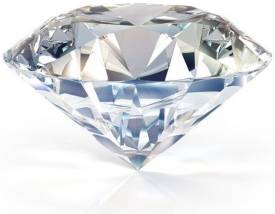
Table Of Contents
- 1) Round Brilliant Diamond: Understanding The World’s Most Iconic Diamond Cut
- 2) Evolution Of The Round Brilliant Cut: From Antique To Modern Precision
- 3) Round Brilliant Diamond Facets: How 57/58 Facets Create Maximum Sparkle
- 4) Understanding GIA Cut Grades For Round Brilliant Diamonds
- 5) Buying The Best Round Brilliant Diamond: Key Criteria
- 6) Round Brilliant Diamonds In Jewelry
- 7) Round Brilliant vs Other Diamond Cuts
- 8) Hearts-And-Arrows Round Brilliant Diamonds
- 9) Round Brilliant Diamond Price Guide
- 10) FAQs About Round Brilliant Diamonds
- 11) Conclusion

|
1) Round Brilliant Diamond: Understanding The World’s Most Iconic Diamond CutBack To Top |
This diamond cut holds a special place in jewelry history and still wins the hearts of most buyers today. You see unmatched sparkle, timeless style, and a confident shine every time you look at it. Round brilliant diamonds lead global demand because they deliver consistent brilliance in every kind of light, from soft candlelight to bright sunlight.

|
1.a) What Makes The Round Brilliant Diamond So Popular?Back To Top |
You often see round brilliants at the center of engagement rings and heirloom jewelry because they sparkle with purpose. Their design focuses on light return, making them a favorite for people who want intense brilliance and high visual appeal.
Historic dominance in engagement rings
For more than a century, round brilliant diamonds have been the first choice for engagement rings due to their bright sparkle and clean symmetry. You can picture classic Hollywood proposals, royal engagements, and modern love stories — almost all showing a round diamond at the center. Many couples reach for this shape instinctively because it feels elegant, meaningful, and proven through generations.
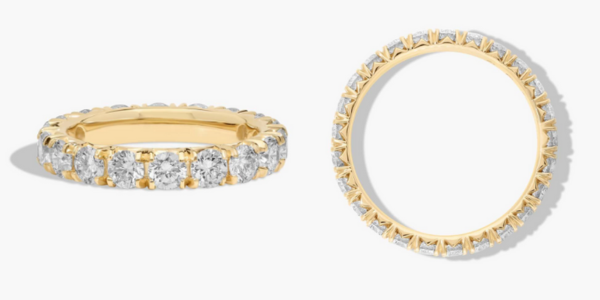
French Pave Eternity Ring With 1
|
|
| Make This French Pave Eternity Ring With 1 Ctw Diamonds In 14k Yellow Gold (2.50mm) Yours — Click To See Details! |
Why jewelers and shoppers trust this cut
You never feel unsure with a round brilliant diamond, and jewelers feel the same. This cut is backed by decades of gem-cutting science that focuses on brilliance, fire, and balanced light performance. Jewelers love it because it performs well in almost every lighting condition, so you get that “wow” sparkle whether you’re at dinner or out in the sun. With this cut, what you see is exactly what you get — bright, lively, and dazzling.
Emotional and symbolic appeal of maximum sparkle
People connect emotionally to sparkle that feels alive, and round brilliants deliver that feeling in full force. The intense shine often symbolizes clarity, honesty, and a bright future, which explains why so many engagement rings feature this shape. A round diamond almost whispers confidence and romance — like saying, “This love shines bright and stands strong.”
|
|
1.b) How Round Brilliant Diamonds Earn Global LoveBack To Top |
Across continents and cultures, round brilliants stay in demand because they look beautiful in every metal and setting style. You see them on celebrities, influencers, and everyday couples, and they never seem out of place. Something about that balanced sparkle fits every mood, outfit, and moment in life.
Consumer buying trends and three-quarters preference
Most jewelry buyers — almost three-quarters — still choose round diamonds over fancy shapes. Even with fashion trends shifting toward ovals or cushions sometimes, the round shape stays the chart-topper. When you want a diamond that feels safe, classic, and radiant, you’re naturally drawn to this cut first.
Bridal jewelry and modern luxury appeal
Walk into any bridal boutique or high-end jewelry store, and you’ll notice round diamonds everywhere. They appear in solitaires, halo rings, pave bands, and even sleek minimalist designs, proving how naturally they adapt to any style. Whether you’re drawn to vintage romance or modern glam, a round brilliant supports your look like a loyal co-star with serious shine.
Timelessness vs trend-based diamond shapes
Some shapes rise and fade with fashion, but round brilliants refuse to step aside. Even as ovals or emerald cuts enjoy moments in the spotlight, the round brilliant remains the gold standard for sparkle and prestige. If you want a diamond that still feels fresh decades later, this shape gives you confidence without ever feeling trendy or outdated.
|
|
2) Evolution Of The Round Brilliant Cut: From Antique To Modern PrecisionBack To Top |
Diamond cutting did not reach brilliance overnight. You are looking at centuries of human skill, curiosity, and optical improvement coming together in one famous shape. The round brilliant diamond carries a deep past, and understanding this evolution helps you appreciate why today’s cut looks so breathtaking.
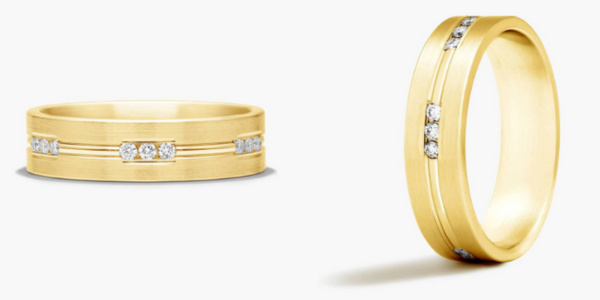
Etched Channel Set Men’s Diamond Wedding
|
|
| Want To Know More? Click And Explore The Etched Channel Set Men’s Diamond Wedding Band In 14k Yellow Gold (6.00mm) In Depth! |
|
|
2.a) Early Round Cuts And Old European DiamondsBack To Top |
Before modern cutting technology, early cutters shaped diamonds by hand, guided by experience and light reflection. You notice a warmer, candlelit sparkle in these antique round diamonds, which creates a romantic charm many collectors love.
Old Mine and Old European cut traits
Early round diamonds, such as the Old Mine and Old European cuts, had high crowns, small tables, and a chunky, bold appearance. You often see a soft glow instead of a sharp flash because their facet structure focused more on broad light reflections than fine fire. These stones feel soulful and rich, perfect if you admire history and want a diamond with character and warmth.
Larger culet and chunky facet reflections
Older diamonds usually show a visible culet — a small flat facet at the bottom of the stone — which you can spot as a tiny dot when you look face-up. Because early cutters shaped facets by hand, the pattern created bigger, blocky flashes of light. If you enjoy jewelry that tells stories and looks unique, these wider flashes and a noticeable center point add charm and personality.
Candlelight sparkle and antique charm
Antique diamonds were cut for candlelight and soft lighting, so they glow differently than modern stones under bright LEDs. Their gentle fire and romantic shimmer feel nostalgic, like stepping into a timeless ballroom scene. If you love heirloom aesthetics, this warm glimmer steals your heart in a quiet, poetic way.
|
|
2.b) Transitional Brilliant CutsBack To Top |
During the late 1800s and early 1900s, cutters began pushing for stronger brilliance and better symmetry. You start to see a shift toward larger tables, smaller culets, and more controlled light performance as cutting tools improved.
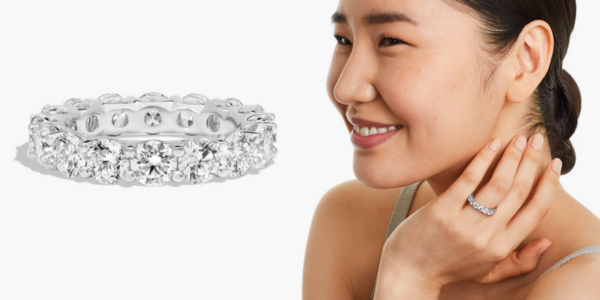
Low Dome Basket Eternity Ring With 5
|
|
| See What Makes This Low Dome Basket Eternity Ring With 5 Ctw Diamonds In 14k White Gold (4.00mm) A True Head-turner! |
Shift toward symmetry and brightness
Cutters experimented with angles and facet alignment to create more balanced light return and cleaner patterns. You notice diamonds from this period start to show crisper sparkle compared to older cuts. This stage feels like an exciting bridge between history and modern brilliance.
Larger table, reduced culet phase
Transition-era stones often feature a slightly larger table and a reduced culet, leading to brighter face-up appearance. You can see more light entering and reflecting through the stone, giving the diamond a brighter personality. These features make transitional brilliants appealing if you enjoy antique style with a little extra sparkle.
Industrial and fashion influences
As diamond production increased and fashion demanded more shine, cutters embraced innovations like mechanical bruting. This shift allowed more precise shaping, so you get diamonds with smoother outlines and better optical performance. The blend of technology and style helped pave the path for the round brilliant shape we cherish today.
|
|
2.c) Modern Round Brilliant EraBack To Top |
The modern round brilliant diamond represents a breakthrough in optical science and precision craftsmanship. You benefit from exact angles, computer-controlled cutting, and mathematical brilliance that maximize sparkle and fire.
Marcel Tolkowsky’s calculations and optical science
In 1919, Marcel Tolkowsky used mathematics to define ideal angles, table percentages, and depth ratios that optimize light return in a round diamond. His research shaped the modern understanding of brilliance, fire, and scintillation, giving cutters a scientific roadmap. When you choose a modern round brilliant diamond, you choose a cut built on proven optical principles.
Precision cutting, lasers and symmetry
With lasers and advanced polishing tools, modern cutters shape facets with incredible accuracy and symmetry. This precision means you enjoy consistent sparkle across the entire diamond surface, even in low light. Seeing perfect symmetry feels almost magical, like the diamond is dancing with light.
Maximizing brilliance, fire and scintillation
Modern round brilliant diamonds aim to achieve all three elements of beauty: brilliant white light, colorful fire, and lively sparkle when the stone moves. You get a diamond that looks alive, energetic, and radiant from every angle. It is no surprise that this cut stays No. 1 in popularity, offering performance that makes your eyes light up with joy.
|
|
3) Round Brilliant Diamond Facets: How 57/58 Facets Create Maximum SparkleBack To Top |
A round brilliant diamond earns its fame from clever engineering, not luck. With 57 or 58 facets positioned at precise angles, this cut unlocks intense sparkle, fire, and a lively dance of light. You see a bright, crisp shine because each facet works like a tiny mirror, working together to return light to your eye.
|
|
3.a) Facet Structure Explained (57 vs 58 Facets)Back To Top |
Arrangement of Facets in a Round Brilliant Diamond
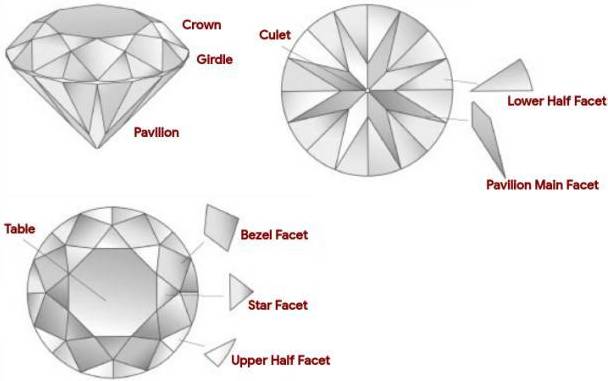
Every facet in a round brilliant diamond has a job, and they function as a team to control light. You can think of this diamond as a carefully tuned optical instrument, with each surface guiding brightness and rainbow flashes. Whether it has 57 facets or 58, the focus stays on maximizing brilliance and elegance.
Table, crown, and pavilion anatomy
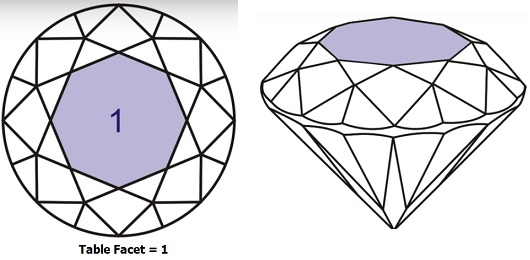
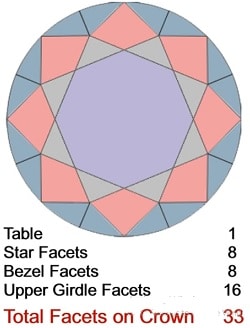
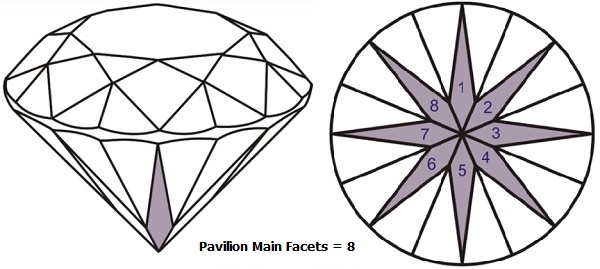
A round brilliant diamond features three key zones that control light: the table, the crown, and the pavilion. The table is the large flat top where light enters and reflects, while the crown facets help break white light into rainbow fire. Beneath that, the pavilion facets push light back up through the top, giving you that bold sparkle you notice from across the room.
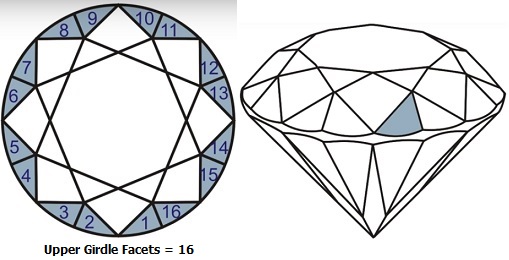
Star, bezel, upper girdle and lower girdle facets
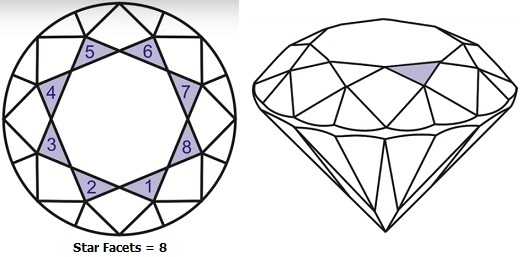
Star facets sit near the table and help spread light evenly across the stone, so you see bright reflections instead of dull patches. Bezel and upper girdle facets guide light as it enters and bounces around, shaping both brilliance and pattern. Lower girdle facets stretch down the pavilion and increase scintillation, adding those crisp sparkles you catch when the diamond moves.
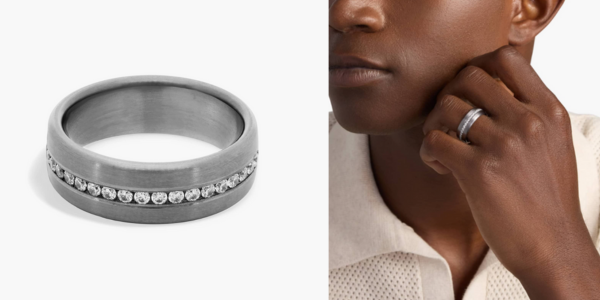
Satin Finish Diamond Wedding Ring In Grey Tantalum |
|
| Fall For The Details — Click To Reveal More About This Satin Finish Diamond Wedding Ring In Grey Tantalum! |
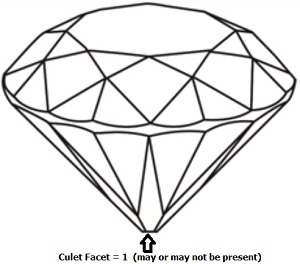
Culet facet and zero culet version
Some round brilliants have a tiny culet facet at the bottom, while modern stones often feature no culet at all. If a culet exists, you may spot a tiny dot when looking straight down into the diamond, though it does not reduce sparkle in well-cut stones. Many buyers prefer a “no culet” look because it keeps the diamond face-up appearance clean and uninterrupted.
57 vs 58 facets optical effect
A diamond with 58 facets has a tiny culet, while a 57-facet diamond has no culet. You do not lose sparkle either way when the cut quality stays high, though some purists enjoy the traditional feel of a culet. Most modern round brilliants skip it, giving a sleek, flawless center with a bright mirror-like effect.
Round Brilliant Diamond Table Facet
Round Brilliant Diamond Star Facets
Bezel Facets
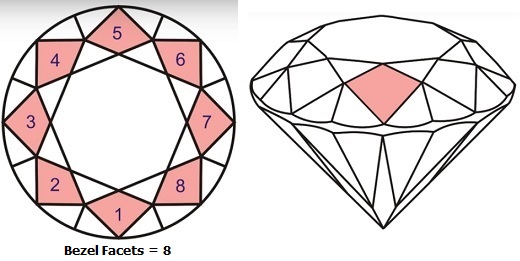
Round Brilliant Diamond Upper Girdle Facets
Round Brilliant Diamond Total Crown Facets
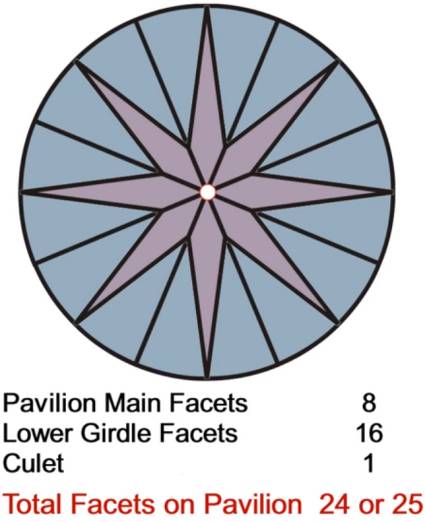
Pavilion Main Facets
Round Brilliant Diamond Lower Girdle Facets
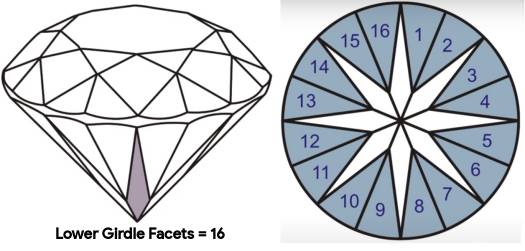
Round Brilliant Diamond Culet Facet
Round Brilliant Diamond Total Facets on Pavilion
Round Brilliant Diamond Total Facets
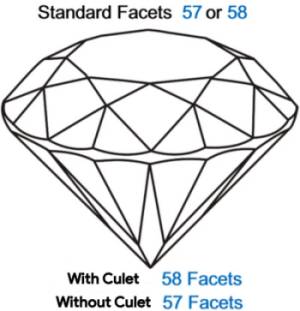
|
|
3.b) Light Performance ExplainedBack To Top |
Round brilliant diamonds stand above all other shapes because they nail the three pillars of light performance: brilliance, fire, and scintillation. You get bright white flashes, bursts of rainbow color, and lively sparkles the moment it catches light. These qualities work together to create a diamond that feels full of life and personality.
Brilliance: white light return
Brilliance comes from how well a diamond reflects white light back to your eye. A well-cut round brilliant sends light upward instead of letting it leak through the sides or bottom. If you enjoy that dramatic, crisp shine that almost feels electric, strong brilliance delivers exactly that.
Fire: spectral color dispersion
Fire refers to tiny flashes of color that appear when white light splits inside the stone. Round brilliants with ideal angles and facet symmetry produce vivid spectral bursts, like miniature rainbows inside the diamond. This colorful sparkle gives the stone personality and makes it feel more magical and alive, especially under spotlights or sunlight.
Scintillation: sparkle during movement
When a diamond moves and you see bursts of bright light flicker across the surface, you are experiencing scintillation. Round brilliants excel at this because their facet pattern creates sharp contrast between light and dark areas as the stone shifts. This lively sparkle makes the diamond look playful, energetic, and captivating, like a spark of lightning caught inside a gemstone.
|
|
3.c) Ideal Facet ProportionsBack To Top |
Small changes to facet percentages and angles can transform a diamond from average to breathtaking. You see the difference in the way light bounces, the sparkle intensity, and even the pattern you see when looking down the stone. That is why ideal facet proportions matter so much when choosing a round brilliant.
Table size and crown angle
The table should stay within an optimal percentage range to let just the right amount of light in. A balanced crown angle helps break light into vivid fire without dulling the brightness. When these two measurements work together, you get a diamond that looks crisp, vivid, and full of life.
Pavilion depth and lower halve length
The pavilion depth controls how light reflects inside the diamond, so a correct depth keeps light bouncing upward instead of leaking out. Longer lower halves often create thinner, more refined sparkles, adding elegance and a modern feel. You will notice that diamonds with ideal pavilion angles and lower halves appear more intense and vibrant.
Symmetry and facet alignment importance
Precise symmetry and tight facet alignment help create clean, balanced light performance and even sparkle across the stone. When every facet lines up properly, the diamond shows a beautiful pattern and strong brightness with no dull areas. People with a sharp eye for sparkle often choose diamonds with excellent symmetry because the difference feels striking and satisfying.
|
|
4) Understanding GIA Cut Grades For Round Brilliant DiamondsBack To Top |
Cut quality affects how bright, fiery, and lively a round brilliant diamond looks, and the GIA grading system helps you judge it with confidence. You can trust this scale because it measures brilliance, fire, symmetry, polish, and overall craftsmanship. When you learn how GIA cut grades work, you feel more sure about choosing a diamond with strong light performance and stunning sparkle.
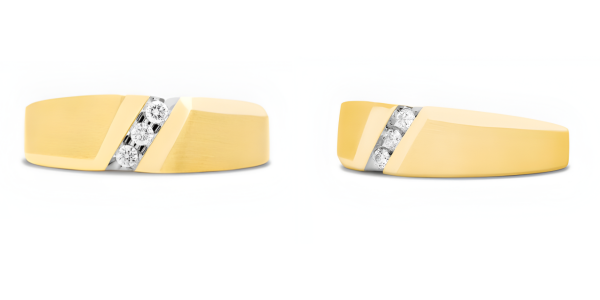
Slope Men’s Diamond Wedding Band
|
|
| Get All The Details On This Gorgeous Slope Men’s Diamond Wedding Band In 14k Yellow Gold (7.50mm) — Click Now! |
|
|
4.a) GIA Cut Quality ScaleBack To Top |
GIA evaluates round brilliant diamonds using five grades that reveal how well the stone handles light. You want to pay close attention, because even a tiny difference in cut can change how bright and clean the diamond looks in real life. By understanding this scale, you pick diamonds that shine beautifully in everyday settings, not just under store lights.
Excellent, Very Good, Good, Fair, Poor
GIA uses these five cut grades to show how well a diamond reflects light: Excellent, Very Good, Good, Fair, and Poor. An Excellent cut delivers the most sparkle, brightness, fire, and balance, while lower grades show weaker performance. If you want a diamond that feels full of life and radiance, you usually aim for Excellent or Very Good.
Importance of symmetry and polish
Symmetry and polish influence how clean and balanced the diamond looks as light moves through it. High symmetry keeps reflections even and sharp, while high polish avoids haze or dull areas on the surface. When both stay strong, you enjoy a diamond that feels crisp, glassy, and visually satisfying from every angle.
Brightness, fire, pattern evaluation factors
GIA checks how light returns through the diamond, how much colored sparkle appears, and how evenly the facets create light and dark contrast. Brightness ensures a bold white flash, fire gives you rainbow color bursts, and pattern controls the diamond’s balance. The right mix gives you a diamond that catches the eye and keeps it there.
|
|
4.b) “Unmodified Round Brilliant” DefinitionBack To Top |
GIA uses the term “unmodified round brilliant” to describe diamonds cut to the standard round shape with the expected number of facets. You see consistent performance in these stones because they follow a tested layout for brilliance, fire, and scintillation. Understanding this label helps you separate true round brilliants from near-round or altered versions.
Standard facet arrangement rules
To qualify as an unmodified round brilliant, the diamond must follow the classic facet blueprint: 57 or 58 facets arranged with a symmetrical round outline. This format supports strong light return and balanced sparkle across the face of the stone. When cutters follow this pattern, the diamond displays the clean brilliance people expect from a round cut.
2005 modern GIA rounding conventions
In 2005, GIA introduced updated cut standards for round brilliant diamonds based on research into human visual preference and optical physics. These standards fine-tuned proportion guidelines, so modern grading feels more accurate and consistent. When you buy a diamond graded after these standards came into place, you benefit from a clearer understanding of light performance and beauty.
Why antique diamonds are graded differently
Antique diamonds like Old European cuts do not follow modern proportion rules, so their grading relies on different visual expectations. These gems show gentle sparkle and wide flashes of light, giving them charm but less precision than today’s cuts. If you enjoy vintage romance and historical style, you can still fall in love with these stones even though they do not hit modern brilliance targets.
|
|
4.c) Professional Performance EvaluationBack To Top |
Expert graders often use tools beyond a standard GIA certificate to assess diamond light performance. You gain deeper insight by viewing how light enters, reflects, and exits the stone. This helps you spot diamonds with exceptional sparkle that might stand out even within the same grade level.
ASET and Idealscope light maps
ASET images highlight how well the diamond captures and returns light from all angles, while Idealscope views reveal areas of leakage. These tools show where light enters, where it reflects, and where it escapes, giving you a clear picture of brilliance and efficiency. By looking at these images, you can feel more confident choosing a diamond with strong brightness and balanced contrast.
Hearts-and-arrows symmetry check
A hearts-and-arrows pattern appears in diamonds with extremely precise facet alignment and symmetry. When you view the stone under a special scope, you see clear heart shapes from the pavilion side and arrow shapes from the crown side. This visual pattern shows extremely disciplined craftsmanship and gives the diamond a refined, crisp sparkle.
Why “Excellent” does not always mean peak brilliance
Even within the Excellent category, performance can vary based on proportions and optical precision. You may find that some Excellent stones look brighter, sharper, or more lively than others because symmetry, angles, and facet length still matter. That’s why comparing actual sparkle before buying makes a huge difference, and it lets your eyes decide which diamond feels truly electric.
|
|
5) Buying The Best Round Brilliant Diamond: Key CriteriaBack To Top |
Choosing a round brilliant diamond gets easier once you understand which features affect sparkle, value, and beauty the most. You want a diamond with strong cut proportions, pleasing color, clean clarity, and a carat weight that suits your taste and budget. With the right knowledge, you pick a gem that shines bright in real life, not only under shop lights.
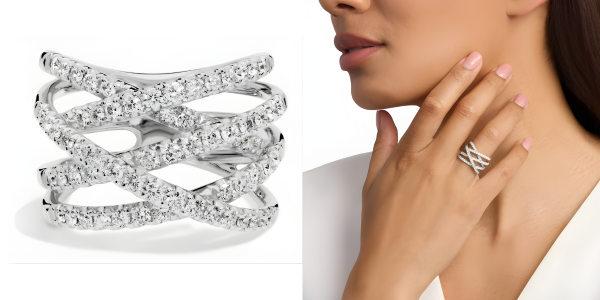
Diamond Wrap Fashion Ring In
|
|
| Get The Scoop On This Diamond Wrap Fashion Ring In 14k White Gold (1 Ct. Tw.) Before It’s Sold Out! |
|
|
5.a) Best Cuts And Proportions To ChooseBack To Top |
Cut drives sparkle in a round brilliant diamond more than any other factor. You benefit from balanced angles, proper depth, and an ideal table size because they shape how light moves inside the stone. By focusing on cut quality, you secure a diamond that looks lively, crisp, and full of energy.
Table %, depth %, crown & pavilion angles
Ideal proportions matter because they guide brightness, fire, and contrast. The table size, depth percentage, crown angle, and pavilion angle work together like a choreographed light routine, making the diamond appear radiant from every angle. When these proportions sit within proven ranges, the stone reflects light efficiently and appears clean, sharp, and brilliant to your eye.
Using the Holloway Cut Advisor (HCA)
The Holloway Cut Advisor helps you judge cut quality by scoring a diamond’s proportions for light return, fire, sparkle, and spread. You enter pavilion angle, crown angle, depth, and table size, and the tool gives you a score that helps narrow your choices fast. You still need your eyes and proper images too, but HCA acts like a quick filter so you avoid stones with weak light performance.
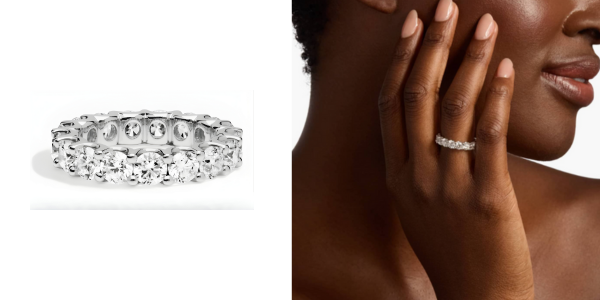
Luna Diamond Eternity Ring In Platinum (4 Ct. Tw.) |
|
| Tap The Image And Discover The Beauty Of Luna Diamond Eternity Ring In Platinum (4 Ct. Tw.) Today! |
Why cut trumps color and clarity
Strong cut quality makes even a lower-color or mid-clarity diamond look more stunning than a poorly cut stone with flawless grades. Because sparkle grabs attention first, you enjoy more beauty and life when cut takes priority. By leading with cut, you protect both value and visual impact, since light performance defines the round brilliant’s charm.
|
|
5.b) Best Clarity, Color And Carat ChoicesBack To Top |
Round brilliant diamonds handle clarity and color well because their sparkle hides tiny marks and slight warmth. You can choose smart grades that look clean and bright while staying within a sensible budget. The goal stays simple — choose what looks appealing to your eye, not just what appears high on paper.
Eye-clean clarity sweet spot
Round brilliant diamonds often look clean in the SI1 to VS2 clarity range because their sparkle masks tiny inclusions. As long as the stone appears clean when you view it without magnification, you enjoy the same beauty as a higher-grade diamond without stretching your budget too far. Your eyes judge clarity better than a lab sheet alone, so trust what you see when inspecting the stone.
Color grades that suit white and yellow gold
Round brilliants can look bright even in slightly lower color grades because their cut disperses light strongly. You get a crisp white look in white metals with grades from D to H, while warm metals like yellow or rose gold complement I or J tones beautifully. Matching color to metal helps your diamond glow rather than compete with the setting.
Fluorescence pros and cons
Fluorescence can help lower-color diamonds appear slightly whiter, especially under daylight. In many diamonds, faint to medium fluorescence stays visually neutral, so you enjoy value without losing beauty. Very strong fluorescence may introduce a slight haze in rare cases, so inspect the diamond in person when possible.
|
|
5.c) Why Round Brilliants Cost MoreBack To Top |
Round brilliant diamonds often cost more because they waste more rough material and remain the top choice for engagement rings and fine jewelry. You see consistent demand across decades, which keeps prices steady and competitive. With this cut, the combination of beauty, precision, and tradition adds value that other shapes rarely match.
High rough diamond wastage during cutting
Cutters remove a large portion of the original rough stone to shape a perfect round brilliant, which raises production cost. Since more material is lost, the price per polished carat increases compared to fancy shapes that use rough more efficiently. This careful shaping gives the round brilliant its striking symmetry and high light return, and that craftsmanship adds value.
Universal demand and resale value
Round brilliants stay in demand across cultures and generations, so they hold resale strength better than many fancy cuts. Because most buyers prefer this shape, it remains a steady choice whether you keep it forever or plan to resell later. High market trust gives you confidence and peace of mind when investing in this cut.
Price premium in engagement rings
Engagement ring shoppers choose round brilliants more than any other diamond shape, which supports premium pricing. Jewelers stock more round diamonds, offer more designs for them, and often highlight them in their best collections. That strong emotional and cultural demand helps keep round diamonds in a class of their own.
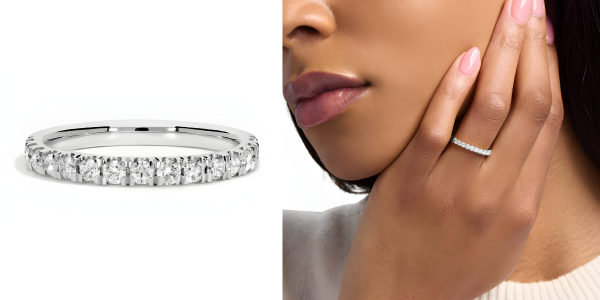
Scalloped Pavé Diamond Ring In Platinum (1/2 Ct. Tw.) |
|
| Click The Image To See Why This Scalloped Pavé Diamond Ring In Platinum (1/2 Ct. Tw.) Stands Out! |
Round brilliant diamonds shine in every jewelry style thanks to their unmatched sparkle and balanced symmetry. You can wear them with casual looks, grand celebrations, and everything in between because they adapt with ease and grace. Their versatility makes them a favorite choice for engagement rings, earrings, necklaces, and luxury bracelets.
|
|
6) Round Brilliant Diamonds In JewelryBack To Top |
|
|
6.a) Engagement RingsBack To Top |
Most couples choose round brilliant engagement rings because this cut symbolizes devotion, clarity, and bright beginnings. You see an elegant light show that stays romantic and confident in any setting style, from classic solitaires to detailed halos. With a round diamond ring, you get a timeless piece that never feels out of fashion.
Classic solitaire power
Nothing beats the quiet power of a round brilliant solitaire. It draws the eye straight to the diamond, showing its sparkle without distraction, like a spotlight on a star performer. When you wear a solitaire, the shine feels pure, confident, and forever elegant — a style that whispers luxury without trying too hard.
Pavé, halo, and three-stone brilliance
Round diamonds look magical with pavé bands, halo frames, and three-stone settings because the smaller diamonds amplify the center stone’s sparkle. Each accent stone boosts brilliance, creating a glowing effect that feels romantic and rich. If you love drama and shimmer, these settings wrap your finger in light and create a ring that sparkles with every move.
Why round dominates bridal category
Round brilliants continue to rule bridal jewelry because they balance shine, tradition, and emotional appeal. The bright sparkle symbolizes a future full of joy, and the shape fits countless ring styles, from vintage to modern. When you choose a round diamond for your engagement ring, you choose a cut that has won hearts for generations and feels as perfect today as ever.
|
|
6.b) Earrings And StudsBack To Top |
Round diamond studs remain a jewelry staple, offering a crisp, radiant look that brightens your face instantly. You can dress them up or wear them with a simple tee; either way, they deliver effortless sparkle. Many people start their diamond collection with stud earrings because they always feel right, day or night.
Perfect symmetry for ear studs
Round diamonds give you balanced sparkle from all angles, which is why they excel in earrings. As you move, the uniform shape reflects light evenly, framing your face with soft sparkles and clean brilliance. You feel polished and bright, almost as if you carry your own little spotlight wherever you go.
Ideal carat weights and matching pairs
Choosing matching round diamonds matters because symmetry makes pairs look harmonious on your ears. While any size works depending on your style, many people find sweet spots in sizes like 0.50 ct each or 1 ct each because they offer strong shine without feeling too bold or too small. The right pair looks natural, lifts your look, and gives you confidence no matter where you go.
Metal choices and setting tips
Round studs look stunning in white gold, yellow gold, platinum, or rose gold, so you can match them to your skin tone and style. Smooth prong settings keep the diamonds visible, letting light flow in and out freely for extra sparkle. If you want a modern twist, try bezel settings that frame the diamonds neatly while offering a sleek, secure finish.
|
|
6.c) Necklaces, Bracelets And Luxury PiecesBack To Top |
You can enjoy round diamonds on your neckline, wrist, or layered with other jewelry for a refined look. The round shape brings fluid sparkle to chains and tennis bracelets, making each piece feel polished and glamorous. These designs let you wear diamonds in everyday life, giving you a glow that never fades.
Round diamond pendants and chains
A round diamond pendant feels graceful and personal, like a tiny galaxy hanging at your heart. It works well with thin chains for a minimalist style, or with diamond-lined chains for a bold luxury look. You get a piece you can wear daily without feeling overdressed, because round diamonds blend simplicity and sparkle beautifully.
Tennis bracelets and stacking trends
Round diamonds in tennis bracelets create a fluid ribbon of sparkle around your wrist. The symmetry and consistent fire give these bracelets a fine-jewelry glow that stands out while still feeling refined and soft. You may stack them with bangles or wear one solo, either way the look stays polished and glamorous.
Combining rounds with baguettes and fancy cuts
Round diamonds pair beautifully with baguettes, emerald-cuts, pears, and marquise shapes because contrast adds dimension. Mixing shapes gives jewelry a visual rhythm — rounds bring brightness and fire, while step-cuts add calm flashes and clean lines. This blend creates pieces that feel rich and artistic, perfect if you enjoy jewelry with personality and depth.
|
|
7) Round Brilliant vs Other Diamond CutsBack To Top |
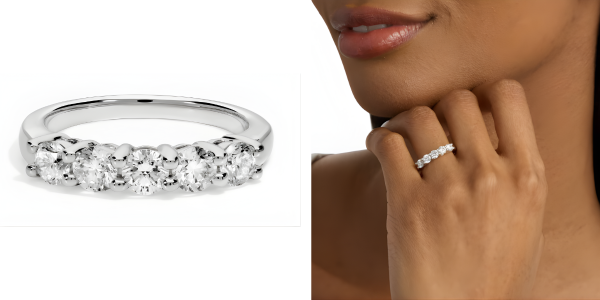
Eternal Five Stone Diamond Ring
|
|
| Curious About This Eternal Five Stone Diamond Ring In Platinum (1 Ct. Tw.)? Tap And Learn More Instantly! |
Round brilliant diamonds stand at the top for sparkle, symmetry, and universal appeal. You get a bright, crisp look that performs beautifully in soft light, sunlight, and indoor lighting. Comparing rounds to other shapes helps you decide whether you want maximum sparkle or a unique personality in your diamond.
|
|
7.a) Round vs Oval, Princess, Cushion And EmeraldBack To Top |
When you weigh round diamonds against oval, princess, cushion, and emerald-cut shapes, you notice clear differences in sparkle, face-up size, and style personality. Each cut carries its own charm, so your choice depends on whether you want bright fire, sleek lines, or a vintage feel. Understanding these contrasts makes your selection process smoother and more confident.
Face-up size and finger coverage
Oval diamonds often appear larger than round diamonds of the same weight because their elongated shape spreads surface area. Princess and cushion cuts may look slightly smaller face-up due to deeper profiles, while emerald cuts show long clean facets but less width. If you like a diamond that fills the finger visually, ovals and pears stretch the look, while rounds focus on balanced presence and symmetry.
Sparkle, brilliance and light behavior
Round brilliants show the most intense sparkle thanks to their perfect symmetry and optimized facet pattern. Ovals and cushions offer soft, romantic flashes, while princess cuts deliver sharp, edgy light reflections. Emerald-cut diamonds create long, mirror-like flashes instead of glittery sparkle, making them ideal if you enjoy smooth, elegant light play rather than a burst of tiny sparkles.
Price differences and style preferences
Fancy shapes like ovals, cushions, and princess cuts often cost less than round diamonds because they waste less rough during cutting. You may find a bigger stone for the same price in those styles, which helps if size matters more than peak sparkle. Still, many buyers choose round diamonds because they offer a classic look, brilliant performance, and strong long-term appeal.
|
|
7.b) Round vs Antique CutsBack To Top |
Modern round brilliant diamonds shine with strong brightness and fire, while antique cuts feel soft, romantic, and nostalgic. You can pick the style that speaks to your taste, whether you love modern precision or old-world charm. Both options carry beauty; they simply express it differently.
Fire and brilliance vs warm vintage glow
A modern round brilliant diamond gives you bold white sparkle and vivid fire — the kind that catches your eye even across a room. Antique cuts like Old Mine and Old European show wider flashes and gentle shimmer, perfect for lovers of vintage jewelry. If you want drama and electricity, go modern; if your heart leans romantic and poetic, antique stones feel like tiny time capsules.
Culet differences and facet style
Modern rounds usually skip the culet, giving a clean pointed base and uninterrupted reflection when viewed face-up. Older cuts show a visible culet, often appearing as a tiny dot in the center, adding character and charm to their antique look. Facet patterns differ too — vintage stones favor chunky facets, while modern rounds create a crisp, high-contrast sparkle.
Choosing modern vs period charm
|
|
8) Hearts-And-Arrows Round Brilliant DiamondsBack To Top |
Hearts-and-arrows diamonds take round brilliant cutting to a higher level of precision and beauty. You see perfect symmetry, sharp contrast, and intense sparkle that feels almost hypnotic. When you view one in person, it becomes clear why collectors and serious diamond lovers admire this pattern so much.
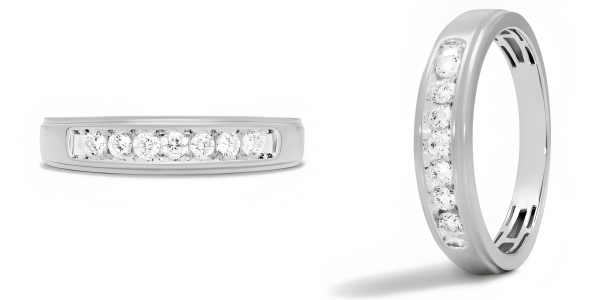
Slender Channel Men’s Diamond Wedding
|
|
| Don’t Miss Out! Explore This Slender Channel Men’s Diamond Wedding Band In 14k White Gold (5.50mm) In Full Detail Now! |
|
|
8.a) What Makes A Hearts-And-Arrows Diamond SpecialBack To Top |
A true hearts-and-arrows diamond has facet alignment so precise that it forms a clear pattern of eight hearts and eight arrows under special magnification. This level of craftsmanship increases light performance, giving you crisp brilliance, strong fire, and dramatic scintillation. Because of this quality, hearts-and-arrows diamonds carry a special reputation among people who want the best optical symmetry.
Optical precision and symmetry standards
To qualify as hearts-and-arrows, the diamond must show tight facet alignment, perfect angles, and sharp contrast under a hearts viewer. Every facet must sit in harmony, so light reflects evenly without distortion or uneven patches. When you choose a diamond cut at this level, you enjoy a clean, razor-sharp sparkle that feels both refined and powerful.
Hearts and arrows pattern meaning
The arrows appear when you look through the crown, and the hearts appear when you look through the pavilion using a special scope. These shapes prove the diamond meets strict symmetry standards and that each facet works in balance with the others. You get a diamond where every angle and surface works together to create a light show that feels smooth, elegant, and full of life.
Difference from generic excellent cuts
Not every Excellent-cut diamond displays hearts-and-arrows, since the grade allows some variation in symmetry and facet length. Hearts-and-arrows stones sit in the top tier of precision, meaning they shine with cleaner patterns and more even sparkle. If you want a round brilliant with elite light performance, hearts-and-arrows gives you that extra polish and refinement.
|
|
8.b) How To Verify Authentic H&A DiamondsBack To Top |
You should always verify hearts-and-arrows diamonds instead of assuming the label tells the full story. Tools like the hearts viewer and images from the seller help you confirm the pattern and ensure true optical precision. With the right information, you avoid marketing hype and pick a diamond that genuinely delivers elite symmetry and brilliance.
Hearts viewer, Idealscope, ASET
A hearts viewer reveals the heart shapes from the bottom, while an arrows view shows the arrows from the top, proving symmetry accuracy. Idealscope images help you check light return and spot any leakage, and ASET maps show light distribution. When you review these visuals, you see whether the diamond handles light efficiently, giving you confidence in your choice.
Distinguishing true precision from marketing
Some sellers use the hearts-and-arrows term loosely, so you want to rely on images, not claims. True hearts-and-arrows diamonds show clean hearts with distinct separation and crisp arrows without distortion. When you spot an uneven heart or a bent arrow, the diamond may still sparkle, but it does not meet the strict standards that define this category.
When the H&A premium is worth paying
You may pay more for hearts-and-arrows diamonds because they require extra cutting skill, time, and rough loss. If you value top-tier light performance, absolute symmetry, and a refined sparkle that looks stunning even up close, the premium feels justified. On the other hand, if you simply want a bright diamond without chasing perfection, a well-cut Excellent stone may suit you just fine.
|
|
9) Round Brilliant Diamond Price GuideBack To Top |
Round brilliant diamonds follow clear pricing patterns, and understanding them helps you choose wisely without guesswork. You see prices vary by carat weight, cut quality, clarity, and color, and each factor affects beauty and budget differently. With the right approach, you balance value, sparkle, and size to get a diamond that feels worth every rupee or dollar you invest.
|
|
9.a) Diamond Price RangesBack To Top |
Round brilliant pricing often sits higher than other shapes because demand remains strong and cutting yields less usable rough. You will notice dramatic price jumps at certain carat weights, especially near 1.00 ct, 1.50 ct, and 2.00 ct. Learning these patterns lets you shop smart and stretch your budget further.
Price per carat for common sizes
Larger diamonds cost more per carat because they are rarer and harder to cut from rough stones without losing too much weight. You may find that a 0.90 ct stone looks almost as big as a 1.00 ct stone, yet costs noticeably less, making that size a clever value zone. By exploring price breaks near key carat marks, you often secure better sparkle without overspending.
Budget benchmarks for quality grades
Pricing rises quickly when you move from Very Good to Excellent cut, and from SI clarity to VS grades. You can target combinations like Excellent cut, H to I color, and VS2 to SI1 clarity to balance clarity, color, and sparkle without paying unnecessary premiums. When you focus on eye-clean, bright stones instead of chasing perfect grades, your money works harder for you.
Price trends driven by demand
Round brilliant diamonds hold price strength because they remain the most requested shape in engagement rings and fine jewelry. Demand keeps inventory moving, and retailers rarely discount quality rounds because they know buyers keep returning for them. If you plan ahead and compare trusted sellers, you spot fair deals while still getting a premium-quality stone.
|
|
9.b) What Affects Pricing MostBack To Top |
Prices rise or fall based on how skillfully the diamond is cut, how clean and white it looks, and whether it carries a respected certification. You also pay a premium for stones with excellent symmetry, polish, and optimal light return. When you study these factors, you protect yourself from overpaying and build confidence as you choose your diamond.
Cut precision and light performance
Cut holds the biggest influence on price because it controls brilliance, fire, and overall sparkle. Even two diamonds with the same grade may look different, so you want to review proportions, symmetry, and images if available. By placing cut quality first, you ensure the diamond always looks lively, bright, and full of character.
Color and clarity value zones
Color and clarity affect price, yet round diamonds hide small inclusions well and appear bright even at near-colorless grades. You often get the best value in clarity ranges like SI1 to VS2 and colors from G through J, depending on the metal color and your taste. When the diamond feels clean and white to your eye, you know you chose wisely without forcing your budget.
Certification, brand and craftsmanship impact
GIA-certified round diamonds often carry more trust and value, since buyers feel confident about their grading accuracy. A recognized jeweler or cutter may charge a premium for craftsmanship and precision, especially for hearts-and-arrows or super-ideal rounds. If you pay extra for a brand, make sure you see the brilliance and finish quality that justify the added cost, so your diamond shines proudly every time you wear it.
|
|
10) FAQs About Round Brilliant DiamondsBack To Top |
Round brilliant diamonds tend to raise common questions about facets, sparkle, clarity, color, fluorescence, and ideal sizes. You want simple answers that help you shop with confidence and avoid confusion. This section clears up key doubts so you feel prepared to choose the right round diamond without second-guessing your decision.
|
|
10.a) Common Buyer QuestionsBack To Top |
Many buyers ask how many facets round brilliants have, how table size affects sparkle, and whether rounds beat other shapes. You also may wonder about clarity, color, fluorescence, and which carat size looks good for engagement rings. With clear guidance, you make smarter buying decisions and avoid costly mistakes.
How many facets does a round brilliant diamond have?
A round brilliant diamond usually has 57 facets, or 58 facets if it has a small culet. These facets work like tiny mirrors that reflect light back to your eye, which gives the diamond its bright sparkle. When you choose a diamond with well-aligned facets, you enjoy sharper brilliance and cleaner flashes of fire.
Does table size affect sparkle?
Yes, table size matters because it influences how light travels through the diamond. A balanced table lets the crown angles and pavilion angles work together, creating strong brilliance and fire. When the table is too large or too small, the diamond can look glassy or dark, so staying near ideal ranges helps protect sparkle.
Is round better than princess or oval?
Round diamonds give you the strongest sparkle, while oval and princess shapes offer different style personalities and may look bigger for the same weight. If you value timeless elegance and bright light performance, round feels like a safe and rewarding choice. If you prefer a modern or elongated look, princess or oval may speak to your taste better — the “best” cut depends on your style.
Best clarity and color for round diamonds?
Round diamonds hide small inclusions well thanks to their lively sparkle, so VS2 to SI1 clarity often looks clean to the eye. Many shoppers choose color grades from D to H for a bright white look in white gold or platinum, while I and J can look lovely in yellow or rose gold. When the diamond looks clean and bright in person, you found the right balance between quality and value.
Should I buy fluorescence?
Fluorescence can help lower-color diamonds appear whiter, especially in sunlight, and faint to medium levels usually do not harm beauty. Very strong fluorescence may cause a light haze in rare cases, so viewing the diamond helps you feel sure. If the stone looks crisp and lively, fluorescence can actually save you money while still giving you a great look.
Best carat size for engagement rings?
Popular sizes include 0.75 ct, 1.00 ct, and 1.50 ct because they offer noticeable presence on the finger. Still, the “best” size depends on your hand shape, setting style, and budget — even a smaller stone looks stunning when cut well and set thoughtfully. Since sparkle draws the eye first, you win by prioritizing cut quality over carat alone.
|
|
11) ConclusionBack To Top |
Round brilliant diamonds stand as the most loved diamond cut because they deliver intense sparkle, balanced symmetry, and timeless charm. When you understand how facets, cut precision, and proper proportions affect brightness and fire, you shop with clarity instead of doubt. You feel confident choosing a diamond that looks stunning to your eye, suits your style, and reflects the emotions you want to express.
Whether you prefer a classic solitaire, glittering halo, or sleek diamond studs, the round brilliant fits effortlessly into every jewelry style. With smart choices in cut, color, clarity, and carat, you enjoy a diamond that lights up every room and still feels beautiful years from now. As you finish your search, trust your vision — the right round diamond brings joy, pride, and a sparkle that feels like magic each time you see it.
Or See More Diamond Shapes As Follows:
| Baguette Diamonds | Marquise Diamond |
| Princess Cut Diamonds | Asscher Cut Diamond |
| Emerald Cut Diamond | Cushion Cut Diamond |
| Oval Diamond | Radiant Cut Diamond |
| Pear Shaped Diamond | Diamond Shape |