|
1) Radiant Cut Diamond Definition |
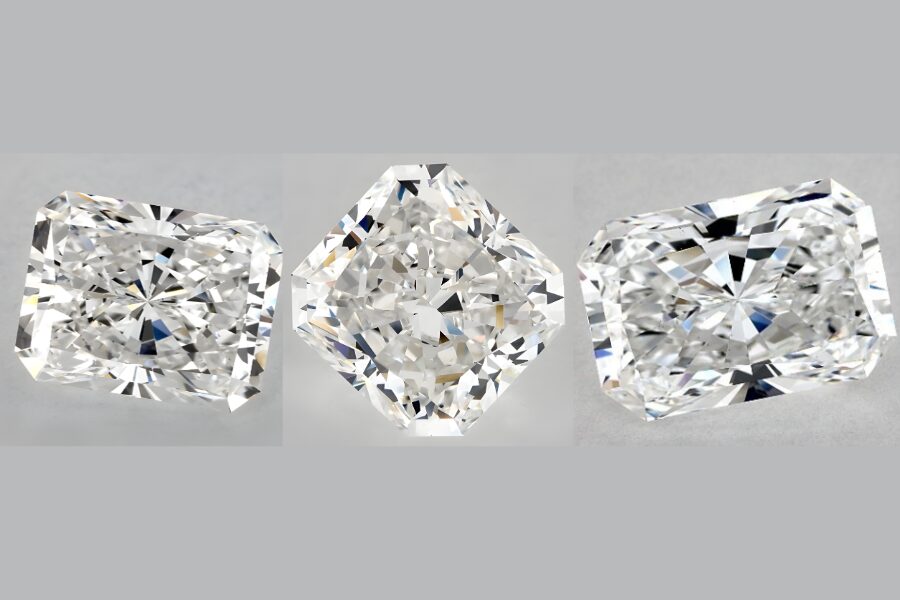
A radiant cut diamond is a square or rectangular hybrid diamond, combining elements of round brilliant and emerald cuts, with cropped corners and a lively, brilliant look. First introduced in 1977, it typically features 70 facets, which help maximize light return and sparkle. By pairing brilliant-style faceting with a clean, straight-edged outline, the radiant cut delivers a bold “crushed ice” effect and a modern visual punch.
Table Of Contents
- 1) Radiant Cut Diamond Definition
- 2) Origins and Evolution of the Radiant Cut Diamond
- 3) Radiant Cut Diamond Shape and Geometry
- 4) Faceting Style and Light Performance
- 5) Radiant Cut Diamond Quality Factors
- 6) Radiant Cut Diamond Durability and Wearability
- 7) Radiant Cut Diamond Compared to Other Shapes
- 8) Buying Guide for Radiant Cut Diamonds
- 9) Conclusion
- 10) Frequently Asked Questions About Radiant Cut Diamond

|
1.a) What Is a Radiant Cut Diamond?Back To Top |
Radiant cut diamonds are built to throw back light in fast, bright flashes, so you notice sparkle even in normal indoor lighting. Because the corners are cropped, the shape handles everyday wear better than sharp-corner styles when you pair it with a protective setting. You’ll see it used a lot in engagement rings and statement jewelry because it looks bold without needing a round outline.
Radiant Cut Diamonds |
|
|
Tap The Image To See An Awesome Collection Of Radiant Cut Diamonds! |
Clear Definition of a Radiant Cut Diamond Shape
A radiant cut diamond uses a dense brilliant-style facet layout spread across a square or rectangular outline. Those facets break light into many small reflections, which creates the signature crushed-ice visual instead of large mirror-like flashes. This structure explains why radiant cuts appear lively even when the proportions are slightly varied.
Shape Scope Clarification: Diamond Shape vs Cut Grade vs Clarity
Here, the term radiant cut refers strictly to the diamond’s shape and facet layout. It does not describe the cut grade assigned by a laboratory, nor does it refer to clarity or color quality. Keeping this distinction clear helps you judge shape, cut quality, and clarity as separate factors.
|
|
1.b) Why the Radiant Cut Is Considered a Hybrid Diamond ShapeBack To Top |
The radiant cut sits between classic step cuts and traditional brilliant cuts. Its outline echoes emerald and cushion shapes, while its facets behave more like a round brilliant. This mix gives you structure on the outside and sparkle across the surface.
Combination of Brilliant Faceting and Step-Cut Outline
Radiant diamonds use triangular and kite-shaped facets similar to brilliant cuts, which boosts light return. At the same time, the straight edges and rectangular form mirror step-cut geometry. This blend explains why radiant diamonds look sharper and brighter than many rectangular shapes.
How Radiant Cut Differs Structurally from Other Diamond Shapes
Structurally, radiant cuts have cropped corners that reduce stress points and improve durability. Compared to emerald cuts, they use many more facets, which increases sparkle. When set next to princess or cushion shapes, radiants stand out for their crisp outline paired with intense light play.
|
|
2) Origins and Evolution of the Radiant Cut DiamondBack To Top |
The radiant cut diamond emerged as a modern response to changing buyer tastes and advances in diamond cutting. You see its evolution shaped by the demand for strong brilliance in angular diamond shapes. Over time, this cut gained recognition for blending visual strength with lively sparkle.
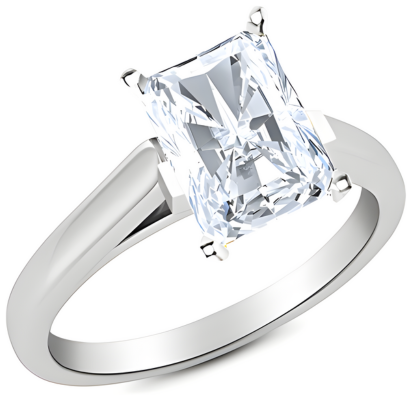
Radiant Cut Solitaire Diamond
|
|
|
Tap The Image To Reveal Full Details Of This Elegant Radiant Cut Diamond Engagement Ring! |
Radiant cuts were created to give you a rectangular or square outline with more sparkle than step-cut shapes. Cutters leaned on brilliant-style faceting to break light into many fast reflections, which is why you often see that “crushed ice” look. Since radiant cuts vary a lot by maker, the evolution of this shape also became a story of better planning, cleaner symmetry, and more consistent light return.
|
|
2.a) History of the Radiant Cut DiamondBack To Top |
The radiant cut diamond has a clearly documented and relatively recent origin in modern diamond cutting. It was introduced in 1977 by Henry Grossbard, a master cutter who aimed to solve a specific problem: how to give square and rectangular diamonds the sparkle buyers loved in round brilliants. This historical context matters because the radiant cut was engineered for light performance first, not tradition.
Development of the Radiant Cut in Modern Diamond Cutting
In the late twentieth century, cutters introduced the radiant cut to combine brilliance with straight-edged geometry. New faceting methods allowed light to bounce more freely inside rectangular and square diamonds. As a result, you get a shape that sparkles more than traditional step cuts while holding a clean form.
Why the Radiant Cut Was Created as an Alternative to Emerald Cut
Emerald cuts are admired for their clean lines and calm, mirror-like flashes, but their step-cut facets return light more slowly and reveal inclusions easily. To address this, cutters developed the radiant cut with a brilliant-style facet pattern that breaks light into many small reflections. This allowed buyers to keep the straight-edged, emerald-style outline while gaining stronger sparkle and better tolerance for minor inclusions.
|
|
2.b) Rise in Popularity of Radiant Cut DiamondsBack To Top |
As buyers began prioritizing sparkle, durability, and modern outlines, radiant cut diamonds gained steady traction in the engagement ring market. Their cropped corners reduced chipping risk, while the brilliant-style faceting delivered stronger light return than step-cut shapes. This mix made the radiant cut especially appealing to buyers who wanted a bold look without the fragility associated with sharp-cornered cuts.
Adoption in Engagement Rings and Statement Jewelry
Designers began using radiant cuts in engagement rings because the shape offers presence and durability. The cropped corners reduce wear at stress points, which suits everyday rings. In statement jewelry, the cut holds visual weight and draws attention through sharp flashes of light.
Influence of Modern Cutting Technology on Radiant Diamonds
Advances in cutting tools and planning software refined the radiant cut further. Precision faceting improved symmetry and light return across the stone. Because of this progress, you now see radiant diamonds with better sparkle, cleaner outlines, and more consistent quality.
|
|
3) Radiant Cut Diamond Shape and GeometryBack To Top |
Radiant cut diamonds stand out for their sharp outline and balanced proportions. You see a shape that blends straight edges with dynamic faceting for a bold look. Geometry plays a key role in how the diamond appears on the finger and how it handles light.
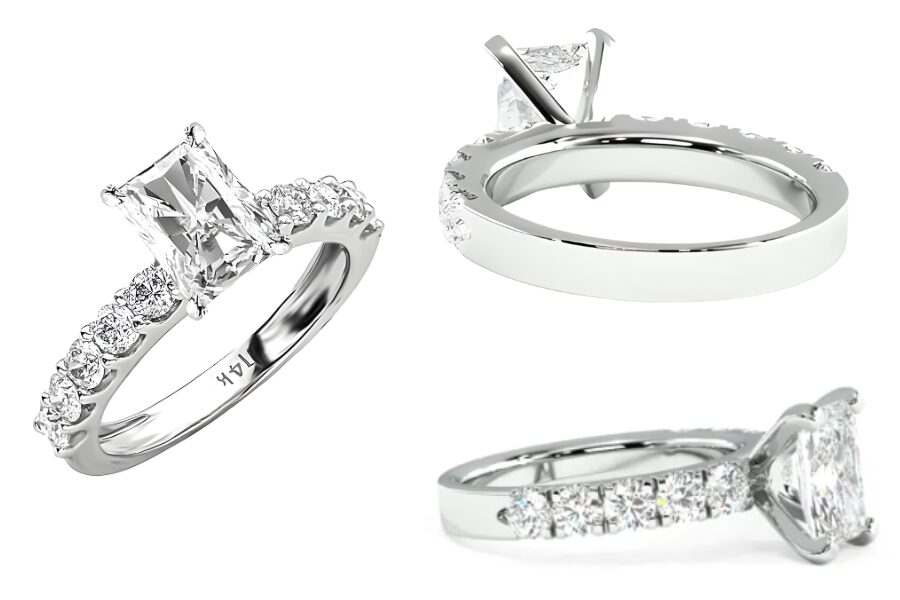
14K White Gold Prong Set Radiant
|
|
|
Click On The Image To View Details And Own This Gorgeous 14K
White Gold Prong Set Radiant Cut Diamond Engagement Ring! |
|
|
3.a) Outline and Proportions of Radiant Cut DiamondsBack To Top |
Radiant cut diamonds feature a square or rectangular outline with softly trimmed corners, giving them a strong yet refined shape. Unlike perfectly symmetrical rounds, their length-to-width ratio plays a visible role in how the diamond appears on the hand. Because proportions vary widely, two radiant cuts of the same carat weight can look very different in size and presence.
Rectangular vs Square Radiant Cut Diamond Shapes
Rectangular radiant diamonds look longer and more dramatic, which many buyers prefer for engagement rings. Square radiants feel compact and modern, with a balanced presence across the finger. Your choice here often comes down to whether you want length or symmetry.
Length-to-Width Ratios and Visual Impact
Length-to-width ratio influences how slender or bold a radiant cut diamond appears. Slightly elongated ratios create a graceful look, while lower ratios give a fuller outline. Paying attention to this detail helps you avoid stones that feel too narrow or too boxy.
|
|
3.b) Cropped Corners and Structural StrengthBack To Top |
The cropped corners of a radiant cut diamond serve a functional purpose beyond appearance. By removing sharp points, the design reduces stress concentration at the corners, which lowers the risk of chipping during daily wear. This structural advantage makes radiant cut diamonds more forgiving in active lifestyles and compatible with a wider range of settings.
Purpose of Trimmed Corners in Radiant Diamonds
Trimmed corners soften the diamond’s outline without rounding it off. This design lowers the risk of chipping at vulnerable points. As a result, you get a shape that looks sharp yet holds up well over time.
How Corner Design Improves Durability
Corner design spreads pressure more evenly across the diamond. Because stress does not concentrate at sharp tips, the stone handles daily wear better. For rings worn often, this added strength can make a real difference.
|
|
4) Faceting Style and Light PerformanceBack To Top |
Radiant cut diamonds are known for high sparkle driven by a brilliant-style facet pattern. Light performance plays a central role in why many buyers choose this shape over step-cut diamonds. Understanding how facets handle light helps you judge brilliance, fire, and overall visual energy.
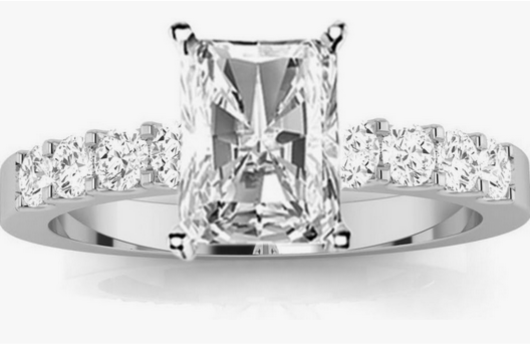
White Gold 3.5 Ctw Round Radiant
|
|
|
Turn Heads With This White Gold 3.5 Ctw Round Radiant Cut Diamond Engagement Ring. Tap The Image To Explore! |
|
|
4.a) Brilliant Faceting Pattern in Radiant Cut DiamondsBack To Top |
Unlike step-cut diamonds (such as emerald and Asscher cuts), a radiant cut uses a complex brilliant-style faceting pattern across both the crown and pavilion. These facets break incoming light into many small reflections, which increases sparkle and visual energy across the surface. As a result, radiant cut diamonds tend to look lively even in larger sizes or lower clarity grades.
Crushed Ice Effect Explained
Many radiant cut diamonds show what people call a crushed ice effect. Instead of broad flashes, you see many small, shimmering reflections that move as the diamond shifts. Some buyers love this look because it feels energetic, while others prefer more defined light patterns.
Sparkle Characteristics Compared to Step-Cut Diamonds
Step-cut diamonds, such as emerald cuts, produce long flashes of light rather than scattered sparkle. Radiant cuts behave differently, sending light back in short, bright bursts. If you enjoy constant sparkle rather than calm reflections, radiant cuts often feel more exciting.
|
|
4.b) Brilliance, Fire, and Scintillation BalanceBack To Top |
A radiant cut diamond delivers a strong balance of brilliance, fire, and scintillation due to its dense facet arrangement. Brilliance comes from white light returning directly to your eye, while fire appears as flashes of spectral color under spot lighting. Scintillation adds contrast and movement, giving the stone a lively look as it shifts with motion.
How Radiant Cut Maximizes Light Return
Light enters a radiant cut diamond and reflects repeatedly through angled facets. Those reflections redirect light back through the top of the stone, which boosts brightness. Because of this design, radiant cuts often look lively even in lower lighting.
Factors That Affect Sparkle in Radiant Diamonds
Several factors influence how much sparkle you see in a radiant cut diamond. Proportions, depth, and facet alignment all shape light behavior. When these elements work together, the diamond avoids dark zones and keeps its surface bright and engaging.
|
|
5) Radiant Cut Diamond Quality FactorsBack To Top |
Quality in a radiant cut diamond depends on proportions, facet balance, and overall light behavior. Since labs do not assign an official cut grade for radiant shapes, you need to judge performance with your eyes and basic metrics. Getting these factors right helps you avoid dull stones and pick one that looks bright in real life.
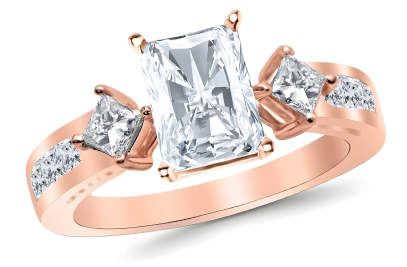
Three Stone Princess Radiant Cut Diamond Engagement Ring |
|
|
Click On The Image To View Details And Own This Gorgeous Three Stone Princess Radiant Cut Diamond Engagement Ring! |
|
|
5.a) Ideal Proportions for Radiant Cut DiamondsBack To Top |
Radiant cut diamonds do not receive an official cut grade, so proportions play a key role in visual performance. Well-balanced stones typically show moderate depth and table percentages that support strong light return without looking glassy or dark. When proportions fall outside these ranges, the diamond may lose sparkle or appear smaller than its carat weight suggests.
Depth and Table Percentage Considerations
Depth and table percentages affect brightness and face-up size. If the diamond is too deep, light escapes through the bottom and the stone looks smaller. When the table grows too large, sparkle drops and the diamond can appear flat.
Proportion Ranges That Enhance Brilliance
Balanced proportions help a radiant cut reflect light evenly across its surface. Well-proportioned stones show fewer dark areas and stronger sparkle from edge to edge. Choosing a diamond within proven proportion ranges gives you a better chance of lively light return.
|
|
5.b) Clarity and Color ConsiderationsBack To Top |
Because of its brilliant-style faceting, a radiant cut diamond tends to hide inclusions better than step-cut shapes. This allows you to prioritize eye-clean clarity rather than high grades that add cost without visible benefit. Color also appears slightly warmer in radiant cuts, so many buyers find near-colorless grades offer strong value without sacrificing beauty.
How Radiant Faceting Masks Inclusions
The dense facet pattern in a radiant cut breaks up reflections across the diamond. Because light scatters in many directions, small inclusions blend into the sparkle. You can often choose a slightly lower clarity grade without seeing flaws with the naked eye.
Best Color Grades for Radiant Cut Diamonds
Radiant cut diamonds show color more than round diamonds but less than step cuts. Mid-range color grades often look white once set, especially in yellow or rose gold. By balancing color grade with setting choice, you can control appearance without overspending.
|
|
6) Radiant Cut Diamond Durability and WearabilityBack To Top |
A radiant cut diamond is built for real-world wear, combining strong geometry with practical design features. Its cropped corners and balanced facet layout help reduce damage risks while keeping the stone visually lively. If you want a diamond that looks bold and holds up well, this shape fits the brief.
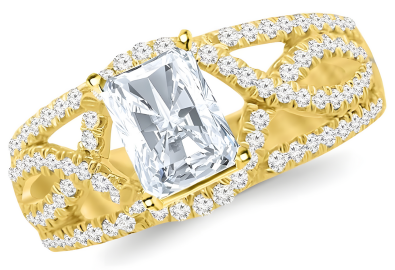
Radiant Cut Diamond Engagement Ring
|
|
|
Click On The Image And Bask In The Glory Of This Gorgeous Radiant Cut Diamond Engagement Ring 14K Yellow Gold Eternity Split Shank! |
|
|
6.a) Structural Strength of Radiant Cut DiamondsBack To Top |
Radiant cut diamonds are structurally stronger than many pointed or cornered shapes. The trimmed corners and even facet distribution reduce stress points that often lead to chips. This design makes the radiant cut a reliable option for rings worn every day.
Why Radiant Cuts Are Less Prone to Chipping
Sharp corners tend to concentrate impact force, which raises the risk of breakage. Radiant cuts remove those vulnerable points by cropping the corners, spreading pressure more evenly across the stone. As a result, accidental knocks are less likely to cause visible damage.
Suitability for Daily Wear Jewelry
Because of this added strength, radiant cut diamonds work well in engagement rings and daily wear pieces. You can wear them confidently without constant worry about corner damage. This balance of sparkle and toughness makes the shape especially appealing for active lifestyles.
|
|
6.b) Setting Compatibility and ProtectionBack To Top |
Radiant cut diamonds pair well with a wide range of ring settings due to their clean outline. Their shape allows jewelers to secure the stone without hiding its brilliance. With the right setting, durability improves without sacrificing style.
Best Ring Settings for Radiant Cut Diamonds
Prong, halo, and bezel settings all complement radiant cut diamonds effectively. Prongs highlight the outline and sparkle, while halos add extra protection around the edges. Bezel settings offer maximum security for buyers who prioritize long-term wear.
Prong and Bezel Considerations for Long-Term Wear
Well-placed prongs should protect the cropped corners without crowding the stone. Bezel settings fully encase the diamond, which minimizes impact risk and maintenance concerns. Your choice depends on whether you prefer a lighter look or maximum protection over time.
|
|
7) Radiant Cut Diamond Compared to Other ShapesBack To Top |
Comparing a radiant cut diamond with similar shapes helps you spot real differences in sparkle, outline, and wear. These comparisons focus on faceting style, geometry, and everyday appeal. By weighing these traits, you can choose the shape that matches how you want your diamond to look and perform.
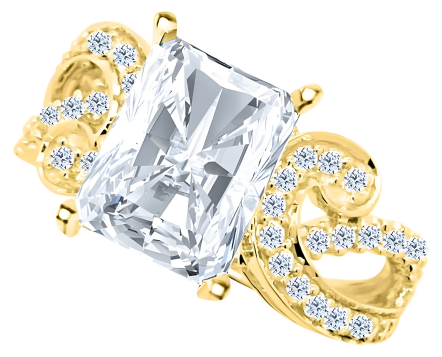
Radiant Cut Diamond Engagement Ring
|
|
|
Click On The Image To Reveal Full Specs And Shine Of This Radiant Cut Diamond Engagement Ring 14K Yellow Gold Eternity Split Shank! |
|
|
7.a) Radiant Cut Diamond vs Cushion Cut DiamondBack To Top |
Radiant and cushion cut diamonds differ mainly in outline, facet structure, and visual texture. Radiant cuts show a clean, well-defined rectangular or square outline with a tighter brilliant-style facet pattern, while cushion cuts feature rounded corners and a softer, pillow-like appearance. If you prefer crisp lines and a modern look, a radiant cut feels more structured, whereas cushion cuts appeal to buyers drawn to a softer, vintage-style presence.
Differences in Faceting and Visual Texture
Radiant cut diamonds use straight edges and cropped corners paired with brilliant facets, which creates a busy, lively surface. Cushion cuts rely on rounded edges and larger facet groupings that give softer flashes of light. As a result, radiants feel sharper and more energetic, while cushions appear smoother and more romantic.
Choosing Between Radiant and Cushion Cuts
If you like strong sparkle with clean lines, the radiant cut often feels right. Cushion cuts suit buyers who prefer a gentle outline and broader light flashes. Your choice usually comes down to whether you want crisp geometry or a softer shape.
|
|
7.b) Radiant Cut Diamond vs Princess Cut DiamondBack To Top |
Radiant and princess cut diamonds share a modern look, but they differ in corner design and wearability. Princess cuts have sharp, pointed corners that create a crisp square outline, while radiant cuts use cropped corners that reduce stress points. If you want a bold square or rectangular shape with added durability for daily wear, radiant cuts often feel more forgiving than princess cuts.
Shape Geometry and Corner Design Comparison
Princess cut diamonds feature sharp, pointed corners that create a bold square look. Radiant cuts soften those stress points with cropped corners while keeping a rectangular or square outline. This difference affects both durability and how the diamond sits in a setting.
Brilliance and Sparkle Differences
Princess cuts often show bold, bright flashes from their facet layout. Radiant cuts spread sparkle across the surface in smaller, quicker reflections. If you enjoy constant shimmer with less contrast, radiant cuts tend to feel more dynamic.
|
|
8) Buying Guide for Radiant Cut DiamondsBack To Top |
Buying a radiant cut diamond requires attention to cut quality, proportions, and overall light performance. Since this shape has no official cut grade, you need to rely on visual cues and basic measurements. A smart approach helps you choose a diamond that looks bright, balanced, and appealing in everyday wear.
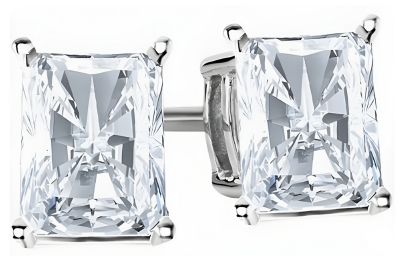
Lab Grown Radiant Cut Diamond Stud Earrings In Platinum |
|
|
Tap The Image And Discover The Brilliance Of Lab Grown Radiant Cut Diamond Stud Earrings In Platinum! |
|
|
8.a) How to Choose a High-Quality Radiant Cut DiamondBack To Top |
When choosing a radiant cut diamond, visual performance matters more than lab cut grades. Because radiant cuts are not assigned an official cut grade, you should judge sparkle, brightness, and contrast by eye or through high-quality images and videos. Look for a stone that reflects light evenly across the surface without dark areas or a glassy appearance.
Evaluating Cut Quality Without an Official Cut Grade
Radiant cut diamonds do not receive a standardized cut grade from major labs. Instead, you judge quality by looking at brightness, pattern consistency, and balance across the surface. A well-cut radiant looks lively from edge to edge rather than dark or uneven.
Visual Checks for Light Performance
Looking at the diamond in different lighting reveals how it performs. Strong light return shows up as even sparkle without large dark patches. When the stone reacts quickly to movement, you know the facets are working well together.
|
|
8.b) Radiant Cut Diamonds in Engagement Rings and Fine JewelryBack To Top |
Radiant cut diamonds work especially well in engagement rings and fine jewelry because they balance strong sparkle with practical durability. Their cropped corners make them easier to protect in prong, halo, and bezel settings, which suits daily wear. You often see radiant cuts chosen for buyers who want a bold, modern look without the maintenance concerns of sharper corner styles.
Style Suitability and Design Preferences
Radiant cut diamonds fit modern, clean designs as well as classic settings. The sharp outline gives a strong look, while the sparkle adds energy. If you enjoy a diamond that feels confident and expressive, this shape often delivers.
Metal Choices That Complement Radiant Diamonds
Metal choice affects how a radiant cut diamond looks once set. White metals highlight sparkle and keep the stone looking bright. Yellow and rose gold add warmth, which can soften the look and help manage visible color.
|
|
9) ConclusionBack To Top |
A radiant cut diamond brings together sharp geometry, strong sparkle, and practical wearability in one modern shape. You get brilliant-style light return without the fragility of pointed corners, which makes this cut both eye-catching and dependable. For buyers who want impact without constant worry, the radiant cut strikes a rare balance.
Lab Grown Radiant Cut Diamond Stud Earrings In Platinum |
|
|
|
Explore Every Sparkling Detail — Click On The Image To See This Lab Grown Radiant Cut Diamond Stud Earrings In Platinum Now! |
|
|
9.a) Why the Radiant Cut Diamond Appeals to Modern BuyersBack To Top |
Radiant cuts suit you if you want a bold, structured look with lively sparkle that performs well in real life. The cropped corners improve durability, while the dense facet pattern keeps the diamond bright even in everyday lighting. This mix of visual strength and practicality explains why radiant cuts continue to gain favor in engagement rings and fine jewelry.
Key Takeaways on Sparkle, Strength, and Versatility
Radiant cut diamonds deliver lively sparkle through brilliant-style faceting and hold up well thanks to cropped corners. The shape works across engagement rings, fashion jewelry, and statement designs without feeling dated. If you want a diamond that looks bright, wears well, and adapts easily, the radiant cut checks those boxes.
|
|
10) Frequently Asked Questions About Radiant Cut DiamondBack To Top |
This section answers common buyer questions about radiant cut diamonds, focusing on sparkle, durability, and proportions. If you are comparing shapes or narrowing a final choice, these quick answers help remove doubt and clarify expectations.
|
|
10.a) Is a Radiant Cut Diamond More Brilliant Than an Emerald Cut?Back To Top |
Yes, a radiant cut diamond is more brilliant than an emerald cut.
Radiant cuts use brilliant-style faceting that breaks light into rapid flashes, producing stronger sparkle and fire. Emerald cuts use step facets, which favor broad, mirror-like reflections and clarity over brilliance, so they appear calmer and less sparkly by design.
Understanding Brilliance Differences Between Faceting Styles
Emerald cuts use step-cut facets that create long, mirror-like flashes of light. Radiant cuts rely on many angled facets that break light into quick, bright reflections. Because of this, you usually see more sparkle and movement in a radiant cut diamond.
|
|
10.b) Does a Radiant Cut Diamond Hide Inclusions Well?Back To Top |
Yes, a radiant cut diamond generally hides inclusions well.
Its dense brilliant-style faceting breaks light into many small reflections, which helps mask inclusions better than step-cut shapes. While clarity still matters, radiant cuts are more forgiving than emerald or Asscher cuts at the same clarity grade.
Clarity Performance Explained
Small inclusions blend into the sparkle created by the radiant’s facet pattern. Light scatters across the surface, which draws attention away from internal marks. As a result, you can often choose a slightly lower clarity grade without visible issues.
|
|
10.c) Are Radiant Cut Diamonds Good for Engagement Rings?Back To Top |
Yes, radiant cut diamonds are very good for engagement rings.
They combine strong brilliance with cropped corners that reduce chipping risk, making them practical for daily wear. This balance of sparkle, durability, and setting flexibility is why many buyers choose radiant cuts for long-term rings.
Practical Advantages for Everyday Wear
Trimmed corners lower stress at vulnerable points, which helps the diamond hold up over time. The shape also suits many settings that protect the stone without hiding its outline. For rings worn daily, these features add peace of mind.
|
|
10.d) What Is the Ideal Length-to-Width Ratio for Radiant Cut Diamonds?Back To Top |
There is no single perfect ratio, but most radiant cuts fall within a comfortable visual range. The right choice depends on whether you prefer a square or a more elongated outline.
Choosing Between Square and Elongated Radiant Shapes
Square radiant cuts typically sit close to a 1.00 to 1.05 ratio, while rectangular radiants often range from about 1.20 to 1.35. Shorter ratios feel bold and compact, whereas longer ratios look sleeker on the finger. Choosing the ratio comes down to how you want the diamond to look when worn, not a fixed rule.
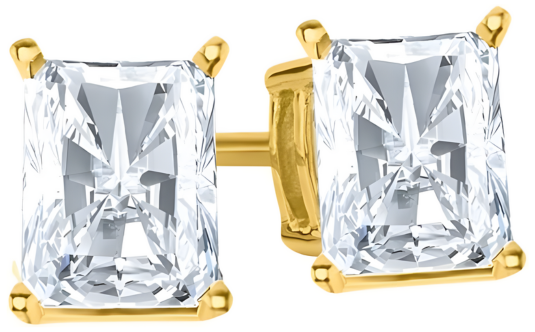
Lab Grown Radiant Cut Diamond
|
|
|
Tap The Image To Reveal Full Details Of This Elegant Lab Grown Radiant Cut Diamond Stud Earrings in Yellow Gold! |
See More Diamond Shapes As Follows:
| Baguette Diamonds | Marquise Diamond |
| Princess Cut Diamonds | Round Brilliant Diamond |
| Asscher Cut Diamond | Emerald Cut Diamond |
| Oval Diamond | Cushion Cut Diamond |
| Pear Shaped Diamond | Diamond Shape |