|
1) Pear Shaped Diamond Definition |
A pear shaped diamond, also called the pendeloque cut or teardrop cut, is a fancy diamond shape that blends the brilliance of a round base with the sharp elegance of a marquise-style tip. Most well-cut pear diamonds feature around 58 facets, which help maximize light reflection and create strong sparkle. With its elongated and slightly asymmetrical form, this shape makes the finger look longer and carries a sense of romance, individuality, and visual charm.
Table Of Contents
- 1) Pear Shaped Diamond Definition
- 2) Physical Structure and Design of Pear Shaped Diamonds
- 3) Proportions and Measurements of Pear Shaped Diamonds
- 4) Cut Quality and Visual Performance of Pear Shaped Diamonds
- 5) Color and Clarity Selection for Pear Shaped Diamonds
- 6) Pricing and Value of Pear Shaped Diamonds
- 7) Buying Guide for Pear Shaped Diamonds
- 8) Pear Shaped Diamond Settings and Jewelry Styles
- 9) Comparison of Pear Shaped Diamonds with Other Cuts
- 10) Advantages and Disadvantages of Pear Shaped Diamonds
- 11) Care and Maintenance of Pear Shaped Diamonds
- 12) Trends and Popularity of Pear Shaped Diamonds
- 13) Conclusion
- 14) Frequently Asked Questions about Pear Shaped Diamond

|
1.a) What Is a Pear Shaped DiamondBack To Top |
A pear shaped diamond features one rounded end and one pointed tip, creating a soft teardrop silhouette. This shape belongs to the family of brilliant-style fancy cuts and reflects light through multiple facets. If you want a diamond that looks graceful yet eye-catching, this shape fits that goal well.
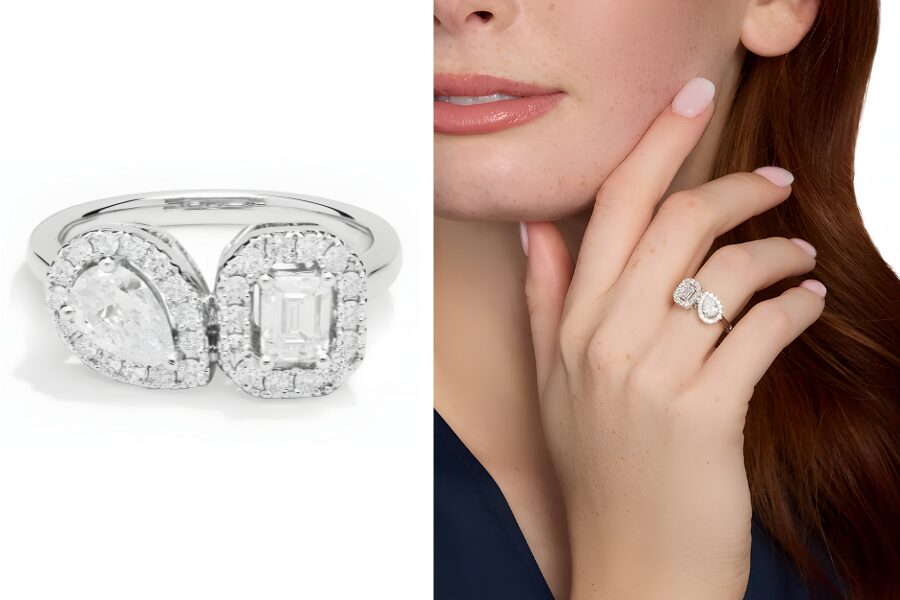
Emerald & Pear Halo Two Stone
|
|
|
Tap The Image To Reveal Full Details Of This Elegant Emerald And Pear Halo Two Stone Diamond Ring 14k White Gold |
Clear Definition and Core Meaning of Pear Shaped Diamonds
A pear shaped diamond is a modified brilliant cut that merges the symmetry of a round diamond with the elongated form of a marquise. One side appears softly curved, while the other ends in a defined point, giving the stone its signature teardrop look. Because of this structure, the diamond often appears larger than its actual carat weight and offers strong brilliance when well cut. You will usually see this shape used in engagement rings, pendants, and statement jewelry where elegance and sparkle matter.
Why Pear Shaped Diamonds Are Also Known as Teardrop Diamonds
Many people call pear shaped diamonds “teardrop diamonds” because of their water-drop-like outline. When viewed face-up, the stone resembles a falling drop, narrow at one end and full at the other. This visual similarity makes the nickname easy to remember and widely used in jewelry marketing. If you hear both terms, you can be sure they refer to the same diamond shape.
|
|
1.b) Scope and Usage in Fine JewelryBack To Top |
Pear shaped diamonds are mainly used in fine jewelry and certified gemstone settings. They appear in engagement rings, earrings, pendants, and custom designer pieces. Their versatile form allows you to wear them in both modern and classic styles.
Distinguishing Pear Shape from Face Shapes and Fashion Terms
The term “pear shaped diamond” refers only to the gemstone’s outline and cutting style. It has nothing to do with face shapes, body types, hairstyles, or fashion categories. In jewelry, the word “pear” simply describes how the diamond is cut and polished. Understanding this distinction helps you avoid confusion when searching for diamond information online.
How Pear Shaped Diamonds Are Used in Rings and Jewelry Designs
Jewelry designers often use pear shaped diamonds as center stones because they create strong visual impact. In rings, the elongated shape can make your fingers look longer and slimmer. In pendants and earrings, the teardrop form adds flow and movement to the design. Thanks to this flexibility, pear diamonds work well in solitaire, halo, bezel, and three-stone settings.
|
|
1.c) Historical Background of the Pear CutBack To Top |
The pear cut has a long history that reflects both craftsmanship and innovation. It developed as diamond cutters learned how to balance beauty with light performance. Over time, it became a symbol of refined taste in fine jewelry.
Origins of the Pear Shaped Diamond Design
The pear shaped diamond was first created in the 15th century by Flemish diamond cutter Lodewyk van Bercken. He developed new polishing techniques that made complex shapes possible. Using these methods, he produced the first known teardrop-style diamond. This breakthrough changed how diamonds were cut and set in jewelry.
Evolution of the Pear Cut in Fine Jewelry
Over the centuries, cutters refined the pear shape to improve symmetry, brilliance, and durability. Modern technology now allows precise control over proportions and facet placement. As a result, today’s pear shaped diamonds show better sparkle and balance than early versions. You now benefit from centuries of craftsmanship combined with advanced cutting tools.
|
|
2) Physical Structure and Design of Pear Shaped DiamondsBack To Top |
The physical structure of a pear shaped diamond controls how it looks, sparkles, and wears over time. Every curve, angle, and edge plays a role in brilliance, balance, and durability. When you understand these design features, you can choose a diamond that looks beautiful and performs well.
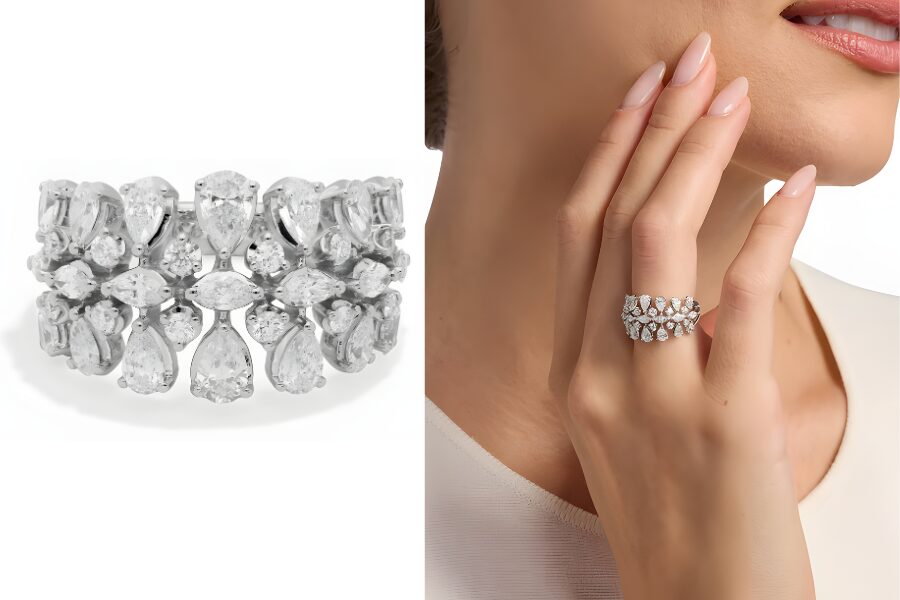
14k White Gold Pear And Marquise Diamond Fashion Ring |
|
|
Tap The Image And Discover The Beauty Of 14k White Gold Pear And Marquise Diamond Fashion Ring Today! |
|
|
2.a) Shape Geometry and OutlineBack To Top |
A pear shaped diamond features a rounded end, sloping sides, and a pointed tip that form its signature teardrop outline. This geometry affects symmetry, finger coverage, and visual size. By checking the outline carefully, you can spot whether a pear diamond looks balanced and well cut.
Symmetry, Shoulders, and Tapered Point Structure
Symmetry determines how evenly both sides of a pear shaped diamond mirror each other. Well-cut stones show matching shoulders, smooth curves, and a centered pointed tip. If one side looks wider or flatter, the diamond may appear lopsided when worn. A balanced structure helps light travel evenly and improves overall visual appeal.
Balanced Proportions in Pear Shape Diamonds
Balanced proportions keep a pear shaped diamond from looking too wide, too narrow, or stretched out. Proper length-to-width ratios create a pleasing silhouette that flatters your hand. In well-proportioned stones, the rounded end flows naturally into the point without sudden changes in width. This harmony makes the diamond look elegant and well finished.
|
|
2.b) Faceting Style and Light PerformanceBack To Top |
Pear shaped diamonds use brilliant-style faceting to reflect and return light to your eyes. The placement and alignment of facets control brightness, fire, and contrast patterns. With good faceting, a pear diamond appears lively instead of dull or patchy.
Brilliant-Style Faceting in Pear Cut Diamonds
Brilliant-style faceting divides the diamond into many small, carefully angled facets. These facets bounce light inside the stone and send it back through the top. In pear shaped diamonds, cutters adjust facet patterns to match the tapered form. When done well, this structure delivers strong sparkle across the entire surface.
How Facets Affect Sparkle and Contrast
Facets act like tiny mirrors that shape how light moves through a pear shaped diamond. Well-aligned facets create bright flashes and dark contrast areas that add depth. Poor alignment can cause dull zones, light leakage, or uneven brightness. By observing how light plays across the stone, you can judge whether the faceting supports strong visual performance.
|
|
3) Proportions and Measurements of Pear Shaped DiamondsBack To Top |
Proportions and measurements decide how a pear shaped diamond looks, shines, and feels when worn. Small changes in ratio, depth, or table size can affect beauty and value. By understanding these numbers, you can choose a diamond that offers strong brilliance and pleasing balance.
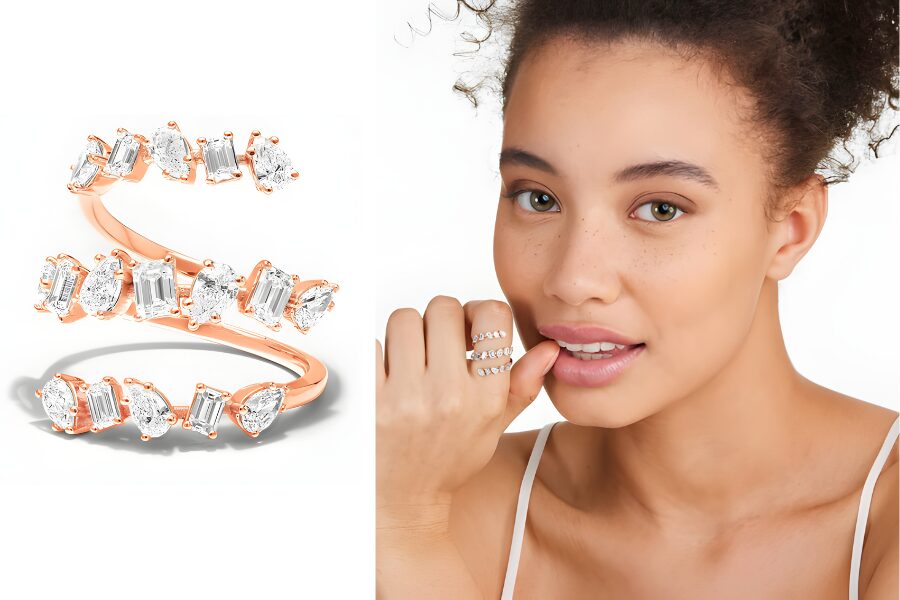
14k Rose Gold Mixed Shape Diamond Spiral Ring |
|
| Make This 14k Rose Gold Mixed Shape Diamond Spiral Ring Yours. Click The Image Now! |
|
|
3.a) Length-to-Width Ratio ExplainedBack To Top |
The length-to-width ratio shows how long a pear shaped diamond appears compared to its width. This ratio controls whether the stone looks slim, wide, or perfectly balanced. When you know this measurement, you can match the diamond’s shape to your personal style.
Ideal Length-to-Width Ratio for Pear Diamonds
Most well-cut pear shaped diamonds fall between a length-to-width ratio of about 1.45 and 1.75. Ratios in this range usually create a graceful teardrop outline without looking too narrow or too rounded. Stones below this range may appear stubby, while higher ratios can look overly thin. By staying within these limits, you increase your chances of choosing a visually pleasing diamond.
How Ratio Impacts Appearance and Finger Coverage
A longer ratio makes a pear shaped diamond look larger and more elongated on your finger. This effect often creates the illusion of slimmer and longer hands. Shorter ratios produce a fuller look that feels bold and substantial. Your choice should reflect whether you prefer a sleek silhouette or a softer, wider presence.
|
|
3.b) Table, Depth, and Girdle ConsiderationsBack To Top |
Table size, depth percentage, and girdle thickness work together to control light performance and durability. These measurements influence brightness, fire, and resistance to damage. Checking them helps you avoid diamonds that waste light or weaken easily.
Recommended Table Percentage for Pear Diamonds
In most high-quality pear shaped diamonds, the table percentage usually falls between about 53% and 63%. Tables in this range allow light to enter and reflect properly through the stone. Very large tables can reduce fire, while very small tables may limit brightness. A balanced table supports lively sparkle and clear contrast.
Depth Percentage and Its Effect on Brilliance
Depth percentage measures how tall the diamond is from top to bottom. Well-cut pear diamonds often show depth between roughly 58% and 64%. Shallow stones may leak light and look watery, while overly deep stones can appear dark and smaller than their carat weight. Proper depth helps you get strong brilliance and better visual size.
Girdle Thickness and Durability Factors
The girdle is the thin edge that runs around the widest part of the diamond. In pear shaped diamonds, a medium to slightly thick girdle usually offers the best balance between safety and beauty. Very thin girdles increase the risk of chipping, especially near the pointed tip. On the other hand, extremely thick girdles can hide weight and reduce visual appeal.
|
|
4) Cut Quality and Visual Performance of Pear Shaped DiamondsBack To Top |
Cut quality plays the biggest role in how a pear shaped diamond looks in real life. Even with good color and clarity, poor cutting can reduce sparkle and visual appeal. When you focus on cut precision, you increase your chances of choosing a bright and lively stone.
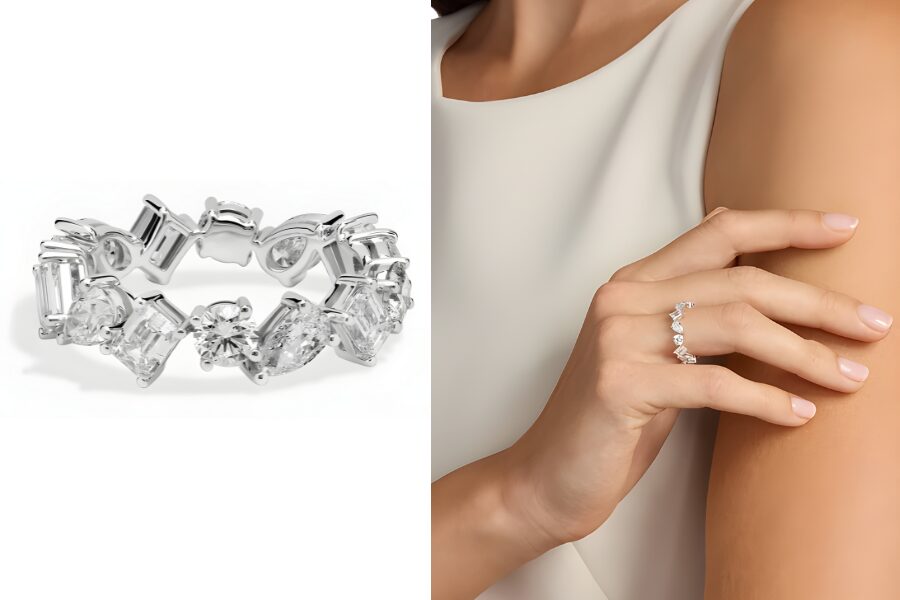
Mixed Shape Diamond Eternity Ring in Platinum |
|
|
Make This Mixed Shape Diamond Eternity Ring in Platinum Yours. Click Image To See Details! |
|
|
4.a) Understanding the Bow Tie EffectBack To Top |
The bow tie effect appears as a dark shadow across the center of some pear shaped diamonds. This pattern forms when light fails to reflect evenly through the stone. By learning how to spot it, you can avoid diamonds that look dull or patchy.
What Causes the Bow Tie Effect in Pear Diamonds
The bow tie effect develops when facet angles and proportions do not guide light back to your eyes. In pear shaped diamonds, the tapered structure makes this problem more common than in round cuts. Shallow or deep areas often block light and create dark zones. When cutting lacks balance, these shadows become clearly visible under normal lighting.
How to Minimize Visible Bow Tie Shadows
You can reduce bow tie visibility by choosing diamonds with strong symmetry and precise faceting. Well-cut stones spread light evenly across the center and shoulders. Viewing the diamond in different lighting helps you judge how shadows behave. If the dark area fades and shifts with movement, the bow tie effect remains under control.
|
|
4.b) Symmetry and Polish GradesBack To Top |
Symmetry and polish grades describe how carefully a diamond cutter finished the stone. These grades affect light return, surface smoothness, and overall beauty. Higher grades usually indicate better craftsmanship and stronger visual performance.
Evaluating Symmetry in Pear Cut Diamonds
Symmetry shows how evenly both sides of a pear shaped diamond match each other. In high-quality stones, the rounded end, shoulders, and pointed tip align along a central axis. Uneven curves or off-center tips can make the diamond look unbalanced. By checking symmetry, you ensure the stone looks harmonious when worn.
Importance of Polish for Light Reflection
Polish refers to how smooth and clean the diamond’s surface appears after cutting. Fine polish allows light to enter and exit the stone without distortion. Scratches, haze, or dull areas can weaken sparkle and reduce clarity. When you choose a well-polished pear diamond, you gain sharper reflections and stronger brilliance.
|
|
5) Color and Clarity Selection for Pear Shaped DiamondsBack To Top |
Color and clarity strongly influence how bright and clean a pear shaped diamond appears. Because of their elongated form, these diamonds can show color and inclusions more easily than round cuts. By choosing the right grades, you can balance beauty, quality, and budget.
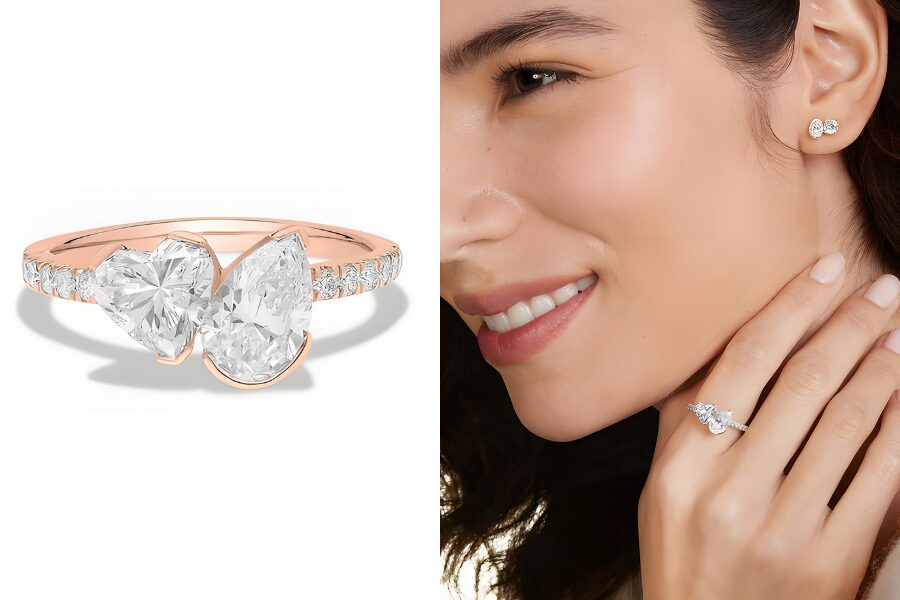
14K Rose Gold Pear And Heart
|
|
|
Tap The Image And Discover The Beauty Of 14K Rose Gold Pear And Heart Lab Grown Diamond Ring Today! |
|
|
5.a) Best Color Grades for Pear DiamondsBack To Top |
Pear shaped diamonds usually look best in the colorless to near-colorless range. Higher color grades help maintain a crisp and bright appearance, especially in white metal settings. When you understand how color works in pear cuts, you can avoid stones that look dull or tinted.
How Color Concentration Appears in Pear Shapes
In pear shaped diamonds, color often gathers near the pointed tip and along the edges. This happens because light travels unevenly through the tapered structure. Lower color grades may appear slightly yellow or brown in these areas. By checking the tip and sides carefully, you can judge whether color is noticeable in everyday lighting.
Choosing Between Near-Colorless and Colorless Grades
Colorless grades from D to F offer the highest level of visual purity and brightness. Near-colorless grades from G to J often provide excellent value with minimal visible tint. In many settings, especially yellow or rose gold, near-colorless diamonds look just as attractive. Your choice should reflect how sensitive you are to color and how much you want to spend.
|
|
5.b) Clarity Considerations and InclusionsBack To Top |
Clarity describes the presence of internal flaws and surface marks inside a pear shaped diamond. Because of the pointed end and elongated body, some inclusions stand out more easily. Learning how to evaluate clarity helps you find stones that look clean without overpaying.
Common Inclusion Types in Pear Shaped Diamonds
Common inclusions in pear shaped diamonds include feathers, crystals, clouds, and needles. Feathers near the tip deserve special attention because they can weaken the pointed area. Dark crystals in the center may affect sparkle and visual balance. By examining inclusion placement, you can judge both appearance and durability.
Eye-Clean Standards for Pear Diamonds
An eye-clean pear diamond looks free of visible inclusions when viewed at normal distance. Many stones in the VS2 to SI1 range meet this standard when well chosen. Placement matters more than clarity grade alone, especially near the center and tip. If inclusions remain hidden to your eye, you can enjoy better value without sacrificing beauty.
|
|
6) Pricing and Value of Pear Shaped DiamondsBack To Top |
Pricing for pear shaped diamonds depends on cut quality, proportions, and overall visual appeal. Compared to round diamonds, pears often cost less for the same carat weight. By understanding market trends, you can find strong value without giving up beauty.
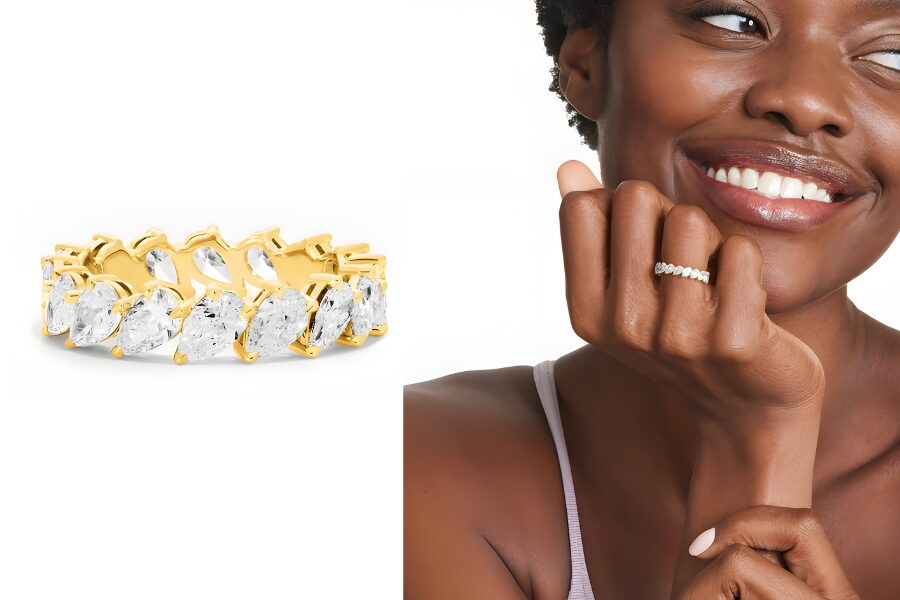
14K Yellow Gold Diagonal Pear Diamond Eternity Ring |
|
|
Click On The Image To View This 14KYellow Gold Diagonal Pear Diamond Eternity Ring! |
|
|
6.a) Price Comparison with Other Diamond ShapesBack To Top |
Pear shaped diamonds usually sell at lower prices than round brilliants and some popular fancy cuts. Their pricing reflects both demand and cutting complexity. When you compare shapes, you can see how form influences cost.
Pear vs Round Diamond Pricing Differences
Round brilliant diamonds command premium prices because of high demand and greater cutting waste. Pear shaped diamonds often cost 15 to 30 percent less than rounds of similar quality. This price gap allows you to buy a larger-looking stone within the same budget. If value matters to you, pears offer strong visual impact at a lower cost.
Pear vs Oval and Marquise Price Trends
Compared to oval and marquise diamonds, pear shapes usually fall in the middle price range. Ovals often cost slightly more because of strong market demand. Marquise diamonds may sell for similar or slightly lower prices, depending on proportions. By checking current listings, you can spot where pears fit in the price spectrum.
|
|
6.b) Factors That Influence Pear Diamond ValueBack To Top |
Several technical and market factors determine how much a pear shaped diamond costs. Cut precision, symmetry, and light performance affect both beauty and price. Certification and size also play major roles in long-term value.
Impact of Cut Quality on Pricing
Cut quality has the strongest influence on the price of a pear shaped diamond. Well-cut stones with balanced proportions and minimal bow tie effects sell for higher rates. Poorly cut diamonds look dull and trade at discounts. By choosing better cutting, you invest in lasting visual appeal.
Role of Certification and Carat Weight
Independent grading reports from respected laboratories increase buyer confidence and resale value. Certified diamonds with clear cut, color, and clarity grades usually command higher prices. Carat weight also affects cost, especially at popular size points such as one carat. When you balance size with quality, you get better long-term value.
|
|
7) Buying Guide for Pear Shaped DiamondsBack To Top |
A smart buying approach helps you avoid poor cuts and overpriced stones. Pear shaped diamonds vary widely in quality, even within the same grade range. When you know what to check, you can choose a diamond that delivers lasting beauty and strong value.
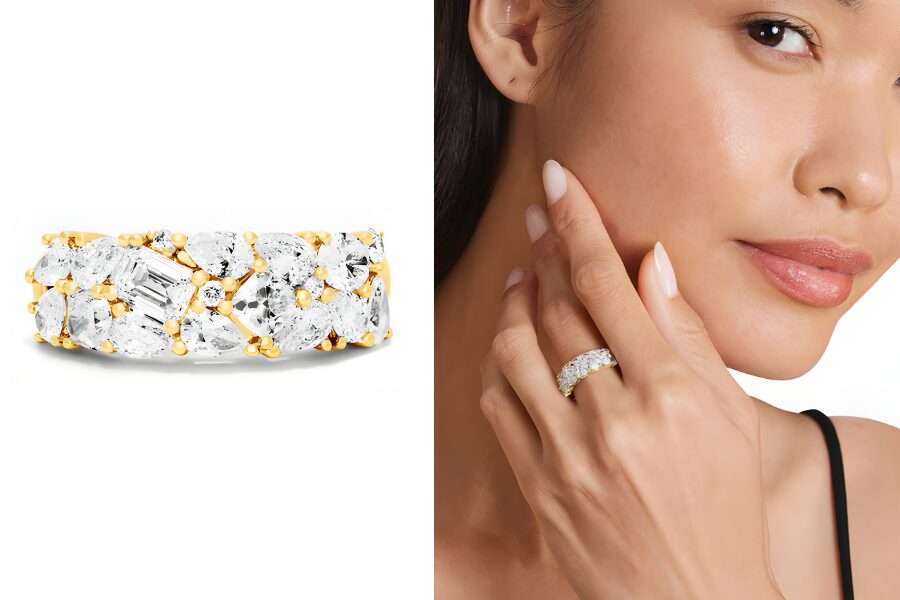
14K Yellow Gold Fancy Scatter
|
|
|
Click On The Image To Reveal Full Specs And Shine Of This 14K Yellow Gold Fancy Scatter Lab Grown Diamond Ring! |
|
|
7.a) How to Choose a High-Quality Pear DiamondBack To Top |
Choosing a good pear shaped diamond requires attention to cut, symmetry, and light performance. Small visual details often matter more than lab grades alone. By learning how to assess these features, you gain confidence as a buyer.
Step-by-Step Evaluation Process
Start by examining the outline to confirm even shoulders and a centered tip. Next, check for strong sparkle and limited bow tie shadows under different lighting. Then, review proportions such as length-to-width ratio, table, and depth. Finally, compare several stones side by side so you can judge which one looks the most lively and balanced.
Red Flags to Avoid When Buying Pear Diamonds
Uneven sides, crooked points, and dull central areas signal poor cutting. Strong dark bow tie patterns that remain visible in most lighting should raise concern. Large inclusions near the tip or center can weaken durability and beauty. If a stone looks flat or lifeless, it usually reflects weak craftsmanship.
|
|
7.b) Certification and Grading ReportsBack To Top |
Grading reports provide reliable information about a diamond’s quality and measurements. Trusted certificates protect you from misleading descriptions and hidden flaws. By learning how to read them, you can verify what you are paying for.
Understanding GIA and IGI Reports for Pear Diamonds
Reports from major laboratories such as GIA and IGI list key details about cut style, proportions, color, and clarity. These documents confirm whether a pear shaped diamond meets recognized grading standards. GIA reports focus strongly on accuracy and consistency, while IGI reports often cover both natural and lab-grown stones. Reviewing these certificates helps you make informed decisions.
Important Measurements to Check on Certificates
Length, width, depth, and table percentage appear clearly on grading reports. These numbers help you judge shape balance and light performance. Girdle thickness and culet description also reveal durability risks. By matching these values with recommended ranges, you can avoid poorly proportioned diamonds.
|
|
8) Pear Shaped Diamond Settings and Jewelry StylesBack To Top |
The right setting can highlight the beauty and protect the delicate tip of a pear shaped diamond. Different styles influence how large, bright, and elegant the stone appears. When you match the setting to your lifestyle, you enjoy both beauty and comfort.
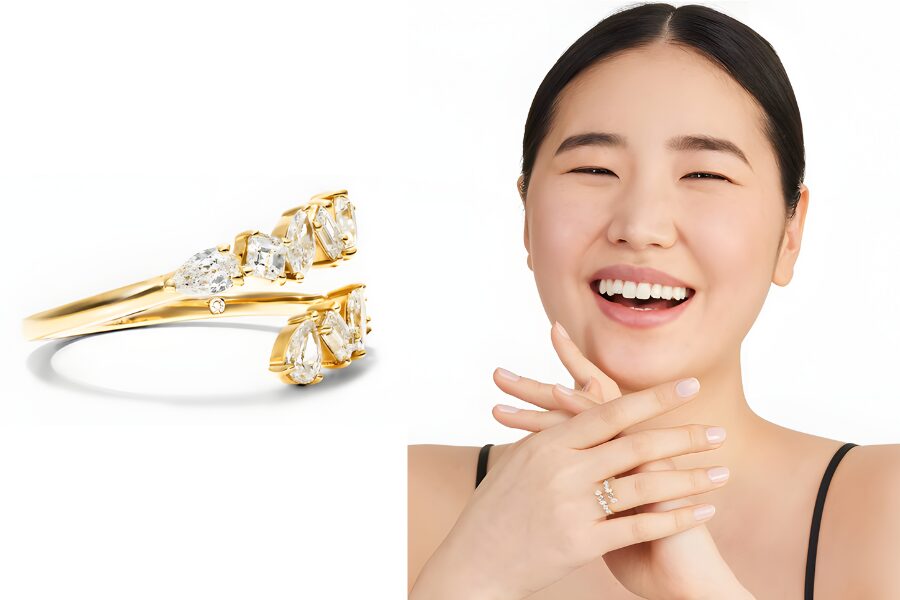
Mixed Diamond Bypass Ring In 14K Yellow Gold |
|
|
Tap The Image And Discover The Beauty Of This Mixed Diamond Bypass Ring In 14K Yellow Gold! |
|
|
8.a) Popular Ring Settings for Pear DiamondsBack To Top |
Ring settings control how securely the diamond sits and how much light reaches it. Some designs focus on simplicity, while others add extra sparkle and visual drama. By understanding each style, you can choose one that fits your taste and daily use.
Solitaire, Halo, and Bezel Setting Styles
Solitaire settings place the pear shaped diamond at center stage and allow maximum light exposure. Halo designs surround the stone with smaller diamonds, increasing sparkle and perceived size. Bezel settings wrap metal around the edge, offering strong protection for the pointed tip. Each style balances beauty and durability in a different way.
Three-Stone and Vintage-Inspired Designs
Three-stone rings pair a pear diamond with side stones that add balance and symbolism. These designs often represent the past, present, and future of a relationship. Vintage-inspired settings feature detailed metalwork, milgrain edges, and classic patterns. If you enjoy old-world charm, these styles create a rich and timeless look.
|
|
8.b) Orientation and Wearing StylesBack To Top |
Orientation refers to how the pear shaped diamond faces on your finger or jewelry piece. The direction you choose affects visual length, balance, and personal expression. By experimenting with orientation, you can find what feels most natural to you.
Point Up vs Point Down Wearing Styles
Point-up settings place the tip toward the fingertip and create a slimming, elongated effect. Point-down styles direct the tip toward the hand and produce a softer, rounded appearance. Many people prefer point-up for engagement rings, while point-down works well in pendants. Your comfort and style preference should guide this choice.
How Orientation Affects Visual Appeal
Orientation changes how light reflects and how the diamond frames your hand. A vertical position often makes the stone appear longer and more dramatic. A reversed or angled setting can feel artistic and unique. By viewing the ring from different angles, you can see which orientation suits you best.
|
|
9) Comparison of Pear Shaped Diamonds with Other CutsBack To Top |
Comparing pear shaped diamonds with other popular cuts helps you understand their unique strengths and limits. Each shape reflects light differently and creates a distinct visual effect on the hand. By studying these differences, you can choose the cut that fits your style and lifestyle.
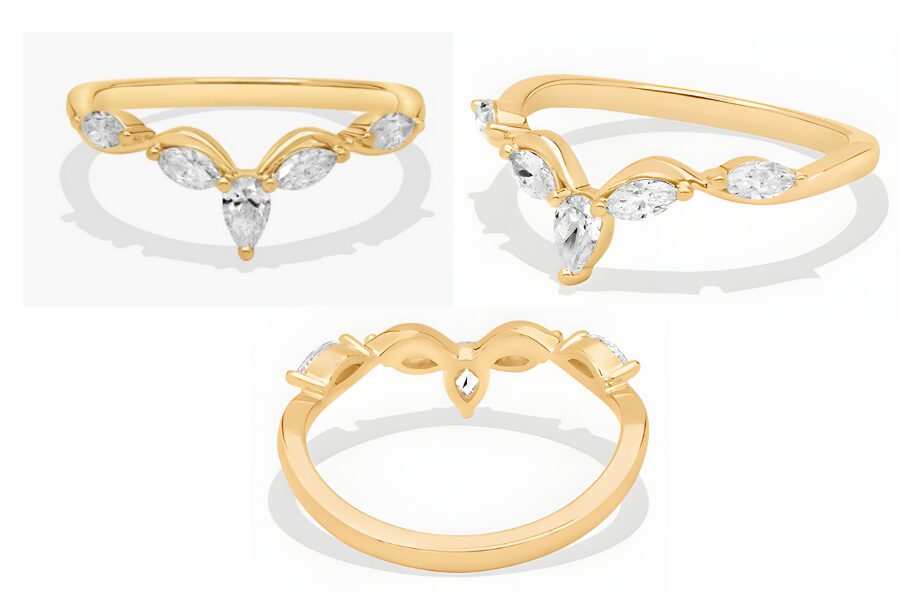
18K Yellow Gold Floral Vine Diamond Wedding Ring |
|
|
Click The Image To See Why This 18K Yellow Gold Floral Vine Diamond Wedding Ring Stands Out! |
|
|
9.a) Pear vs Oval DiamondsBack To Top |
Pear and oval diamonds both belong to the elongated shape family and offer strong brilliance. While they share similar sparkle, their outlines create different visual impressions. Knowing these contrasts helps you decide which form suits you best.
Shape Differences and Visual Impact
Oval diamonds feature smooth, symmetrical curves with no pointed ends. Pear shaped diamonds combine one rounded side with a sharp tip, creating a more dramatic silhouette. This pointed end adds character and directional flow to the design. If you prefer a softer look, oval may appeal more, while pear offers stronger visual personality.
Which Is Better for Finger Elongation
Both pear and oval diamonds can make fingers appear longer and slimmer. Pear shapes often enhance this effect because the pointed tip draws the eye vertically. Ovals create a balanced lengthening effect without sharp edges. Your hand shape and personal taste should guide the final choice.
|
|
9.b) Pear vs Marquise and Heart DiamondsBack To Top |
Pear, marquise, and heart diamonds share elongated or symbolic designs that attract attention. Each cut delivers a different mix of symmetry, sparkle, and emotional appeal. Understanding these traits helps you select the shape that feels most meaningful.
Structural Differences Among Elongated Shapes
Marquise diamonds feature pointed ends on both sides, creating a football-like outline. Pear diamonds combine one point with one rounded end, offering softer balance. This mixed structure makes pears easier to set and protect than marquise stones. Heart diamonds, by contrast, focus more on symbolism than elongation.
Choosing Between Teardrop and Elongated Cuts
Teardrop-shaped pear diamonds suit buyers who want elegance with a touch of drama. Marquise cuts work well if you prefer bold length and sharp symmetry. Heart shapes appeal to those who value romance and symbolism. By considering comfort, durability, and visual style, you can choose the cut that truly fits you.
|
|
10) Advantages and Disadvantages of Pear Shaped DiamondsBack To Top |
Pear shaped diamonds offer a mix of visual beauty, value, and individuality. Their unique form attracts buyers who want something different from traditional round cuts. At the same time, this shape requires careful selection to avoid common quality issues.
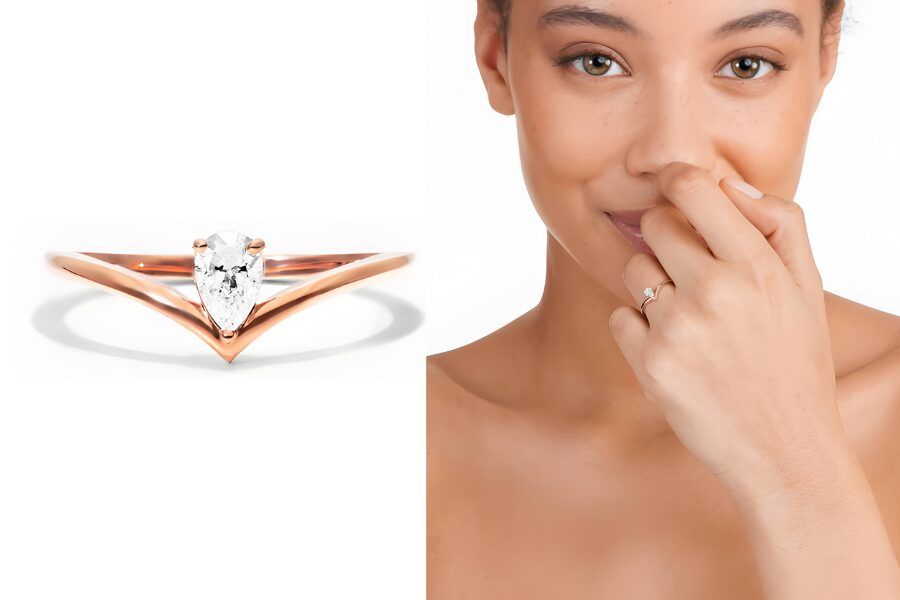
14K Rose Gold Pear Shape Diamond Pinnacle Ring |
|
|
Tap The Image To Reveal Full Details Of This Elegant 14K Rose Gold Pear Shape Diamond Pinnacle Ring! |
|
|
10.a) Benefits of Choosing Pear DiamondsBack To Top |
Pear shaped diamonds combine brilliance with an elegant silhouette that stands out. They often appear larger than their actual carat weight and deliver strong visual presence. If you enjoy distinctive yet timeless designs, this shape offers strong appeal.
Finger-Flattering Appearance
The elongated outline of a pear shaped diamond naturally draws the eye along the finger. This vertical flow creates the illusion of longer and slimmer hands. Many wearers find this effect especially attractive in engagement rings. Because of this visual advantage, pears remain a favorite among buyers who value elegance.
Unique and Elegant Visual Style
A pear shaped diamond blends softness and sharp definition in one design. The rounded end adds warmth, while the pointed tip introduces drama and movement. This contrast gives the stone a graceful yet confident personality. If you prefer jewelry that feels refined without looking ordinary, pear diamonds fit that style well.
|
|
10.b) Potential Drawbacks to ConsiderBack To Top |
Despite their beauty, pear shaped diamonds come with certain risks. Their structure makes them more sensitive to cutting flaws and physical damage. Understanding these limits helps you make a smarter purchase.
Vulnerability of the Pointed Tip
The pointed tip represents the weakest part of a pear shaped diamond. Direct impact against hard surfaces can cause chipping or cracking in this area. Protective settings such as V-prongs or bezels help reduce this risk. When you choose proper mounting, you protect the stone for long-term wear.
Sensitivity to Poor Cut Quality
Pear shaped diamonds show cutting flaws more easily than many other shapes. Poor symmetry, weak proportions, and misaligned facets reduce sparkle and create visible dark areas. Even small mistakes can affect beauty and value. By focusing on cut quality, you avoid stones that look dull or uneven.
|
|
11) Care and Maintenance of Pear Shaped DiamondsBack To Top |
Proper care keeps a pear shaped diamond bright, secure, and damage-free over time. Daily wear exposes jewelry to dust, oils, and minor impacts that affect appearance. When you follow simple maintenance habits, you protect both beauty and value.
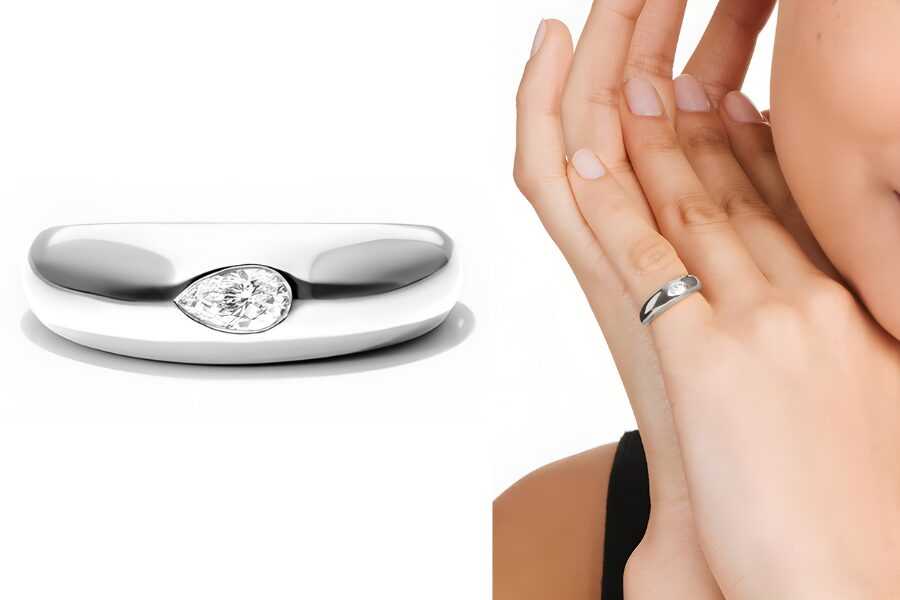
Pear Shape Diamond Dome Ring In 14K White Gold |
|
|
Make This Pear Shape Diamond Dome Ring In 14K White Gold Yours. Click The Image To See Details! |
|
|
11.a) Cleaning and Storage GuidelinesBack To Top |
Regular cleaning removes buildup that reduces sparkle and clarity. Safe storage prevents accidental scratches and chipping. By managing both, you keep your diamond looking fresh and well cared for.
Safe Cleaning Methods for Pear Diamond Jewelry
Warm water mixed with mild soap works well for routine cleaning. Use a soft brush to reach areas around the setting and pointed tip. Rinse thoroughly and dry with a lint-free cloth to avoid residue. Avoid harsh chemicals and ultrasonic cleaners unless a professional confirms they are safe for your setting.
Proper Storage to Prevent Chipping
Store pear shaped diamond jewelry separately from other pieces to prevent contact damage. Soft fabric pouches or padded jewelry boxes reduce friction and impact. Keep rings and pendants from rubbing against harder gemstones. This simple habit lowers the risk of chips along the edges and tip.
|
|
11.b) Long-Term Durability TipsBack To Top |
Long-term care focuses on protecting weak areas and monitoring setting stability. Small issues can grow into serious problems if ignored. With regular attention, you extend the life of your jewelry.
Protecting the Tip and Girdle
The pointed tip and thin girdle remain the most vulnerable parts of a pear shaped diamond. Protective prongs or bezel edges help shield these areas from impact. Remove your jewelry during heavy physical activity to avoid accidental knocks. Careful handling preserves structural strength and appearance.
Professional Inspection and Maintenance
Professional jewelers can check prongs, settings, and alignment during routine inspections. These visits help detect loose stones or worn metal early. Periodic polishing and tightening restore security and shine. By scheduling regular checkups, you prevent costly repairs later.
|
|
12) Trends and Popularity of Pear Shaped DiamondsBack To Top |
Pear shaped diamonds continue to gain attention in modern engagement rings and fine jewelry collections. Their blend of elegance and individuality appeals to buyers who want something different from traditional round cuts. As fashion and social trends evolve, this shape maintains strong visibility and demand.
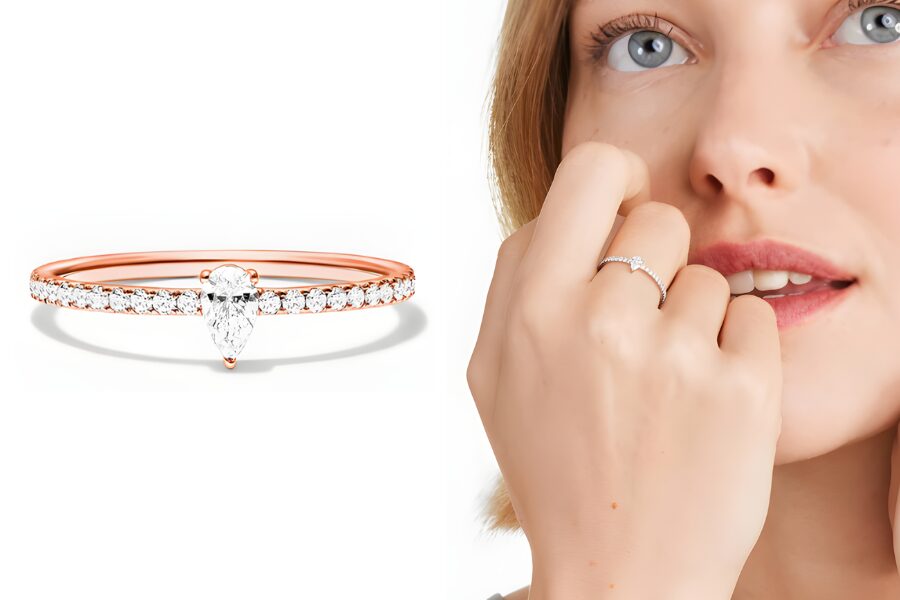
14K Rose Gold Pear Shape Diamond Pave Ring |
|
|
Tap The Image To Reveal Full Details Of This Elegant 14K Rose Gold Pear Shape Diamond Pave Ring! |
|
|
12.a) Modern Engagement Ring TrendsBack To Top |
Current engagement ring trends favor unique shapes with strong visual character. Pear shaped diamonds fit this preference by offering both brilliance and personality. Many couples now choose pears to reflect personal style rather than follow tradition.
Celebrity Influence on Pear Diamond Popularity
Celebrity engagement rings often influence public taste and buying patterns. When well-known figures choose pear shaped diamonds, interest in this cut rises quickly. These high-profile appearances highlight the shape’s elegance and versatility. As a result, many buyers feel more confident selecting pears for their own rings.
Social Media and Design Trends
Social media platforms showcase thousands of pear diamond rings through photos and videos. Designers and influencers share creative settings, mixed-metal styles, and custom designs. This constant exposure keeps the shape fresh and desirable. When you browse these platforms, you can easily spot emerging trends and new design ideas.
|
|
12.b) Market Demand and Resale ValueBack To Top |
Market demand affects both pricing stability and long-term value. Pear shaped diamonds benefit from steady interest in fancy cuts and engagement jewelry. Understanding resale trends helps you make informed purchasing decisions.
Long-Term Demand for Pear Diamonds
Pear shaped diamonds have maintained consistent popularity over many decades. Their balance of classic beauty and modern appeal keeps them relevant in changing markets. Demand remains strong in bridal and luxury segments. This stability supports long-term confidence in the shape.
Investment Potential and Resale Considerations
Resale value depends on cut quality, certification, and overall condition. Well-proportioned, certified pear diamonds from reputable sources hold value better over time. Unique settings and extreme proportions may limit resale appeal. If you consider future resale, focus on quality and balanced design.
|
|
13) ConclusionBack To Top |
Pear shaped diamonds combine brilliance, elegance, and individuality in a single design. Their balance of beauty and value makes them a strong choice for engagement rings and fine jewelry. With the right knowledge, you can select a pear diamond that brings lasting satisfaction.
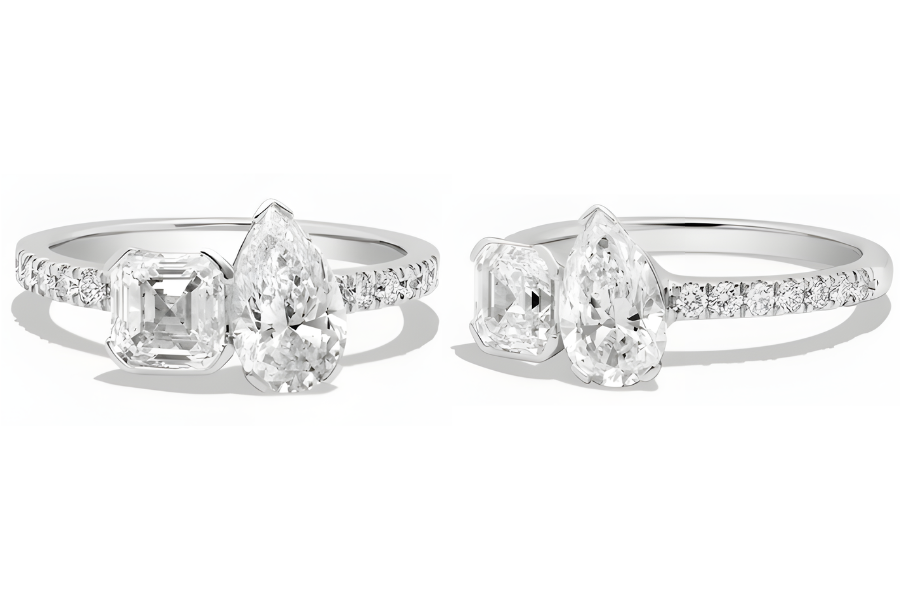
14K White Gold Toi Et Moi Pear And
|
|
|
Want To Know More? Click The Image To Explore The 14K White Gold Toi Et Moi Pear And Asscher Lab Grown Diamond Ring In Depth! |
|
|
13.a) Summary of Key PointsBack To Top |
Choosing a pear shaped diamond involves understanding cut quality, proportions, color, and clarity. Each of these factors affects sparkle, durability, and overall appearance. When you evaluate them together, you make smarter and more confident decisions.
Why Pear Shaped Diamonds Remain Timeless
Pear shaped diamonds have stayed popular because they blend classic design with modern appeal. Their teardrop outline suits many settings and personal styles. This flexibility keeps them relevant across changing fashion trends. As tastes shift, pears continue to feel graceful and fresh.
Final Buying Recommendations
Focus first on cut quality, symmetry, and balanced proportions. Choose certified stones that show strong light performance and minimal bow tie effect. Select a setting that protects the tip and fits your daily routine. With this approach, you maximize both beauty and long-term value.
|
|
13.b) Final Thoughts for BuyersBack To Top |
Buying a pear shaped diamond is a personal and meaningful choice. Your lifestyle, budget, and design preferences should guide the final decision. When you trust your research, the process feels clear and rewarding.
Matching Pear Diamonds to Personal Style
Some buyers prefer sleek solitaires, while others enjoy detailed halos or vintage designs. Metal choice, orientation, and size all influence how the diamond feels on your hand. By matching these elements to your personality, you create a piece that feels truly yours. Personal comfort matters as much as visual appeal.
Making a Confident Purchase Decision
Confidence comes from understanding both technical details and personal priorities. Compare multiple options, review certificates, and view stones under different lighting. Ask questions and take your time before committing. When knowledge meets intuition, you make a choice you will enjoy for years.
|
|
14) Frequently Asked Questions about Pear Shaped DiamondBack To Top |
This section answers the most common questions buyers ask before choosing a pear shaped diamond. Clear answers help you avoid confusion and make confident decisions. By understanding these basics, you can shop with greater clarity and peace of mind.
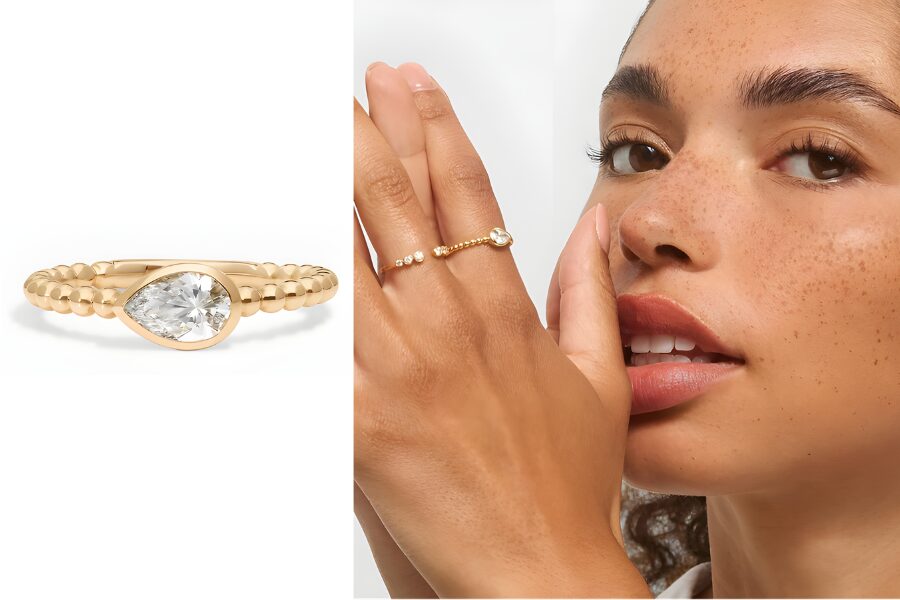
14K Yellow Gold East-West
|
|
|
Want To Know More? Click The Image To Explore The 14K Yellow Gold East-West Bezel Pear Lab Diamond Ring In Depth! |
|
|
14.a) Are Pear Shaped Diamonds More Expensive Than Round DiamondsBack To Top |
Pear shaped diamonds usually cost less than round brilliants of similar quality and size. Price differences reflect demand, cutting waste, and market popularity. When you compare options, pears often offer better value per carat.
Price Differences Between Pear and Round Cuts
Round diamonds command higher prices because cutters lose more rough material and buyers prefer them. Pear shaped diamonds typically sell at noticeable discounts for the same color, clarity, and carat weight. This pricing gap allows you to choose a larger-looking stone within your budget. If value matters to you, pears provide strong visual return.
|
|
14.b) What Is the Ideal Length-to-Width Ratio for Pear DiamondsBack To Top |
The length-to-width ratio determines how slim or wide a pear shaped diamond appears. Most buyers prefer ratios that balance elegance with comfort. Understanding this measurement helps you select a pleasing outline.
Recommended Proportions for Best Appearance
Many attractive pear shaped diamonds fall between ratios of about 1.45 and 1.75. Stones within this range usually show good symmetry and balanced curves. Lower ratios can look short and wide, while higher ratios may seem too narrow. Staying near the middle of this range gives the most versatile look.
|
|
14.c) Do Pear Diamonds Have More Bow Tie EffectBack To Top |
Pear shaped diamonds can show bow tie shadows more often than round cuts. Their tapered structure makes light control more challenging. However, good cutting can reduce this issue.
Managing Bow Tie Visibility
You can manage bow tie visibility by choosing diamonds with strong symmetry and proper depth. Viewing the stone under multiple lighting conditions reveals how shadows behave. Well-cut pears show only faint or shifting dark areas. When sparkle dominates, the bow tie remains minimal.
|
|
14.d) Are Pear Shaped Diamonds Good for Engagement RingsBack To Top |
Pear shaped diamonds work very well in engagement rings when properly set and protected. Their elegant form creates strong emotional and visual impact. With the right design, they combine beauty and practicality.
Durability and Daily Wear Suitability
Durability depends on cut quality, setting choice, and daily habits. Protective prongs or bezels guard the pointed tip against damage. Many people wear pear diamond rings daily without issues when mounted securely. With sensible care, these rings last for decades.
|
|
14.e) How Do I Protect the Tip of a Pear DiamondBack To Top |
The pointed tip needs extra protection because it faces the highest risk of impact. Smart setting choices and careful handling reduce this risk. With simple precautions, you can preserve the stone’s integrity.
Setting and Maintenance Tips
V-shaped prongs offer the best protection for the pointed end. Regular inspections ensure that prongs remain tight and aligned. Removing your ring during heavy work prevents accidental knocks. These habits keep your pear shaped diamond safe and beautiful.
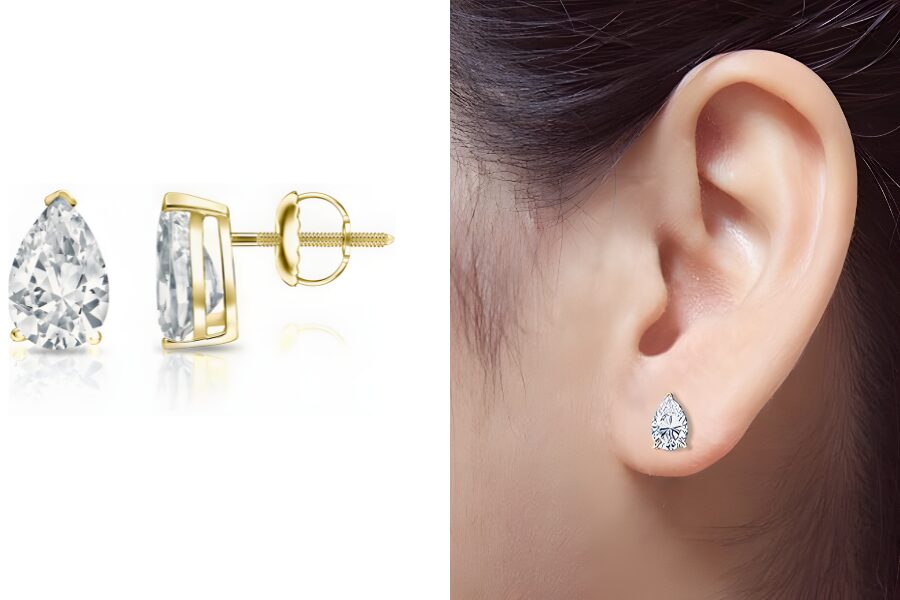
14K Gold V-Prong Pear
|
|
|
Want To Know More? Click The Image To Explore The 14K Gold V-Prong Pear Diamond Stud Earrings In Depth! |
See More Diamond Shapes As Follows:
| Baguette Diamonds | Marquise Diamond |
| Princess Cut Diamonds | Round Brilliant Diamond |
| Asscher Cut Diamond | Emerald Cut Diamond |
| Oval Diamond | Cushion Cut Diamond |
| Radiant Cut Diamond | Diamond Shape |