Black gold jewelry is gold jewelry treated to give its surface a charcoal gray or black appearance. The underlying metal can be yellow gold or white gold. Black rhodium plating is one way to create the dark finish. Other methods include controlled oxidation of suitable gold alloys and laser surface treatment.
You will find this finish on engagement rings, wedding bands, bracelets and pendants, sometimes covering the whole piece and sometimes highlighting selected details. However, black rhodium plating can wear away and reveal the metal beneath. It may need replating, depending on wear and care.
This guide explains how black gold is made, how different treatments affect durability, and what to check before buying. Start by confirming the underlying metal, its gold purity and the treatment used to create the black appearance.

|
1) What Is Black Gold Metal, and What Is Black Gold (or Blackened Gold) Made Of?Back To Table Of Contents |
Black gold is made from a gold alloy whose surface has been darkened. There is no single composition for all black gold jewelry. For example, a jeweler can apply black rhodium plating over yellow gold or white gold. Another method uses a specially formulated gold alloy that develops a dark oxide layer through controlled oxidation.
To understand a particular piece, distinguish its underlying metal from its surface treatment. For example, “14K white gold” identifies the gold alloy, while “black rhodium-plated” describes a finish. The dark appearance alone does not tell you the gold purity or how the piece was made.
14K Black and White Gold Noir Micropave Wedding Band |
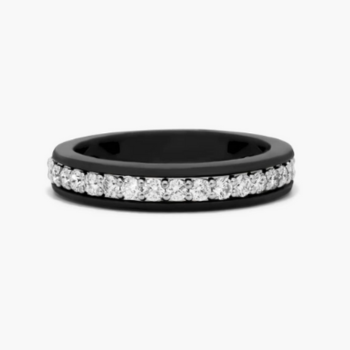
|
| Click on the Image |

|
1.a) How Is Black Gold Made?Back To Table Of Contents |
Different processes create a dark surface on gold. Black rhodium plating adds a separate coating. Controlled oxidation, however, creates a dark surface layer from another metal already present in a suitable gold alloy. These processes should not be described as the same treatment.
Alloying and Controlled Oxidation
One example involves alloying gold with cobalt. Under suitable conditions, cobalt at the surface reacts with oxygen and forms a dark cobalt oxide layer. The World Gold Council identifies cobalt oxide as a source of black gold’s color.
Heat treatment: Controlled heating encourages surface oxidation. The temperature and conditions depend on the alloy and the desired finish.
Black oxide layer: The resulting dark layer forms at the surface. This does not mean that the gold itself has become black throughout the piece. Also, this explanation applies to suitable alloys prepared for oxidation, rather than every item sold as black gold jewelry.
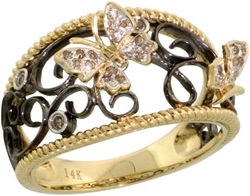
By comparison, black rhodium plating can cover an entire piece or selected details. The butterfly ring below illustrates the use of black rhodium accents alongside visible yellow gold. Its description identifies plating accents, rather than a cobalt oxide finish.
14k Gold Butterfly Ring With Black Rhodium Accented Swirls 0.12 Carat Brilliant Cut Diamonds
|
| Click the Image to View |
|
|
2) Black Rhodium and Ruthenium Plating Techniques in Crafting Black GoldBack To Table Of Contents |
Black rhodium and ruthenium plating create a dark finish by depositing a thin coating over gold jewelry. During electroplating, an electric current drives deposition from a solution containing metal compounds. The jewelry acts as the cathode, where the coating forms. This changes the surface appearance while leaving the underlying gold alloy in place.
The coating metals: Rhodium and ruthenium belong to the platinum group of metals. Different plating formulations produce different colors. For example, bright rhodium plating gives white gold a whiter appearance, while black rhodium formulations produce darker finishes.
How does the coating become black? Manufacturers formulate specialist plating solutions to produce gray, charcoal or black deposits. Their chemistry varies by product. Some black ruthenium solutions use additives that influence the deposit as it forms. The process does not involve first plating ruthenium black and then transferring it onto gold.
Jewelers can apply a dark finish across a piece or use it on selected details. However, a black coating does not make the gold underneath black throughout. Ask which metal lies beneath the finish and whether the seller specifies black rhodium, ruthenium or another treatment.
14K Black and White Gold Noir Micropave Wedding Band |
|
|
| Click on the Image |
|
|
2.a) Exploring the Durability of Rhodium-Plated Black GoldBack To Table Of Contents |
Black gold plating can wear off. As the coating thins or scratches, the underlying metal may show through. Rings are particularly exposed to rubbing and contact during daily activities. A finish that remains dark in recessed details may wear more visibly on exposed edges.
Durability depends on the plating formulation, coating thickness, surface preparation and how you wear the piece. The hardness of rhodium or ruthenium alone does not establish how long a thin coating will last. Therefore, avoid treating black plating as scratch-proof or assuming that every piece needs replating on the same schedule.
Also, plating wear and tarnishing are different processes. Wear removes or damages the coating through contact and abrasion. Tarnishing involves a chemical change at a surface. If a lighter metal color appears on frequently rubbed areas, loss of the dark finish may explain it.
Before buying, ask whether the jeweler can restore the finish and what that service involves. To reduce wear, remove plated jewelry before abrasive work, exercise, swimming and cleaning with harsh chemicals. A jeweler can assess an uneven finish and advise whether replating is appropriate.
|
|
2.b) Femtosecond Laser TreatmentBack To Table Of Contents |
A femtosecond laser delivers extremely short pulses of light. Researchers at the University of Rochester demonstrated that intense laser pulses can create microscopic and nanoscale structures on metal surfaces. These structures absorb more light, making the treated surface appear black.
Unlike electroplating, this approach changes the surface texture rather than adding a separate dark metal coating. However, a research demonstration does not establish how a particular jewelry finish will withstand years of abrasion, polishing or repair. Ask for evidence specific to the piece before accepting claims of permanent, maintenance-free black gold.
A product described simply as “black gold” does not tell you whether laser treatment was used. Confirm the manufacturing method with the seller rather than inferring it from the color.
Section Summary
| Method or Feature | What It Means for the Buyer |
|---|---|
| Black rhodium or ruthenium plating | A thin dark coating covers the underlying metal. Confirm the metal and treatment in the product description. |
| Plating durability | The finish can wear away. Its lifespan depends on the coating and use; professional replating may be needed. |
| Femtosecond laser treatment | Laser-created surface structures can produce a black appearance. Check product-specific durability evidence. |
|
|
3) Blackened Gold and Alternative Black Metals: A ComparisonBack To Table Of Contents |
Black gold, carbon fiber, ceramic, titanium and tungsten carbide can all appear in black jewelry, but they behave differently. Compare the underlying material, the source of its black color, its resistance to scratches and impact, and the options for resizing or repair. A hard surface does not necessarily mean a ring will resist breaking.
|
|
3.a) Black Gold vs. Black Carbon FiberBack To Table Of Contents |
Black gold uses a gold alloy with a darkened surface. Carbon fiber jewelry instead uses carbon fibers bonded with resin, sometimes as an inlay within a metal band. Carbon fiber is lightweight, although the weight of a finished ring also depends on its metal components.
The resin and any surrounding materials affect care requirements. Abrasives and harsh solvents can damage or dull the finish, so follow the maker’s instructions. Also, check whether the ring can be resized or must be exchanged. Carbon fiber’s strength does not make every ring scratch-proof, heat-proof or repairable.
|
|
3.b) Black Gold vs. Black CeramicBack To Table Of Contents |
Jewelry-grade ceramic is an engineered nonmetallic material. It can resist scratching well, but a hard impact may chip or fracture it. Gold alloys are generally more malleable, so a gold ring may bend or dent instead. However, neither material is immune to damage.
Some black ceramic rings have color throughout the ceramic rather than a separate black coating. Check the construction, especially when a design includes metal or inlays. Ceramic rings generally cannot be resized conventionally. A gold ring may offer more resizing options, depending on its design, stones and finish; black plating may need restoration afterward.
|
|
3.c) Black Gold vs. Black TitaniumBack To Table Of Contents |
Titanium offers strength with relatively little weight, making it useful for substantial rings that feel light on the hand. However, titanium can still develop scratches. Its natural color is gray, so a black titanium ring requires a surface treatment, such as a physical vapor deposition (PVD) coating.
The durability of the black finish depends on the treatment, not simply on titanium’s strength. A coating can wear and expose the lighter metal beneath. Resizing options are also limited and depend on the ring and the manufacturer. Ask about size adjustments, exchanges and refinishing before buying.
|
|
3.d) Black Gold vs. Black TungstenBack To Table Of Contents |
Rings marketed as tungsten are typically made from tungsten carbide. This material is highly scratch-resistant, but it is also brittle and can crack under a hard impact. Unlike many gold bands, tungsten carbide rings cannot be resized conventionally.
Black tungsten carbide rings often rely on a surface coating. The underlying material’s scratch resistance does not guarantee that the black coating will remain unchanged. Compare the seller’s finish warranty and size-exchange policy. Also, judge price by the complete design, including stones and inlays, rather than assuming every tungsten ring costs less than every gold ring.
Section Summary
Choose by the properties of the finished ring. Black gold may offer more repair and resizing options, while carbon fiber and titanium can reduce weight. Ceramic and tungsten carbide resist scratching but can fracture under impact. For every material, confirm how the black color is produced and what happens if the finish wears or your ring size changes.
| Material | Key Considerations |
|---|---|
| Black Gold | A darkened gold alloy. Plated finishes can wear away. Repair and resizing options depend on the design, gemstones and treatment. |
| Carbon Fiber | Lightweight fibers bonded with resin, sometimes combined with metal. Care and resizing options depend on the complete ring’s construction. |
| Black Ceramic | Scratch-resistant but vulnerable to chipping or fracture under impact. Some designs are black throughout. Conventional resizing is generally unavailable. |
| Black Titanium | Lightweight and strong, but still susceptible to scratches. Its black surface treatment can wear. Resizing options are limited and design-dependent. |
| Black Tungsten Carbide | Highly scratch-resistant but brittle under hard impact. A black coating can wear independently of the underlying material. Conventional resizing is unavailable. |
|
|
4) The Allure and Value of Black Gold Jewelry PiecesBack To Table Of Contents |
Black gold offers a dark background that can emphasize gemstones, metalwork and contrasting gold colors. Its appeal is a matter of personal taste. Its monetary value, however, depends on the actual materials and the finished piece, rather than the black appearance alone.
|
|
4.a) What Is Black Gold Jewelry?Back To Table Of Contents |
In a finished piece, the black treatment may cover most of the gold or highlight selected areas around stones and decorative details. You will see this approach in black gold rings, bracelets, earrings and pendants. Check the product description to establish which parts are darkened and what gold alloy lies beneath.
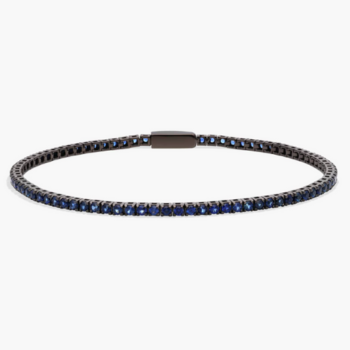
For example, the bracelet below is described as black rhodium-plated 14K white gold. This distinguishes its underlying gold alloy from its dark coating, rather than suggesting that all black gold jewelry starts as yellow gold.
Sapphire Tennis Bracelet in Black Rhodium-Plated 14K White Gold |
|
| Click on the Image |
|
|
4.b) Spotlight on StyleBack To Table Of Contents |
A fully darkened band creates a different impression from a yellow-gold ring with black accents. Likewise, polished and textured surfaces can give otherwise similar designs different characters. Choose the amount of contrast that suits your style, whether you prefer a subtle detail or a predominantly black piece.
When comparing designs, look at close-up photographs as well as pictures of the jewelry being worn. Consider the proportions, comfort and finish maintenance alongside the color.
|
|
4.c) Gemstone HarmonyBack To Table Of Contents |
Dark settings can create contrast with pink diamonds, emeralds and rubies. Alternatively, black gemstones can produce a more uniform appearance. Neither approach is inherently better; the result depends on the individual stone, setting and lighting.
The setting changes how a gemstone is presented, but it does not improve the stone’s actual clarity or quality. Assess the gemstone itself alongside the overall design. We examine specific gemstone choices in the dedicated section later in this guide.
|
|
4.d) Crafting Your Black Gold Jewelry CollectionBack To Table Of Contents |
Start with a piece you expect to wear, rather than buying several items simply to complete a matching set. Think about whether you want an everyday ring, occasional earrings or a pendant. Then compare comfort, construction and the maintenance needed to retain its dark appearance.
Before adding another piece, consider how it works with jewelry you already own. Matching black finishes is optional. A combination of dark surfaces and visible yellow or white gold can also form a coordinated collection.
|
|
4.e) Value of Black Gold JewelryBack To Table Of Contents |
The gold content depends on both the alloy’s purity and its weight. For example, 18K gold contains 75% gold, while 14K gold contains approximately 58.3%, commonly marked 585. At the same gold-alloy weight, an 18K piece contains more gold than a 14K piece. However, a heavier 14K piece may contain more gold than a lighter 18K piece.
The retail price also reflects gemstones, craftsmanship, design, brand and finishing work. A black treatment does not increase the underlying alloy’s gold purity, and a higher purchase price does not guarantee a higher resale return.
If you need a valuation, specify its purpose. An insurance replacement appraisal and an estimate for selling the jewelry answer different questions. We discuss purchasing costs in more detail in the pricing section later in this guide.
Section Summary
| Feature | What to Consider |
|---|---|
| Appearance | Choose between an overall dark finish and selective black accents. |
| Gemstones | Assess the individual stones and their presentation, rather than assuming a dark setting improves quality. |
| Wear and Care | Match the design and finish maintenance to how you plan to wear the piece. |
| Value | Distinguish gold content, retail price and potential resale value. |
|
|
5) Choosing Black Gold for Your Engagement RingBack To Table Of Contents |
Black gold can suit an engagement ring if you like a dark finish and accept the care that its treatment requires. Before choosing one, confirm the underlying gold alloy, how the black surface is created, and whether the jeweler can resize and refinish the design. These practical details matter for a ring you expect to wear regularly.
|
|
5.a) What to Consider When Selecting a Black Gold Engagement RingBack To Table Of Contents |
i) Durability and Maintenance
Assess the ring’s construction separately from its black finish. The gold alloy, band thickness and stone settings affect how the ring withstands wear. Meanwhile, a plated black surface can gradually wear away and reveal the underlying gold color. This is coating wear, rather than the gold “bleeding” through.
Ask about refinishing costs, service arrangements and any restrictions caused by the gemstones or setting. There is no single replating schedule for every ring. Also, confirm whether resizing would require restoration of the black finish and whether the design allows the size adjustment you might need.
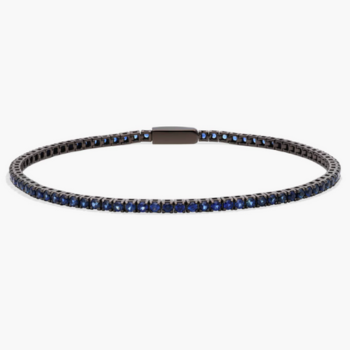
14K Black and Yellow Gold Noir Micropave Wedding Band |
|
| Click on the Image |
ii) Metal Allergies and Skin Sensitivity
The term “black gold” does not establish that a ring is hypoallergenic. Skin compatibility depends on the underlying alloy, the coating and any intermediate plating layers. Some gold alloys contain nickel, a common cause of jewelry-related allergic reactions.
If you have a known metal allergy, ask the seller for the composition of the complete ring, including its plating layers. Do not rely on a surface coating to prevent contact with an allergen indefinitely, because that coating can wear. A black finish alone is not evidence that a ring will suit sensitive skin.
iii) Comparing Black Gold with Other Black Materials
Compare black gold with titanium, tungsten carbide, carbon fiber and ceramic using the material comparison above. Consider weight, scratch resistance, impact resistance, finish maintenance and resizing options. Carbon fiber and ceramic are not metals, and their construction differs from a dark coating applied over gold.
Choose according to the finished ring and the services available for it. Gold content does not automatically make a ring more durable, and an alternative material’s hardness does not guarantee that its black finish will remain unchanged.
iv) Choosing Gemstones for Regular Wear
For a predominantly black design, possible options include black diamonds, onyx and black moissanite. Alternatively, colorless diamonds provide contrast, while sapphire, ruby or amethyst can introduce color. These choices differ in durability and should not be treated as interchangeable for daily wear.
Ruby and sapphire generally offer strong resistance to scratching and good toughness, although treatments can affect care requirements. Onyx and amethyst need more protection from scratching than ruby or sapphire. For any stone, ask about its identity, treatments, condition and suitability for the proposed setting. Color alone does not tell you how well it will withstand wear.
Have the jeweler explain how the stone will be protected and how the ring can be cleaned and serviced. The gemstone, setting and black finish all need compatible care.
Section Summary
| Consideration | What to Confirm |
|---|---|
| Black Finish | The treatment used, expected wear and available refinishing services. |
| Fit and Construction | Comfort, setting security and whether resizing is practical. |
| Skin Sensitivity | The underlying alloy and plating-layer composition, especially if you have a known allergy. |
| Gemstone Choice | Durability, treatments and care requirements for regular wear. |
|
|
6) Matching Your Black Gold Ring with the Right GemstonesBack To Table Of Contents |
Choose gemstones for a black gold ring by considering their appearance, durability and care requirements. Black diamonds can create a predominantly dark design, while colored sapphires and other gems can provide contrast. However, a pleasing color combination does not automatically increase a stone’s quality or the ring’s resale value.
|
|
6.a) Black Diamonds in Black Gold JewelryBack To Table Of Contents |
Black diamonds offer a dark appearance and reflective surface rather than the transparent brilliance associated with colorless diamonds. Both natural-color and color-treated black diamonds occur in jewelry. Therefore, ask how the color originated instead of assuming that every black diamond is rare or untreated.
Inclusions and fractures can affect a black diamond’s resistance to damage despite diamond’s high scratch hardness. Ask about the individual stone’s condition and cleaning requirements. Avoid ultrasonic and steam cleaning for black diamonds; the ring’s dark metal finish also needs compatible care.
Black Diamond Eternity Necklace in Black Rhodium-Plated 14K White Gold |

|
| Click on the Image |
|
|
6.b) Black Sapphire for Black Gold JewelryBack To Table Of Contents |
Black sapphire generally has an opaque or very dark appearance, rather than the transparency associated with many blue sapphires. As corundum, sapphire has a Mohs hardness of 9 and generally good toughness. However, fractures and treatments can affect durability. Ask whether the stone has been treated, particularly by fracture filling, and obtain care instructions for that specific gem.
|
|
6.c) Black Garnet Paired with Black GoldBack To Table Of Contents |
Black garnet can provide a dark, polished surface alongside blackened gold. Garnet is a group of minerals, so ask which variety the seller is offering. Hardness and other properties vary within the group. Neither a dark appearance nor the name “black garnet” establishes rarity, price or suitability for unrestricted daily wear.
|
|
6.d) Black Tourmaline in Black Gold JewelryBack To Table Of Contents |
Black tourmaline offers another option for a dark gemstone design. Tourmaline has a Mohs hardness of 7 to 7.5 but only fair toughness. It can therefore resist some scratching while remaining vulnerable to chips and fractures. For a ring, choose a setting that protects exposed edges and avoid hard knocks and sudden temperature changes.
|
|
6.e) Black SpinelBack To Table Of Contents |
Black spinel can suit a polished, predominantly black design. Spinel has a Mohs hardness of 8 and generally good toughness, making it a practical ring option with appropriate care. Nevertheless, it can still scratch or chip. Assess the individual stone’s condition, cut and setting rather than expecting a permanently flawless surface.
|
|
6.f) Black Jade in Blackened Gold RingsBack To Table Of Contents |
Black jade can provide a smooth, dark surface in a cabochon or carved design. Ask whether the material is nephrite or jadeite and whether it has been dyed, impregnated or otherwise treated. Both materials are notably tough, but they can still scratch. Treatments may also change cleaning requirements, so follow instructions for the specific piece.
|
|
6.g) Black OpalBack To Table Of Contents |
Black opal has a dark bodycolor that can provide a background for flashes of play-of-color. A black gold setting can continue that dark palette, although the visual result depends on the individual opal and lighting. The metal setting does not change the gemstone’s actual play-of-color.
Opal requires more protection from scratches, impacts and sudden temperature changes than sapphire or spinel. For a ring, discuss a protective setting and whether occasional wear would better suit your lifestyle. Also, establish whether the piece contains solid opal, a doublet or a triplet, because construction affects care. See our opal care and cleaning guide for more detail.
|
|
6.h) Colored Gemstones That Complement Black Gold JewelryBack To Table Of Contents |
Colored gemstones, including pink diamonds, emeralds and rubies, can contrast with a dark setting. Compare stones in different lighting and consider how much of the surrounding metal remains visible. The best combination is the one you enjoy wearing, rather than a universally preferred color pairing.
Match care requirements to the stone as well as the finish. For example, an emerald with filled fractures may need different handling from an untreated ruby. Ask about treatments before agreeing to cleaning, replating or repair procedures.
Section Summary
| Consideration | What to Check |
|---|---|
| Identity and Treatments | Confirm the gemstone and any treatments, including the origin of a black diamond’s color. |
| Durability | Consider resistance to scratching, chipping and environmental damage. Hardness alone is insufficient. |
| Appearance | Compare dark-on-dark designs with colored-stone contrast under different lighting. |
| Care and Servicing | Use cleaning and repair methods compatible with both the gemstone and the black finish. |
|
|
7) Customizing Your Black Gold Engagement RingBack To Table Of Contents |
Customizing a black gold engagement ring lets you choose the underlying gold alloy, placement of the dark finish, gemstones and design details. However, the available options depend on the jeweler and the proposed construction. Agree on the design, maintenance requirements and service arrangements before approving production.
|
|
7.a) A World of Color and FinishBack To Table Of Contents |
Decide whether the ring should be predominantly black or combine dark details with visible yellow or white gold. Ask for photographs or a sample of the proposed treatment, because finishes described as black can differ in tone and reflectivity.
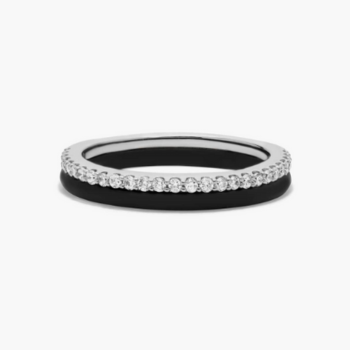
14K Black And White Gold Micropave Noir Wedding Band |
|
| Click on the Image |
i) Exploring Color Variations in Black Gold Jewelry
Color combinations can come from both the metal and the gemstones. For example, visible yellow-gold edges can contrast with a dark center, while colorless or colored stones can provide another focal point. Confirm which surfaces will remain uncoated, including the inside of the band.
ii) Choosing the Right Finish for Your Style
A polished surface reflects light differently from a matte, brushed or hammered surface. Ask which textures the jeweler can combine with the chosen black treatment. Also, discuss how future refinishing would affect that texture and whether restoring the black color would require additional work.
|
|
7.b) Stone Settings and Design Choices for Black Gold JewelryBack To Table Of Contents |
Compare gemstone settings by appearance, protection and servicing needs. Prongs hold a stone with individual metal supports, while a bezel surrounds its edge with metal. Pavé arrangements use small, closely set stones. A halo is a design featuring accent stones around a center stone, rather than one specific method of securing it.
Discuss how much dark metal you want visible around the stones. The jeweler should also explain access for cleaning, checks on stone security and future finish restoration. A design that looks attractive in a rendering must still suit the gemstone and the intended wear.
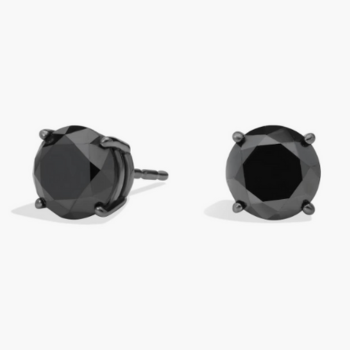
Black Diamond Stud Earrings in Black Rhodium-Plated 14K White Gold (2 Ct. Tw.) |
|
| Click on the Image |
|
|
7.c) Gemstone DiversityBack To Table Of Contents |
Use the gemstone comparisons above to shortlist stones that suit your preferred color and wear requirements. Then choose the actual stone before finalizing a custom setting, so the design can accommodate its measurements, shape and condition.
Ask the jeweler to record the gemstone’s identity, whether it is natural or laboratory-grown, and any disclosed treatments. A birthstone or favorite color can carry personal meaning without relying on a universal symbolic interpretation. Confirm that the stone’s care requirements are compatible with the proposed black finish.
|
|
7.d) Adding Personal TouchesBack To Table Of Contents |
Engraving can add initials, a date or a short message if the design provides enough suitable space. Ask the jeweler to confirm the location, character limit and appearance before proceeding. On a darkened surface, discuss whether the lettering will reveal a contrasting metal color or receive the same finish.
Agree on the order of sizing, engraving and finishing with the jeweler. Also, check how later alterations could affect the inscription and whether personalization changes the seller’s return or exchange terms.
|
|
7.e) Sizing and ComfortBack To Table Of Contents |
Have your finger measured for a band with a similar width and inner profile to the proposed ring. Try the ring alongside any wedding band you plan to wear with it. Check how the edges, stone setting and combined width feel when you bend your fingers.
Resizing depends on the design, stone placement and construction, rather than the label “black gold.” Full-eternity and some other designs may not permit adjustment. Ask what size changes are possible and whether the work would require refinishing or re-engraving. A comfort-fit band has a rounded inner profile, but the best fit remains an individual choice.
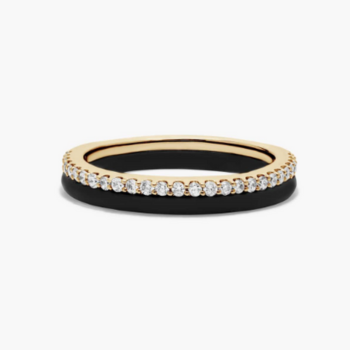
14K Black And Yellow Gold Micropave Noir Wedding Band |
|
| Click on the Image |
Section Summary
| Customization Choice | What to Agree with the Jeweler |
|---|---|
| Color and Finish | The dark treatment, surface texture and areas of visible yellow or white gold. |
| Gemstones and Settings | Stone identity, treatments, measurements, protection and servicing needs. |
| Engraving | Wording, placement, finish and any effect on alteration or return terms. |
| Fit and Future Adjustments | Comfort, permitted size changes and any refinishing required afterward. |
|
|
8) How to Care for Black Gold JewelryBack To Table Of Contents |
Care for black gold jewelry by reducing friction, avoiding harsh chemicals and cleaning gently. Follow the jeweler’s instructions for the specific black treatment and any gemstones. Good care can help preserve the appearance, but it cannot prevent all wear or restore plating that has already rubbed away.
-
Remove it before abrasive activities: Take off rings and bracelets before exercise, gardening, heavy lifting and household work. Repeated rubbing against hard surfaces can wear the dark finish, especially along exposed edges.
-
Avoid cleaners and swimming-pool chemicals: Remove jewelry before handling household cleaners or entering a pool or hot tub. Apply perfumes and lotions before putting it on, and avoid direct contact with sprays.
-
Distinguish cleaning from prolonged exposure: Brief contact with lukewarm water during approved cleaning is different from wearing the piece while swimming, showering or washing dishes. Remove it for these activities to limit exposure to chemicals, residues and rubbing, rather than assuming that plain water automatically damages every black gold finish.
-
Clean with a light touch: Start with a clean, soft, lint-free cloth. If the jeweler confirms that wet cleaning suits the finish and gemstones, use a little mild soap diluted in lukewarm water. Gently wipe away dirt, rinse as instructed and pat dry. Avoid vigorous scrubbing, abrasive cleaners and polishing cloths intended to remove tarnish.
-
Check gemstone restrictions: Some treated, glued or assembled gems need different care and should not be soaked. Do not use ultrasonic or steam cleaners unless a jeweler confirms that the entire piece is suitable. Read about the risks of mechanical gemstone cleaning before using cleaning equipment. See our gemstone cleaning guidefor additional considerations.
-
Use a bowl away from open drains: Clean over a secure surface rather than an open sink. If a stone moves or a setting catches on the cloth, stop cleaning and have the jewelry inspected.
-
Store each piece separately: Let the jewelry dry before placing it in a soft pouch or a separate lined compartment. Keep it from rubbing against other jewelry during storage and travel.
-
Arrange professional inspection when needed: Consult a jeweler if the finish becomes uneven, lighter metal shows through or stones feel loose. Cleaning removes dirt; it does not replace missing plating. Whether the finish can be restored depends on the treatment and construction of the piece.
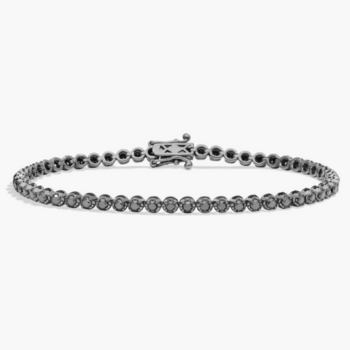
Black Diamond Tennis Bracelet in Black Rhodium-Plated 14K White Gold (2 Ct. Tw.) |
|
| Click on the Image |
|
|
9) Authenticity and Buying Tips for Black Gold JewelryBack To Table Of Contents |
To verify black gold jewelry, establish what metal lies beneath the dark finish and how that finish was created. A black appearance alone does not prove gold content. Ask for a written description of the gold purity, construction, surface treatment and any gemstones before buying.
|
|
9.a) How to Verify the Authenticity of Blackened Gold Jewelry PiecesBack To Table Of Contents |
i) Confirm the Underlying Metal and Black Treatment
Ask whether the item is made from a gold alloy with a black surface treatment, gold-plated base metal, or another material. These are different constructions. For example, black rhodium-plated 14K white gold describes a dark coating over a gold alloy. A description that says only “black gold finish” does not establish the underlying metal.
Request an invoice or product specification recording the stated gold purity and blackening method. If a seller cannot explain the construction, seek clarification before paying. A specialist shop or positive customer reviews can help you assess service, but neither substitutes for accurate material information.
ii) Examine Purity Marks and Supporting Documents
Look for a karat or fineness mark, such as 14K, 18K, 585 or 750, and compare it with the seller’s description. Official hallmarking systems differ between countries. A simple purity stamp is not necessarily an independently verified hallmark, so ask who applied or verified the mark.
A seller-issued “certificate of authenticity” should explain what it covers and who issued it. It is not automatically equivalent to independent laboratory testing. Likewise, a gemstone report may identify a stone and its treatments without establishing the metal composition of the entire piece.
iii) Understand the Limits of Metal Testing
A qualified jeweler or testing laboratory can select appropriate methods for examining coated jewelry. X-ray fluorescence, commonly called XRF, measures elemental composition in the area examined. However, coatings can influence the reading, so a surface result should not automatically be treated as proof of the composition throughout the piece.
GIA has documented gold-plated gold jewelry in which plating affected the apparent karat reading. Ask the examiner how the coating and construction were considered, and whether additional testing is needed. Before authorizing any procedure that could mark the item or remove its finish, discuss the consequences with the examiner.
iv) Blackening Jewelry You Already Own
Adding black plating to verified gold jewelry changes its surface appearance rather than its underlying gold purity. However, plating is not itself a test of authenticity. Have the jeweler assess the existing metal, gemstones and previous treatments before agreeing to the work.
If you may later want the original appearance restored, ask how the black finish would be removed. Complete removal can be difficult in recesses and around small settings. Do not assume that every blackening treatment is easily reversible.
v) Check Gemstone Details and Aftercare Terms
For significant gemstones, ask for identification or grading information appropriate to the stone, including whether it is natural or laboratory-grown and any disclosed treatments. Where an independent report is supplied, check that its details match the item. An identification or grading report is different from a monetary appraisal.
Read the return, resizing and refinishing terms before purchase. Ask whether normal plating wear is covered and who can service the piece. If responsible sourcing matters to you, request evidence supporting the seller’s claims about ethically sourced diamonds; a grading report alone does not establish every aspect of ethical sourcing.
Section Summary
| Check | What to Establish |
|---|---|
| Materials and Finish | The underlying metal, gold purity, construction and black treatment. |
| Marks and Documents | Who verified the information and exactly which materials the document covers. |
| Expert Testing | Whether coatings could affect the results and whether further examination is necessary. |
| Purchase and Aftercare | Gemstone disclosures, return terms, resizing options and finish-restoration arrangements. |
|
|
10) Understanding the Pricing: Factors Affecting the Value of Black GoldBack To Table Of Contents |
Black gold jewelry has no single standard price. Its cost depends on the underlying gold, gemstones, construction and finishing work. A black finish does not automatically make a piece more expensive or more valuable than a comparable yellow-gold or white-gold design.
-
Gold purity and weight: Compare the karat purity and the weight of the gold alloy, excluding gemstones and other components where possible. At the same alloy weight, higher-karat gold contains more gold. However, purity alone cannot explain the price difference between pieces of different weights or designs.
-
Craftsmanship and design complexity: Detailed metalwork, stone setting and custom construction can add labor costs. Handcrafted or intricate jewelry may therefore carry a higher retail price, but those descriptions alone do not establish workmanship quality or a higher resale value.
-
Gemstones: Compare the stones’ identity, size, quality, natural or laboratory-grown origin, and disclosed treatments. Two rings with similar photographs may contain very different gemstones. Review the specifications and any relevant laboratory reports before comparing prices.
-
Blackening and finishing: The treatment used, surface preparation and areas requiring selective finishing can affect production costs. Ask what creates the dark appearance and whether the quoted price includes any future finish restoration. The treatment does not increase the underlying gold alloy’s purity.
-
Brand and included services: A price can reflect the designer’s name, customization, warranty and aftercare arrangements. Compare what each seller actually provides rather than treating a higher price as proof of better materials or construction.
-
Market conditions: Changes in gold prices can affect material costs. However, a finished piece’s retail price also includes labor, gemstones and the seller’s pricing decisions. Do not assume that descriptions such as “rare,” “exclusive” or “limited edition” guarantee strong demand or future appreciation.
-
Ongoing ownership costs: Consider possible charges for replating, repairs, resizing and re-engraving. Ask which services are available for the specific design and what the warranty excludes. A lower purchase price may not mean a lower total cost over the years you wear the piece.
Section Summary
Compare black gold jewelry using matched specifications: gold purity and weight, gemstone details, construction, finish and included services. Also, distinguish the retail purchase price from an insurance replacement valuation or a potential resale offer. These serve different purposes and should not be treated as interchangeable.
| Factor | What to Compare |
|---|---|
| Gold Purity and Weight | Compare both karat purity and gold-alloy weight. Purity alone does not establish the total gold content. |
| Craftsmanship and Design | Detailed construction and stone setting can add labor costs. Assess the workmanship rather than relying on “handcrafted” claims. |
| Gemstones | Compare identity, size, quality, natural or laboratory-grown origin, and disclosed treatments. |
| Blackening and Finishing | Confirm the treatment and finishing work included. A black surface does not increase gold purity. |
| Brand and Services | Compare customization, warranty and aftercare alongside the price. |
| Market Conditions | Gold prices can affect material costs. Limited-edition labels do not guarantee demand or future appreciation. |
| Ownership Costs | Ask about possible charges for replating, repairs, resizing and re-engraving. |
|
|
11) Frequently Asked Questions About Black Gold JewelryBack To Table Of Contents |
|
|
11.a) Is Black Gold Real Gold?Back To Table Of Contents |
Black gold jewelry can be genuine gold with a darkened surface. For example, black rhodium plating can cover a yellow-gold or white-gold alloy. However, the phrase “black gold” alone does not prove gold content. Confirm the underlying metal, karat purity and treatment in the product description.
|
|
11.b) Does Black Gold Tarnish?Back To Table Of Contents |
It depends on the alloy and surface treatment, but a changing appearance does not necessarily mean tarnishing. Tarnishing is a chemical surface change; plating wear physically removes or damages the coating. Lighter areas on frequently rubbed edges may indicate that the black finish has worn away and exposed the underlying metal.
|
|
11.c) Does Black Gold Stay Black?Back To Table Of Contents |
Not indefinitely in every case. Black rhodium plating can wear away, especially on areas exposed to frequent rubbing. The metal revealed beneath may be yellow gold or white gold. How long the appearance lasts depends on the treatment, coating quality, use and care. Professional replating may restore a worn plated finish.
|
|
11.d) Is Black Gold Expensive?Back To Table Of Contents |
There is no single price range that applies to all black gold jewelry. Cost depends on gold purity and weight, gemstones, craftsmanship, brand and finishing work. Compare these specifications between pieces rather than judging price or value from the black appearance alone.
|
|
11.e) Is Black Gold Permanent?Back To Table Of Contents |
Black plating is not a permanent, maintenance-free finish. Other blackening methods alter the surface differently, so their durability must be assessed separately. Ask which treatment was used, how it withstands abrasion and whether it can be restored. Do not assume that a non-plated finish is immune to scratching, polishing or repair-related changes.
|
|
11.f) Is Black Gold More Expensive Than Gold?Back To Table Of Contents |
Not necessarily. A black treatment can add finishing costs to an otherwise comparable gold piece, but it does not establish a universal price premium. Compare jewelry with similar gold purity, gold-alloy weight, gemstones and construction. The black finish does not increase the underlying alloy’s gold purity.
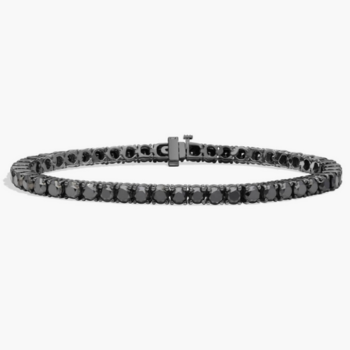
Black Diamond Tennis Bracelet in Black Rhodium-Plated 14K White Gold (14 Ct. Tw.) |
|
| Click on the Image |
Explore More Jewelry Metals
| The Metal Platinum | Platinum Jewelry |
| Palladium Metal Attributes | Rhodium Metal Attributes |
| White Gold | Rose Gold |
| Silver And Sterling Silver | Titanium |
