The Krupp Diamond, now known as the Elizabeth Taylor Diamond, is a 33.19-carat Type IIa diamond celebrated for its exceptional quality and dramatic history. Discover its remarkable attributes, 1959 theft, connection to Elizabeth Taylor, record-setting auction and present ownership.
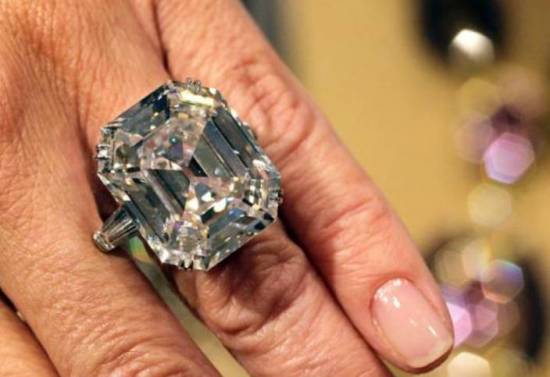
Krupp-Elizabeth-Taylor-Diamond
Table Of Contents

|
1) Krupp Diamond AttributesGo To Table Of Contents |
The Krupp Diamond, now known as the Elizabeth Taylor Diamond, combines exceptional size, color, clarity and chemical purity. Its center stone weighs 33.19 carats and has a cut-cornered rectangular step cut commonly called an Asscher cut. The Gemological Institute of America graded it D color and VS1 clarity. Its grading report also indicates that the clarity may be potentially internally flawless.
In addition, the Krupp Diamond is classified as a Type IIa diamond. Diamonds in this category are chemically very pure and often display exceptional optical transparency. The center diamond is mounted in a platinum ring and flanked by two tapered baguette-cut diamonds. Together, these attributes make it one of the most distinctive and celebrated diamonds associated with Elizabeth Taylor.

|
1.a) What Is the Krupp Diamond?Back To Table Of Contents |
The Krupp Diamond is a 33.19-carat colorless diamond mounted in a platinum ring. It has a cut-cornered rectangular step cut and is flanked by two tapered baguette-cut diamonds. The stone was originally known as the Krupp Diamond, but it later became closely associated with actress Elizabeth Taylor.
Richard Burton bought the ring in 1968 and presented it to Taylor as a gift. She wore it frequently, which made it one of the most recognizable pieces in her celebrated jewelry collection. After her death, Christie’s offered the ring at auction under the name the Elizabeth Taylor Diamond.
The diamond is famous for more than its celebrity connection. Its exceptional size, D color, VS1 clarity and Type IIa classification also give it considerable gemological importance.
|
|
1.b) How Many Carats Is the Krupp Diamond?Back To Table Of Contents |
The Krupp Diamond weighs approximately 33.19 carats, which equals about 6.64 grams. This figure refers to the large center diamond. It does not include the two smaller tapered baguette-cut diamonds positioned on either side of it.
Carat measures a diamond’s weight rather than its visible dimensions. However, a colorless diamond weighing more than 33 carats is exceptionally large for a ring. Its broad step-cut shape also helps display its impressive size.
The Krupp Diamond should not be confused with the Taylor-Burton Diamond. That separate pear-shaped diamond weighs 69.42 carats.
|
|
1.c) What Cut Is the Krupp Diamond?Back To Table Of Contents |
The Krupp Diamond has a cut-cornered rectangular step cut, which the Gemological Institute of America identifies as an Asscher cut. Although modern Asscher-cut diamonds often have a square outline, this historic stone has a more elongated rectangular form.
Its facets run in parallel steps around the diamond. This arrangement creates broad flashes of light and a sense of depth, sometimes described as a hall-of-mirrors effect. It produces a different appearance from a brilliant cut, which relies on numerous smaller facets to create rapid sparkle.
Step cuts can reveal inclusions more readily than brilliant cuts. Therefore, the Krupp Diamond’s exceptional clarity plays an important role in the clean and open appearance of the stone.
|
|
1.d) What Are Its Color, Clarity and Diamond Type?Back To Table Of Contents |
The Gemological Institute of America graded the Krupp Diamond as D color. This is the highest grade on the GIA D-to-Z color scale and identifies the stone as colorless. Its lack of visible color contributes to its bright, icy appearance.
The diamond received a VS1 clarity grade. At this level, inclusions are minor and difficult for a skilled grader to detect under 10× magnification. The accompanying GIA working diagram also indicated that the diamond may be potentially internally flawless. However, its recorded clarity grade remains VS1, so it should not simply be described as internally flawless.
The Krupp Diamond is also a Type IIa diamond. This classification identifies diamonds with exceptional chemical purity, often accompanied by outstanding optical transparency. The combination of D color, VS1 clarity and Type IIa status adds substantial gemological importance to an already remarkable 33.19-carat stone.
|
|
2) History of The Krupp Elizabeth Taylor Diamond:Go To Table Of Contents |
The documented history of the Krupp Diamond begins in the early 20th century, when the 33.19-carat stone was cut. However, its original mine, exact discovery date and earliest owners have not been conclusively established. Claims connecting it to a particular historic diamond source should therefore be treated cautiously.
The diamond later belonged to Vera Krupp, a German actress who lived for several years at Spring Mountain Ranch near Las Vegas. Her ownership gave the gem the name by which it became widely known. During this period, the ring also survived a dramatic theft and nationwide search.
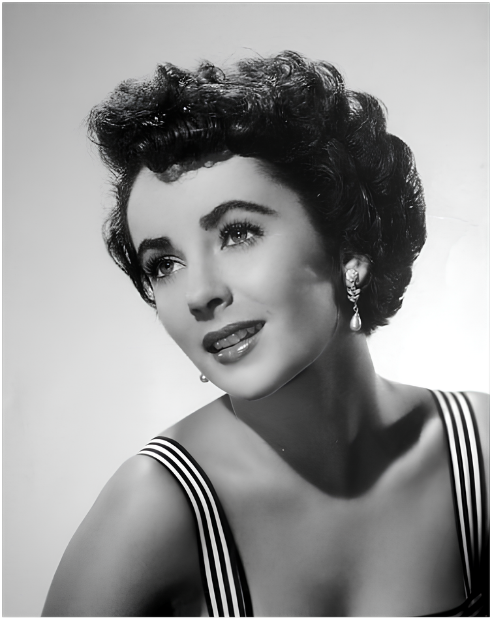
In 1968, Richard Burton purchased the ring at a Parke-Bernet Galleries auction and gave it to Elizabeth Taylor. She wore it frequently, transforming an already exceptional diamond into a Hollywood icon. Christie’s later presented it as the Elizabeth Taylor Diamond when her jewelry collection went to auction in 2011./
|
|
2.a) Where Did the Krupp Diamond Come From?Back To Table Of Contents |
The exact geographic origin of the Krupp Diamond is unknown. Authoritative published records do not identify the mine, country or date of discovery. The Gemological Institute of America states that the diamond was cut in the early 20th century, but its history before that point remains unclear.
Some accounts associate the diamond with India’s historic Golconda region because it is a Type IIa stone. However, Type IIa is a scientific classification, not proof of geographic origin. Christie’s notes that diamonds of this type were first identified with Indian sources but have since been recovered from every major diamond-producing region.
Therefore, describing the Krupp Diamond as a confirmed Golconda diamond would go beyond the available evidence. Its documented ownership becomes clearer later, particularly during the period when the ring belonged to Vera Krupp.
|
|
2.b) Who Was Vera Krupp?Back To Table Of Contents |
Vera Krupp was a German-born actress and ranch owner. She was born Martha Vera Wilhelmine Hossenfeldt in Meine, Germany, and became a naturalized United States citizen in 1947. In 1952, she married German industrialist Alfried Krupp, her fourth husband. Although the couple divorced in 1957, she continued to use the Krupp surname.
In 1955, Vera purchased a property near Las Vegas and renamed it Spring Mountain Ranch. She planned to raise cattle there and added several features to the estate, including kennels for her Great Danes. The ranch later became closely connected with the most dramatic episode in the diamond’s history.
Vera owned the 33.19-carat diamond ring before Elizabeth Taylor. In 1959, armed intruders stole it from her Nevada ranch. Authorities recovered the diamond several weeks later. Her ownership, together with the publicity surrounding the theft, firmly established its identity as the Krupp Diamond.
|
|
2.c) Why Is It Called the Krupp Diamond?Back To Table Of Contents |
The diamond is called the Krupp Diamond because it once belonged to Vera Krupp. She retained the surname after her marriage to German industrialist Alfried Krupp ended in divorce. The name refers to this former owner, not to the diamond’s cut, mine or geographic origin.
The ring became especially well known during Vera’s ownership. Its theft from her Nevada ranch in 1959 attracted nationwide attention, and reports about the investigation repeatedly identified it as the Krupp Diamond. The name remained attached to the stone after authorities recovered it.
When Richard Burton later purchased the ring for Elizabeth Taylor, people continued to call it the Krupp Diamond. Christie’s presented it as the Elizabeth Taylor Diamond at the 2011 auction. Today, both names refer to the same 33.19-carat diamond.
|
|
2.d) How Did the Krupp Diamond Become Elizabeth Taylor’s Ring?Back To Table Of Contents |
The Krupp Diamond became Elizabeth Taylor’s ring when Richard Burton purchased it from Parke-Bernet Galleries in New York on May 16, 1968. He then presented the 33.19-carat diamond ring to Taylor as a surprise gift.
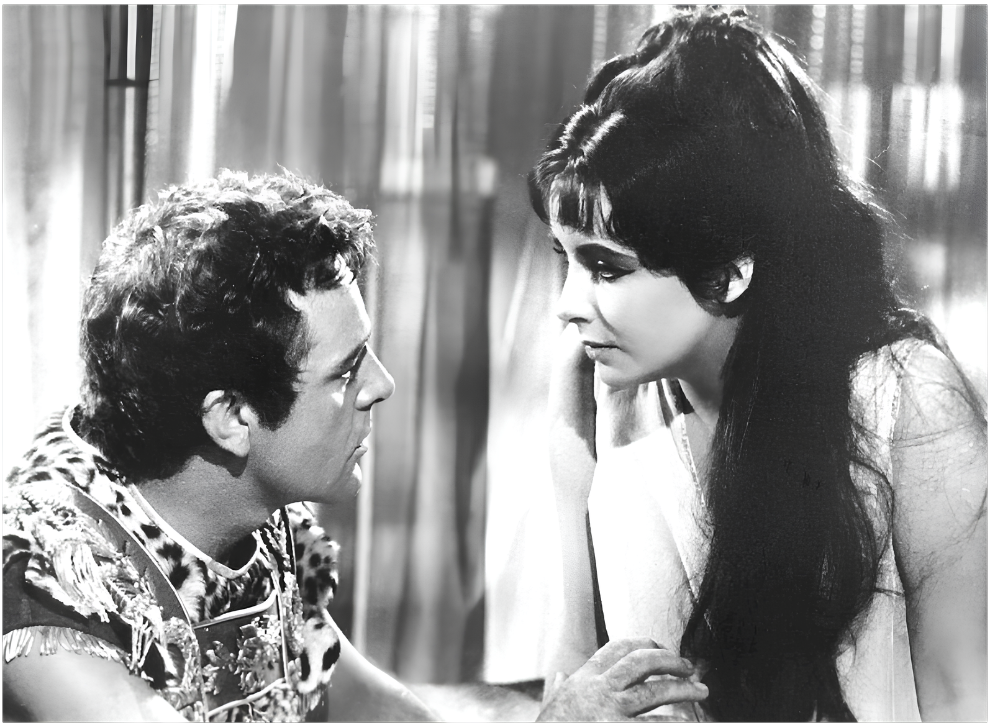
Burton and Taylor were already married when he bought the diamond. Therefore, it was not the ring used for their engagement. Instead, it became one of several extraordinary jewels he gave her during their highly publicized relationship.
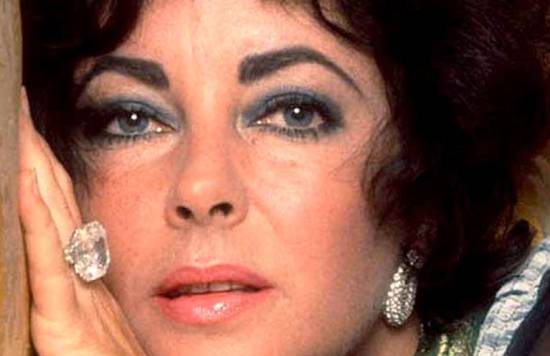
Taylor wore the Krupp Diamond frequently rather than keeping it locked away as a collector’s piece. Photographs of the actress wearing the large step-cut stone helped make the ring instantly recognizable. Over time, its close association with her became as important as its earlier connection with Vera Krupp.
Krupp-Elizabeth-Taylor-Diamond
|
|
3) Krupp Diamond TheftGo To Table Of Contents |
Three armed men stole the Krupp Diamond from Vera Krupp on April 10, 1959. The robbers forced their way into her remote ranch southwest of Las Vegas, pulled the ring from her finger and restrained her and her foreman. They then escaped with the diamond, cash and several other items.
The thieves dismantled the ring and carried its stones across state lines. This brought the FBI into the investigation and triggered a search involving nearly a dozen field offices. Investigators followed the suspects across the country while monitoring attempts to sell the highly recognizable center diamond.
About six weeks after the robbery, FBI agents found the center stone hidden inside the lining of a coat in a New Jersey hotel room. Investigators later recovered the two tapered baguette side diamonds from a jeweler in St. Louis. After authorities recovered all three stones, Vera Krupp was able to rebuild her ring.
|
|
3a) A Violent Heist at a Remote Nevada RanchBack To Table Of Contents |
On the evening of April 10, 1959, Vera Krupp and her ranch foreman were finishing dinner at her property about 26 miles southwest of Las Vegas. Three men arrived at the door and offered to resurface the ranch’s long driveway. Within moments, they forced their way inside.
The intruders pulled the diamond ring from Vera’s finger with enough force to draw blood. They then blindfolded Vera and her foreman and tied them back-to-back with electrical wire taken from a lamp. According to the FBI, the robbers appeared familiar with the property and searched the house methodically.
In addition to the Krupp Diamond, the men reportedly stole about $700,000 in cash, a revolver and a camera. After freeing themselves, Vera and her foreman discovered that the ranch’s battery-powered telephone was not working. They had to drive to the Las Vegas airport to contact the authorities.
|
|
3b) A Nationwide Search for the Elusive DiamondBack To Table Of Contents |
The FBI entered the case because investigators believed the thieves would carry the stolen diamond across state lines. Their attention soon turned to John William Hagenson, a fugitive wanted in connection with a similar robbery in California.
Nearly a dozen FBI field offices helped trace Hagenson’s movements across the country. Agents followed a complicated trail through several cities and eventually arrested him in Louisiana. Meanwhile, other field offices watched for anyone attempting to sell the unusually large and recognizable stone.
About six weeks after the robbery, an informant told an FBI agent in Newark that a local grocer was trying to find a buyer for a large diamond. The grocer led investigators to suspect James Reves. Agents searched Reves’s hotel room in Elizabeth, New Jersey, and found the center diamond hidden inside the lining of a coat hanging in the closet.
|
|
3c) Justice Served, A Diamond RestoredBack To Table Of Contents |
Recovering the center diamond did not complete the investigation because the thieves had dismantled the ring. Authorities later traced the two tapered baguette side diamonds to a jeweler in St. Louis. With all three stones recovered, Vera Krupp could have the platinum ring rebuilt.
James Reves, John William Hagenson and several alleged accomplices went to trial in November 1959. On November 20, Reves and two other defendants were found guilty. Hagenson and additional suspects were convicted several weeks later.
However, the legal outcome was not entirely straightforward. Hagenson, whom the FBI described as the alleged mastermind, later succeeded in overturning his conviction on appeal. Even so, investigators recovered the complete diamond ring and returned its stones to Vera. The Krupp Diamond had survived one of the most dramatic jewelry thefts in American history.
|
|
4) The Diamond is Auctioned:Go To Table Of Contents |
Following Elizabeth Taylor’s death in March 2011, Christie’s offered her celebrated jewelry collection at auction in New York. The auction house presented the former Krupp Diamond under a new name, the Elizabeth Taylor Diamond.
Christie’s estimated that the ring would sell for between $2.5 million and $3.5 million. However, intense competition pushed the final price to $8,818,500, including the buyer’s premium. The result reflected the diamond’s exceptional gemological qualities as well as its connections with Vera Krupp, Richard Burton and Elizabeth Taylor.
The South Korean retail conglomerate E-Land publicly identified itself as the buyer. The 2011 auction result remains the diamond’s last widely documented sale price. However, it should not automatically be treated as its current market value because no later public auction has established a newer price.
|
|
4.a) Who Bought the Krupp Diamond in 2011?Back To Table Of Contents |
The South Korean retail conglomerate E-Land Group bought the Krupp Diamond at Christie’s in December 2011. The company publicly confirmed its purchase shortly after the New York auction.
E-Land paid $8,818,500 for the ring, including the buyer’s premium. This result far exceeded Christie’s presale estimate of $2.5 million to $3.5 million.
After confirming the purchase, E-Land announced plans to display the diamond at its E-World theme park in Daegu, South Korea. However, the company provided few additional details. E-Land therefore remains the last publicly documented buyer, although this fact alone does not confirm whether ownership has changed privately since 2011.
|
|
4.b) Who Owns the Krupp Diamond Now?Back To Table Of Contents |
The best-supported current owner of the Krupp Diamond is E-Land Group, the South Korean conglomerate that bought the ring at Christie’s in 2011. Recent published accounts continue to identify the company as its owner.
No credible public record confirms that E-Land has sold or transferred the diamond since that auction. However, ownership of privately held jewelry can change without a public sale or announcement. Therefore, E-Land should be described as the last publicly documented buyer and the best-supported current owner.
It is inaccurate to claim that the 2011 buyer’s identity remains a mystery. E-Land publicly identified itself as the purchaser shortly after paying $8,818,500 for the ring.
|
|
4.c) Where Is the Krupp Diamond Now?Back To Table Of Contents |
The exact present location of the Krupp Diamond has not been publicly confirmed. E-Land Group bought it in 2011 and remains its last documented purchaser. However, ownership records do not establish where the diamond is physically kept today.
After the purchase, E-Land announced plans to display the diamond at its E-World theme park in Daegu, South Korea. Contemporary reports described this as a plan rather than confirming that a permanent public exhibition had opened.
No reliable current source confirms that the Krupp Diamond remains on public display at E-World or identifies its storage location. Therefore, the most accurate answer is that the diamond is associated with E-Land in South Korea, while its exact location and public accessibility remain unverified.
|
|
4.d) How Much Is the Krupp Diamond Worth Today?Back To Table Of Contents |
The Krupp Diamond has no publicly verified current valuation. Its most reliable value benchmark remains the $8,818,500 price achieved at Christie’s in December 2011. This figure included the buyer’s premium.
Before the auction, Christie’s estimated that the ring would sell for between $2.5 million and $3.5 million. The final result greatly exceeded that range, showing how strongly buyers valued its rarity, documented history and connection to Elizabeth Taylor.
The diamond could be worth more today, but assigning a precise figure without a recent professional appraisal would be speculative. Its 33.19-carat weight, D color, VS1 clarity and Type IIa classification support its exceptional value. Moreover, its celebrity provenance adds a premium that cannot be calculated from diamond prices alone.
Therefore, $8.8 million is the last confirmed market value, not a verified present-day appraisal. Any higher figure reported without a new sale or expert valuation should be treated as an estimate.
|
|
5) Frequently Asked QuestionsGo To Table Of Contents |
The Krupp Diamond has a remarkable history, but its changing name and association with Elizabeth Taylor can cause confusion. It is also frequently mistaken for the much larger Taylor-Burton Diamond.
The following answers clarify how the two diamonds differ, why the Krupp Diamond was renamed and what happened to it after Elizabeth Taylor died. They also explain its purchase price and whether Taylor’s children inherited it.
|
|
5.a) Why Was the Krupp Diamond Renamed the Elizabeth Taylor Diamond?Back To Table Of Contents |
The Krupp Diamond was renamed the Elizabeth Taylor Diamond after the actress died in 2011. The new name recognized her long ownership and the prominent place the ring held in her life and public image.
Richard Burton bought the diamond for Taylor in 1968, and she wore it frequently for more than four decades. When Christie’s offered the ring at the auction of her jewelry collection, it was presented as the Elizabeth Taylor Diamond.
The name change did not create a different gemstone. Both names refer to the same 33.19-carat diamond. “Krupp Diamond” reflects its earlier ownership by Vera Krupp, while “Elizabeth Taylor Diamond” honors its most famous owner.
|
|
5.b) How Is the Krupp Diamond Different from the Taylor-Burton Diamond?Back To Table Of Contents |
The Krupp Diamond and the Taylor-Burton Diamond are two separate jewels. Richard Burton acquired both for Elizabeth Taylor, but they differ in size, shape and history.
The Krupp Diamond is a 33.19-carat, cut-cornered rectangular diamond commonly described as an Asscher cut. Burton bought it in 1968, and Taylor usually wore it as a ring. She kept it for the rest of her life.
In contrast, the Taylor-Burton Diamond weighed 69.42 carats when Taylor acquired it in 1969. Its pear shape and greater weight made it considerably larger than the Krupp Diamond. Taylor wore it as part of a necklace because it was too heavy to wear comfortably as a ring.
Taylor sold the Taylor-Burton Diamond in 1979 and directed part of the proceeds toward constructing a hospital in Botswana. However, she retained the Krupp Diamond until her death in 2011. Her estate then sold it at Christie’s as the Elizabeth Taylor Diamond.
| Feature | Krupp Diamond | Taylor-Burton Diamond |
|---|---|---|
| Weight | 33.19 carats | 69.42 carats when Taylor acquired it |
| Cut | Cut-cornered rectangular, commonly described as Asscher | Pear-shaped |
| Acquired by Taylor and Burton | 1968 | 1969 |
| Purchase price | Approximately $305,000 | $1.1 million |
| How Taylor wore it | As a ring | As part of a necklace |
| Taylor’s ownership | Kept until her death in 2011 | Sold in 1979 |
| Later sale price | $8,818,500 in 2011 | Reportedly $5 million in 1979 |
| Current documented owner | E-Land Group | Robert Mouawad |
| Alternative name | Elizabeth Taylor Diamond | Previously called the Cartier Diamond |
|
|
5.c) How Much Did Richard Burton Pay for the Krupp Diamond?Back To Table Of Contents |
Richard Burton paid approximately $305,000 for the Krupp Diamond at a Parke-Bernet Galleries auction in New York in 1968. He bought the extraordinary 33.19-carat diamond for Elizabeth Taylor.
Historical sources differ slightly on the precise total. Contemporary and archival accounts commonly report $305,000, while the FBI records the price as $307,000. Therefore, describing the purchase price as approximately $305,000 is the most transparent approach.
The amount was extraordinary for its time. More than four decades later, Taylor’s estate sold the same diamond at Christie’s for $8,818,500, including the buyer’s premium.
|
|
5.d) What Happened to the Krupp Diamond After Elizabeth Taylor Died?Back To Table Of Contents |
After Elizabeth Taylor died in March 2011, her estate included the Krupp Diamond in the Christie’s auction of her celebrated jewelry collection. The jewel was presented under its new name, the Elizabeth Taylor Diamond.
Christie’s sold the diamond ring on December 13, 2011. E-Land Group, a South Korean conglomerate, bought it for $8,818,500, including the buyer’s premium. The price far exceeded its presale estimate of $2.5 million to $3.5 million.
E-Land subsequently announced plans to display the diamond at its E-World theme park in Daegu, South Korea. However, reliable current sources do not confirm whether it remains on public display or reveal its exact present location.
|
|
5.e) Did Elizabeth Taylor’s Children Inherit the Krupp Diamond?Back To Table Of Contents |
There is no public evidence that any of Elizabeth Taylor’s children inherited the Krupp Diamond as personal property. Instead, the ring formed part of the jewelry collection offered for sale by her estate after her death.
Christie’s auctioned the diamond in December 2011, and E-Land Group bought it for $8,818,500. Therefore, Taylor’s children did not retain the famous ring as a family heirloom.
The private terms of Taylor’s estate do not establish how the auction proceeds were distributed among her heirs, trusts or charitable interests. Consequently, it would be inaccurate to claim that her children received the diamond’s sale proceeds without reliable documentation.
Explore Famous Diamonds
| The Orloff Diamond | The Cullinan Diamond |
| The Centenary Diamond | The Esperanza Diamond |
| Eureka Diamond |